
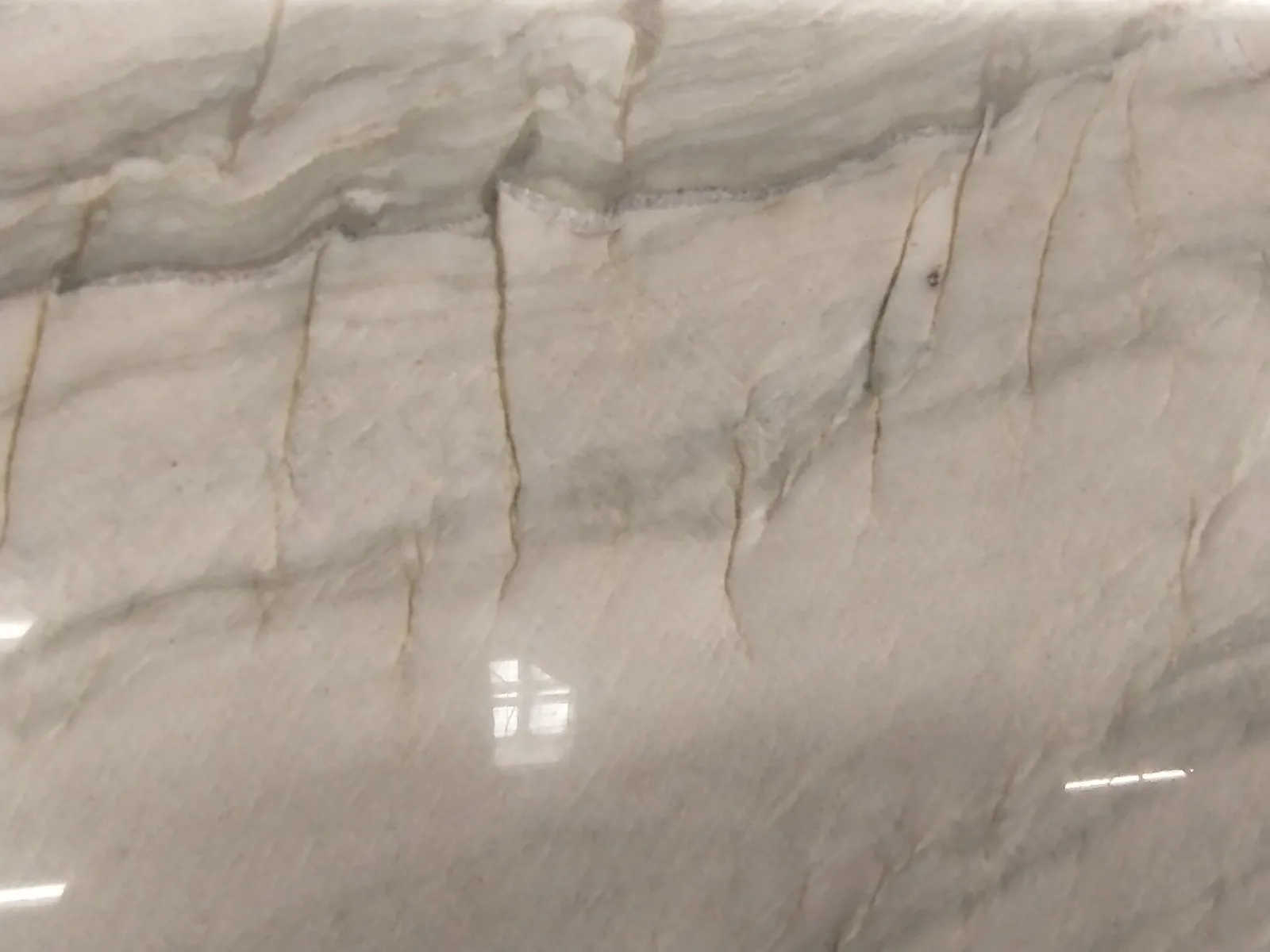
Sealing quartzite · Perth
The right seal for quartzite.
Quartzite is one of the hardest, most acid-resistant stones you can put in a home. It's also porous, which is why it stains. We seal it with MineralProtect: the one and only next-generation sol-gel surface coating in Australia, a colourless layer that bonds into the surface itself. This is our sweet spot.
Where quartzite lets people down
Hard as anything, and it still stains.
Quartzite gets sold as indestructible, so people assume it never needs sealing. Then a splash of olive oil, a glass of red or a summer of bore-water reticulation leaves a mark that won't wipe off, and they find out the hard way. Hardness stops scratches. It does nothing about porosity, and quartzite has plenty of it.
On the benchtop
Oil and wine soak in
Cooking oil, red wine and coffee find the open pore and darken it. A honed or leathered finish drinks them in faster than a polished one. Left bare, those marks set and the only fix is professional stone repair.
Outside, on paving and coping
Reticulation and BBQ marks
Sprinklers on bore water bloom orange iron and white calcium across the paving every summer. Barbecue grease, dropped oil and sunscreen around the pool add their own marks. Bare quartzite holds all of it.
The usual fix, and why it fails
The wrong seal makes it worse
A topical coating lays a film that yellows, peels and has to be stripped. A pore-based impregnator sits down in the stone, away from where the wear and cleaning happen, and quietly fails from inside within a year or two in WA conditions.
How our coating protects quartzite
It bonds into the surface itself.
Quartzite is a siliceous stone, built from quartz. That's the ideal partner for our chemistry. MineralProtect is a water-based mineral sol-gel that cures into a dense inorganic Si-O-Si network right at the surface, forming a genuine bond with the stone's own chemistry. It isn't a film sitting on top and it isn't hiding down the pore. It's part of the surface, exactly where wear, cleaning and staining happen.
Bonds in, not on
On siliceous stone like quartzite the coating condenses into the surface as an inorganic mineral network and bonds into the surface itself. There's no film to peel, blush or strip, and nothing sitting on top to fail.
Protects where the wear is
The protection lives in the top hundred nanometres, where the knife, the scrubbing pad, the pressure washer and the sun actually act. A pore-based sealer builds its protection millimetres down, out of reach of how the surface is really used.
Colourless, and it still breathes
It changes only the surface energy, so your quartzite keeps its exact colour, finish and feel. And because it doesn't cap the pores, the stone still releases moisture instead of trapping it beneath the treated face.
The real test isn't the rain
Built for how quartzite gets used.
A benchtop gets scrubbed and splashed with oil. Paving gets walked on and pressure-washed. Pool coping gets sun, salt and sunscreen. Every one of those loads acts at the surface, which is exactly where our coating is. That's the edge a pore-based sealer can't have.
Cleaning & abrasion
Survives the scrubbing
The dense inorganic network sits right where the cream cleanser, the scrub pad and the pressure washer hit, so it keeps working through the cleaning that wears other sealers off. It fades slowly and predictably, and renews with a top-up rather than a strip.
Chemical
Designed for cleaning, not just water
The bonded inorganic surface stays stable through the routine alkaline detergents and pool chemistry of real maintenance, the same exposure that breaks a pore sealer down from the inside. More resistant, not immune: it's built for everyday cleaning, not for neat acid.
UV
Doesn't yellow or chalk
Perth sun is what breaks most sealers down. Our coating is inorganic, so it carries no chain for the sun to cleave the way it attacks an organic film. It holds up under the UV that ages acrylics and yellows films, without going chalky.
Oil
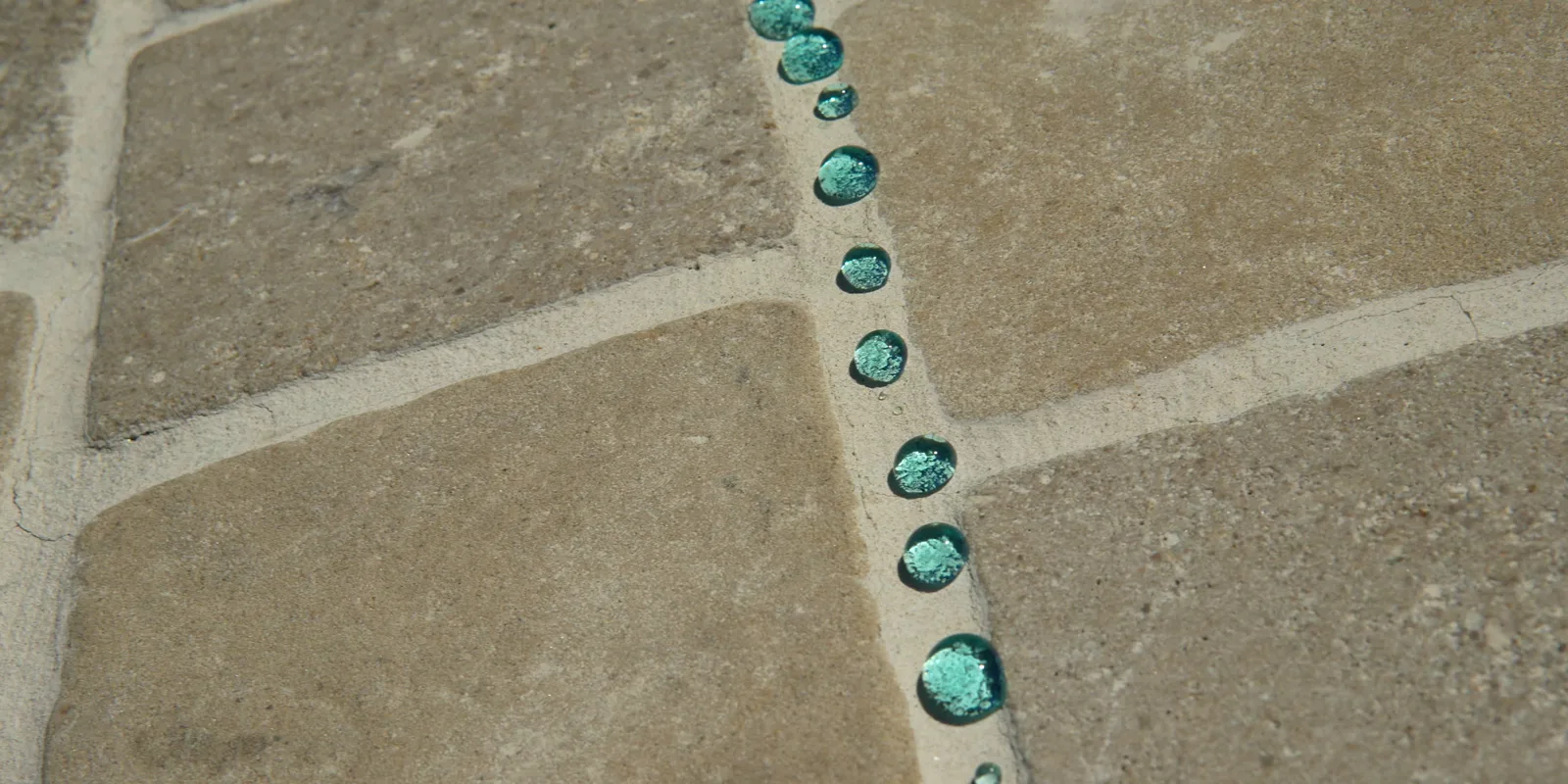
Oil lifts instead of soaking in
This is the one that matters most on quartzite. Cooking oil, wine, BBQ grease and sunscreen sit on the surface and lift in cleaning instead of soaking into the pore, so kitchen, alfresco and pool-surround marks wipe away rather than set. Standard pore sealers repel water only.
One price, on the record
Sealed once, properly.
No hidden pricing, no vague promise. Your quartzite is prepared, sealed with MineralProtect by a certified applicator, and registered under a 10-year guarantee, at one published rate.
- $16 per square metre, all-in. Full preparation clean, MineralProtect applied to spec, and your guarantee registered. Minimum job $960.
- Colourless by design. Same colour, same finish, same feel. The only change is that water and oil stop gripping.
- Independently tested chemistry. The JUMBOGUARD coatings are tested at independent houses including TÜV Rheinland, SGS, Intertek and REACH, and MineralProtect is low-VOC.
What sealing quartzite won't do
The honest limits.
Everyone in this trade has been sold a miracle. We'd rather tell you the boundaries up front, because that's how you know the rest is real.
It's a long-lasting treatment, not a permanent one
A coat of MineralProtect performs for roughly one to three years depending on use, then tops up without stripping. It makes cleaning faster and far less frequent; it doesn't remove the need to clean.
Some "quartzite" is really soft marble
A lot of stone sold as quartzite is actually a dolomitic marble that etches with acid. No penetrating sealer stops etching, because that's the acid dissolving the stone itself. We test what you have and tell you straight before we quote.
It slows staining, it isn't stain-proof
Oil and spills sit on top and lift in cleaning, which buys you time. Wipe them up reasonably promptly. Leave a red-wine puddle overnight and even a sealed surface can mark.
Bore-water staining still needs managing
Sealing helps deposits rinse off more easily, but it can't prevent hard-water staining under direct reticulation. The real fix is aiming sprinklers off the stone; we'll talk you through it.
Quartzite, answered
The questions we get most.
Does quartzite really need sealing if it's so hard?
Hardness and porosity are two different things. Quartzite resists scratching and acid, but it still carries an open pore network that drinks in oil, wine, coffee and bore water. Sealing changes how the surface behaves, so those contaminants sit on top and lift in cleaning instead of soaking in and marking the stone.
Will sealing darken or change the look of my quartzite?
No. MineralProtect is colourless and non-pigmenting. Same colour, same finish, same feel. The only thing that changes is the surface energy, so water and oil stop gripping. The enhancer sealers most people are offered deliberately darken the stone for a wet-look; ours does not.
My slab was sold as quartzite but might be marble. Does that matter?
It matters a lot. A good deal of stone sold as quartzite is actually a softer dolomitic marble, and that etches when it meets lemon, vinegar or acidic bore water. No penetrating sealer stops acid etching, on any stone, because etching is the acid dissolving the stone itself rather than a stain sitting on it. We test what you actually have before we quote and tell you straight what sealing will and won't do for it.
Will sealing stop oil and wine stains on a quartzite benchtop?
Sealing makes oil and grease sit on the surface and lift in cleaning rather than soaking into the pore, so a spill wipes up instead of setting into a dark mark. It reduces staining and buys you time to clean up. It isn't a stain-proof guarantee: wipe spills reasonably promptly and the surface stays right.
Can you seal quartzite paving and pool coping outside?
Yes, and it's one of our best fits. Quartzite is siliceous, so our sol-gel bonds into the surface, stays breathable and holds up under Perth sun, pool chemistry and cleaning far better than a film or a pore-based impregnator. It stays colourless, so the coping keeps its natural look.
How long does the seal last?
Two clocks, kept separate on purpose. One coat of MineralProtect performs for roughly one to three years depending on the surface and how hard it's used, and it tops up without stripping when it's due. The guarantee runs for 10 years, covering the sealed system performing as described, and sits on top of your Australian Consumer Law rights.
Keep reading
Related stone, and the science.
Go deeper
The chemistry of sealing quartzite
For specifiers and the technically minded: the sol-gel mechanism, the siliceous bond, the four resistances with their honest bounds, and the head-to-head against impregnators and films. Read the technical version →
Same family
Granite
The other great siliceous benchtop and paving stone. Same bond, same colourless finish, same honest oil story. Read the granite guide →
Same family
Sandstone
Siliceous and thirsty. A textbook fit for a breathable surface seal that won't darken or trap moisture. Read the sandstone guide →
Related
Travertine
A porous carbonate stone where the coating anchors into the mineral. Our pool-surround favourite. Read the travertine guide →
Related
Limestone (Tamala / natural)
Perth's local stone, and the textbook case for a breathable, colourless surface seal over a trapping film. Read the limestone guide →
Pool surrounds
Protecting pool surrounds
Coping and pool paving take salt, chlorine and mineral systems the hardest. The water science, and how each material copes. Read the guide →
Browse
The Sealing Library
Every common hard surface in WA, by material, graded on how well our coating protects it. Honestly, including where we're not the answer. Find your surface →
Get a quote
Seal your quartzite once.
We'll assess your stone, confirm what it actually is, and seal it with the right coating for the material, registered under a 10-year guarantee. Confirmed price before you book.