
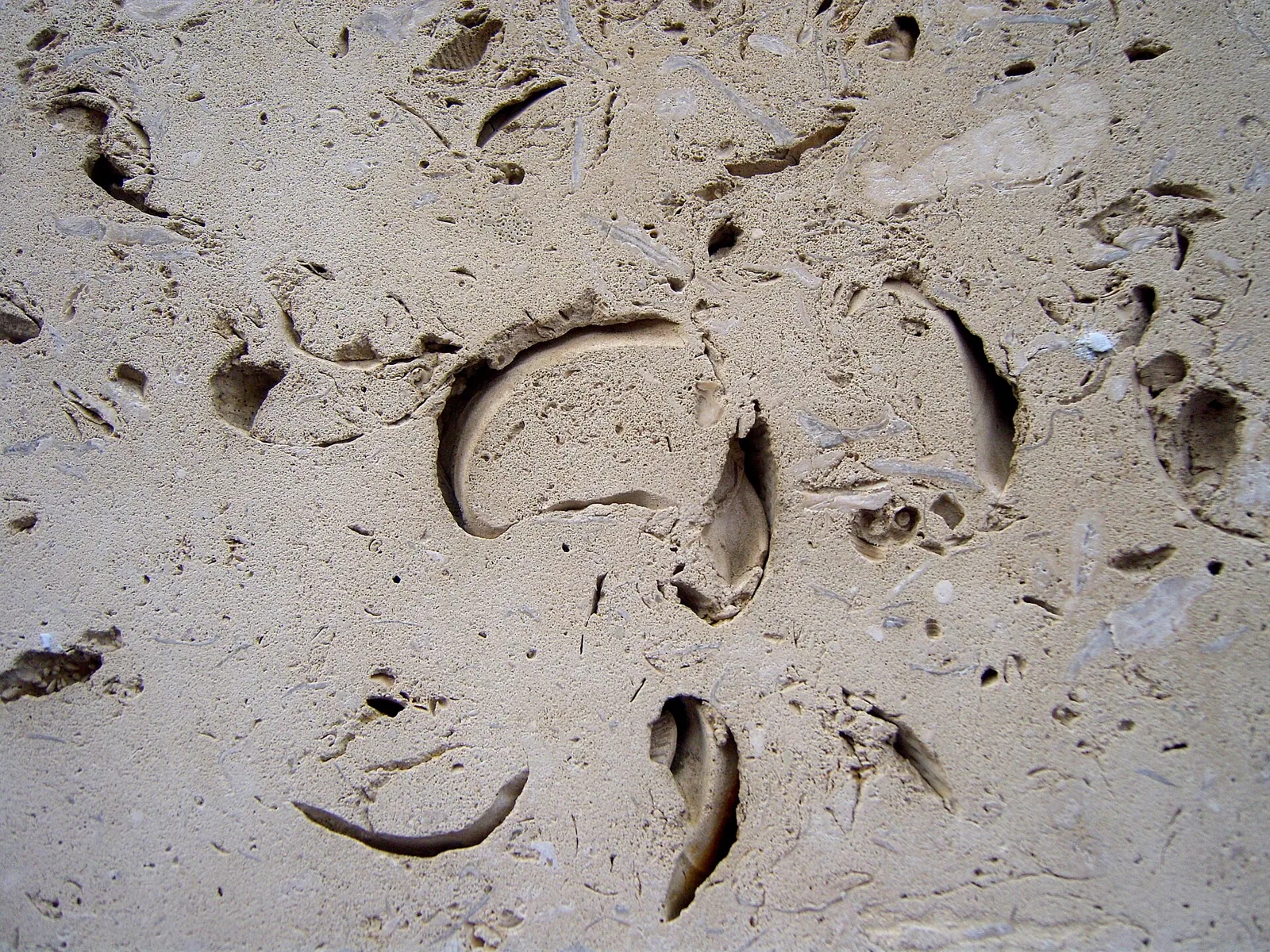
Sealing limestone · Perth
The stone Perth built on, sealed properly.
Limestone is porous, thirsty and everywhere in Perth, and that porosity is exactly why the wrong sealer wrecks it and the right one thrives on it. MineralProtect is the one and only next-generation sol-gel surface coating in Australia, and porous limestone is one of the surfaces it protects best. Here is how, and where the honest limits are.
What goes wrong with bare limestone
Porous, coastal, and quietly soaking it up.
Natural Tamala limestone is a soft, open, calcareous stone, sitting in a coastal, bore-watered environment that is about the harshest thing you can throw at porous stone. Left bare it drinks in whatever lands on it. And the usual answer, a film or a pore-filler, tends to make it worse.
Absorbs everything
Oil and stains key into the pores
Barbecue splash, dropped oil, leaf tannin and red wine wick straight into the open pore network and set as a dark mark you can no longer scrub out. That slow greying most people shrug off as "how old stone looks" is contamination locked in the pores between cleans.
Coastal salt
Reticulation and sea air load it with salt
Bore-water sprinklers and coastal air push salt and minerals deep into the stone. Seal that stone with a film that blocks vapour and you trap the salt underneath, where it crystallises and lifts the surface off from beneath. That is the classic way a "protective" coating destroys limestone.
The wrong sealer
Films peel, enhancers darken
The topical films and enhancer blends most people are sold either lay a membrane on top that blushes, peels and has to be stripped, or deliberately darken the stone to a wet look. Neither respects what limestone actually needs: to stay open, breathe, and keep its colour.
Here's the twist: the same porosity that makes limestone soak up stains is exactly what a breathable surface coating anchors into best. The stone's biggest weakness with the wrong product is its biggest strength with the right one.
How we protect it
It anchors into the surface. It doesn't seal it shut.
For decades there were only two ways to seal limestone: lay a film on top, or soak a repellent down the pores. Both fail this stone in Perth. MineralProtect is a third way, a water-based mineral sol-gel that anchors into the mineral right at the surface, and leaves the pores open so the stone keeps breathing.
Anchors into the surface
The sol wicks into the open pore network and cures in place into a dense, cross-linked mineral layer keyed into the pore mouths and grain contacts. On limestone the porosity helps that grip, not hinders it. It anchors into the mineral rather than sitting on top as a film that can peel.
Protects where the wear happens
The protection lives at the surface, in the top sub-millimetre, exactly where cleaning, foot traffic, oil and weather actually act. A pore-filler buries its repellency millimetres down, out of reach of the very things that stain and wear the face.
And it still breathes
Because it engineers the surface energy instead of capping the pores, moisture can still escape. A film that seals the pores traps salt and moisture beneath the face, and on Perth's salt-laden limestone that is what crystallises under the surface and flakes it off. MineralProtect protects the surface and lets the stone breathe.
Why location decides it
A surface gets used. Ours protects where the use lands.
A limestone surround isn't a lab sample. It gets scrubbed, pressure-washed, walked on wet, splashed with pool chemistry, baked under Perth sun and hit with sunscreen and barbecue oil. Every one of those loads acts at the surface. That's exactly where our coating sits, and where a pore-filler's protection isn't.
Cleaning & abrasion
Built to survive the cleaning
Limestone gets brushed, hosed and pressure-washed. MineralProtect is a dense inorganic network right at the surface, so it keeps working through the scrubbing that strips the thin top layer of a pore-based sealer off. It fades slowly and predictably, and renews with a top-up rather than a strip back to bare stone.
Chemical
Designed for cleaning, not just water
The bonded inorganic surface stays stable through the alkaline detergents and pool chemistry of real maintenance, the same exposure that breaks a pore sealer down from inside the stone. More resistant, not immune: it is built for routine cleaning, and no coating stops acid dissolving carbonate stone itself.
UV
Perth sun doesn't yellow it
The sun is what breaks most sealers down. Our coating is inorganic, so it doesn't yellow or chalk the way an organic film does, and it holds up under the UV that ages other coatings. Far more UV-resistant than an organic film, not UV-proof, and not permanent.
Oil
Oil sits on top and lifts in cleaning
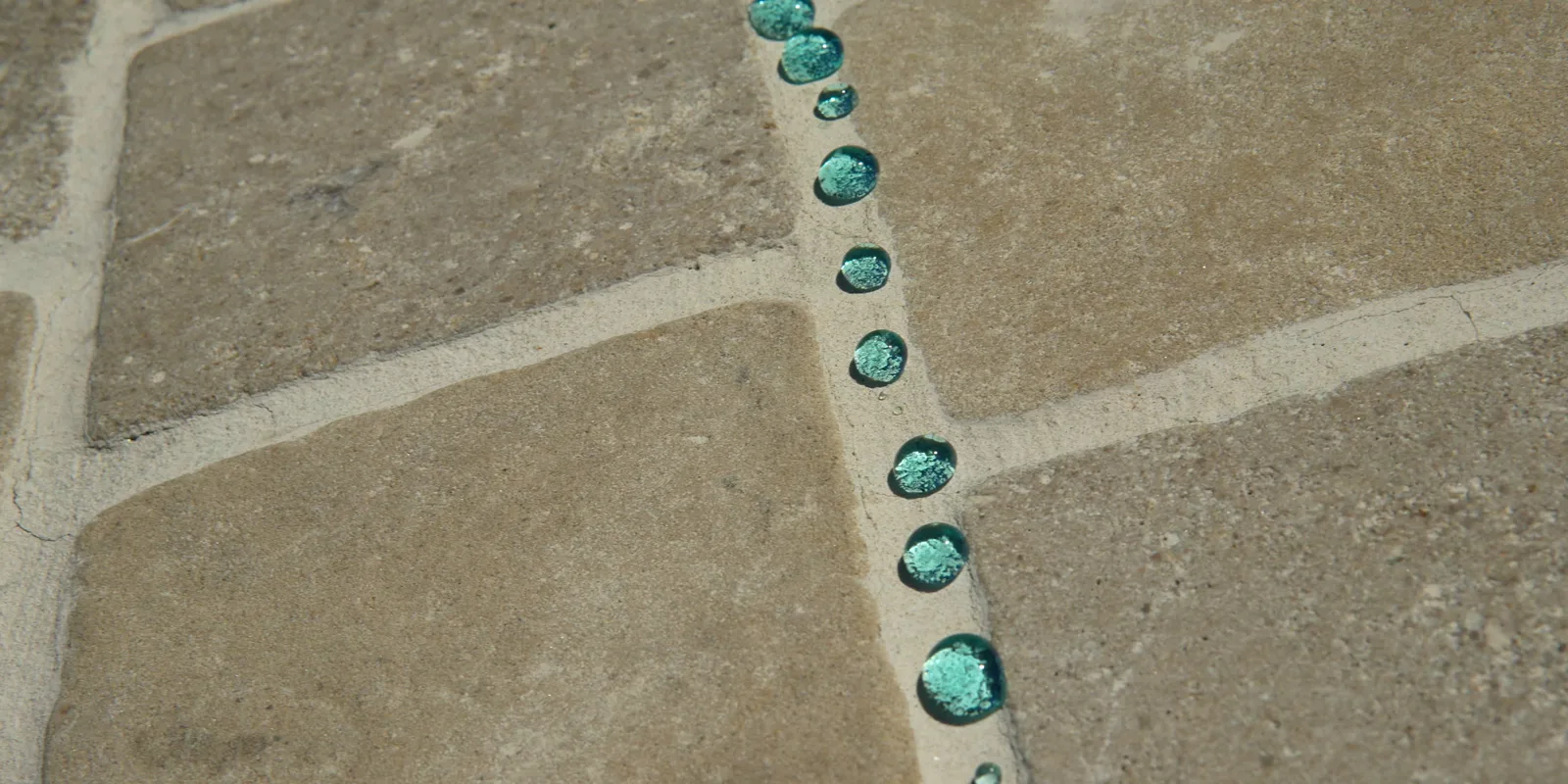
On bare limestone, oil and grease soak into the pores and set as a dark mark. MineralProtect lowers the surface energy so oil and sunscreen sit on the surface and lift in cleaning instead of soaking in, so a barbecue or pool-surround spill wipes up rather than staining for good. The cured coating is PFAS-free by design, with no forever-chemicals in the film. It is an easier clean, honestly, not an oil barrier.
A pore-filler builds its protection millimetres down the pore, where none of this reaches. We put it at the surface, where all of it happens. That's the whole wedge.
Proven, not promised
One rate, one standard, on the record.
Sealing limestone properly isn't just the chemistry. It's the substrate diagnosis, the preparation, and the application to spec, all registered so someone stands behind it. Here's what that looks like.
- Colourless and breathable. Only the surface energy changes: same colour, same finish, same feel, and the pores stay open so the stone keeps drying.
- Assessed for salt and reticulation first. On a heavily salt-laden or bore-watered surround we look at the stone before we quote, and tell you plainly what a surface treatment can and can't do.
- Registered under a 10-year guarantee. The repellency function is documented and backed through Certified Applicators, sitting on top of your Australian Consumer Law rights.
Straight about the limits
What it will not do.
In a category built on over-promising, the honest limits are the point. Here are the ones that matter on limestone, said plainly.
It does not stop acid etching
No penetrating sealer stops acid etching on stone. If wine, lemon juice, pool acid or a harsh cleaner is left sitting on limestone, it can still burn a dull mark, because the acid dissolves the stone itself. Sealing slows how fast a spill soaks in and buys you time to rinse it, no more. Anyone who calls a stone sealer acid-proof is overselling you.
It does not prevent reticulation staining
Under direct bore-water sprinklers the water still lands and dries and leaves an iron or calcium deposit. What changes is where it ends up: on a sealed surface it sits on top and lifts in cleaning instead of locking into the pore. Manageable, not gone. The only fix at the source is treating the reticulation water itself.
It is a long-lasting treatment, not a permanent one
The beading you can see fades before the protection does, and the coating eases back toward untreated over years. It renews with a top-up on clean stone, no strip. It makes cleaning faster and far less frequent; it doesn't remove the need to clean entirely.
Common questions
Sealing limestone, answered.
Should I seal my limestone paving?
If your limestone is holding up and you're happy cleaning it twice a year, we'd rather point that out than sell you a scare. What a seal changes is the effort, not the survival of the stone: each clean is faster, the cleans come round less often, and what doesn't lift straight away is far less likely to key into the pores and slowly dull the stone between cleans. Porous limestone is exactly the kind of open stone our coating grips into best, and it stays colourless and breathable. If that trade is worth it to you, we're worth a quote. If it isn't, keep doing what already works.
Will sealing darken or change the look of my limestone?
No. MineralProtect is colourless and non-pigmenting. The only thing it changes is the surface energy of the stone, so water and oil stop gripping. Same colour, same finish, same feel. The enhancer-grade sealers many people are offered deliberately darken the stone to a wet look; this is the opposite kind of product.
Will it stop my limestone etching if I spill something acidic?
No, and we won't pretend it does. Etching is the acid dissolving the carbonate surface itself, so nothing sealed into the pores can prevent it. What the coating does do every day is slow how fast a spill soaks in, so an acid splash gives you a window to rinse it off, and it repels the water, oil and organic soiling that is the far more common way limestone gets ruined. The one surface where a coating genuinely prevents permanent etching is glass, which is what GlassProtect is for.
My limestone is on bore-water reticulation. Will sealing stop the orange and white staining?
Straight answer: no coating prevents hard-water staining under direct reticulation. The bore water still lands and dries on the paving, and the iron and calcium in it still leave a deposit. On unsealed porous stone that mineral water soaks into the pores and locks in, which is the staining you can no longer scrub out. A seal keeps the surface repellent so the deposit sits on top and lifts in routine cleaning instead. That makes it manageable. The only thing that stops it at the source is treating the reticulation water, and the honest fix is to do both.
Will it make a wet pool surround slippery?
We make no slip claim and hold no slip rating, and we won't call anything non-slip or safe around a pool. What can make coated stone slippery is a film that lays over the top and smooths the texture your feet grip. MineralProtect is not that: it's colourless, adds no film, and leaves the surface profile, texture and feel of your stone unchanged. If a slip classification is part of a strata specification, the correct way to settle it is an accredited AS 4586 test on a sample of your actual coping, before and after coating.
Is liquid limestone or reconstituted limestone different?
Yes, and it's a strong fit too. Poured "liquid" limestone and reconstituted limestone are cement-bound, so the coating anchors into them the same way it does on concrete, which is genuinely excellent. Natural Tamala limestone anchors into the mineral. Both are among the surfaces MineralProtect protects best. Tell us which you have when you get a quote.
How long does it last, and is there a guarantee?
Two things, kept separate on purpose. One coat performs for a few years depending on the surface and how hard it's used, then renews with a top-up rather than a strip. The guarantee is registered for 10 years, covering the coating's repellency function, and it sits on top of your rights under Australian Consumer Law. We track when your reseal is due.
Keep reading
Related surfaces & the science.
Go deeper
The science of sealing limestone
The full technical companion: the sol-gel chemistry, the carbonate anchoring nuance, the four resistances with their honest bounds, and how it stacks up against impregnators and films. Read the technical version
Same family: natural stone
Related guides
Other porous natural stones we seal, and how the story shifts by material.
Get a quote
Seal your limestone once.
We'll assess your stone, prepare and seal it with MineralProtect, and register it under a 10-year guarantee. Confirmed price before you book.