
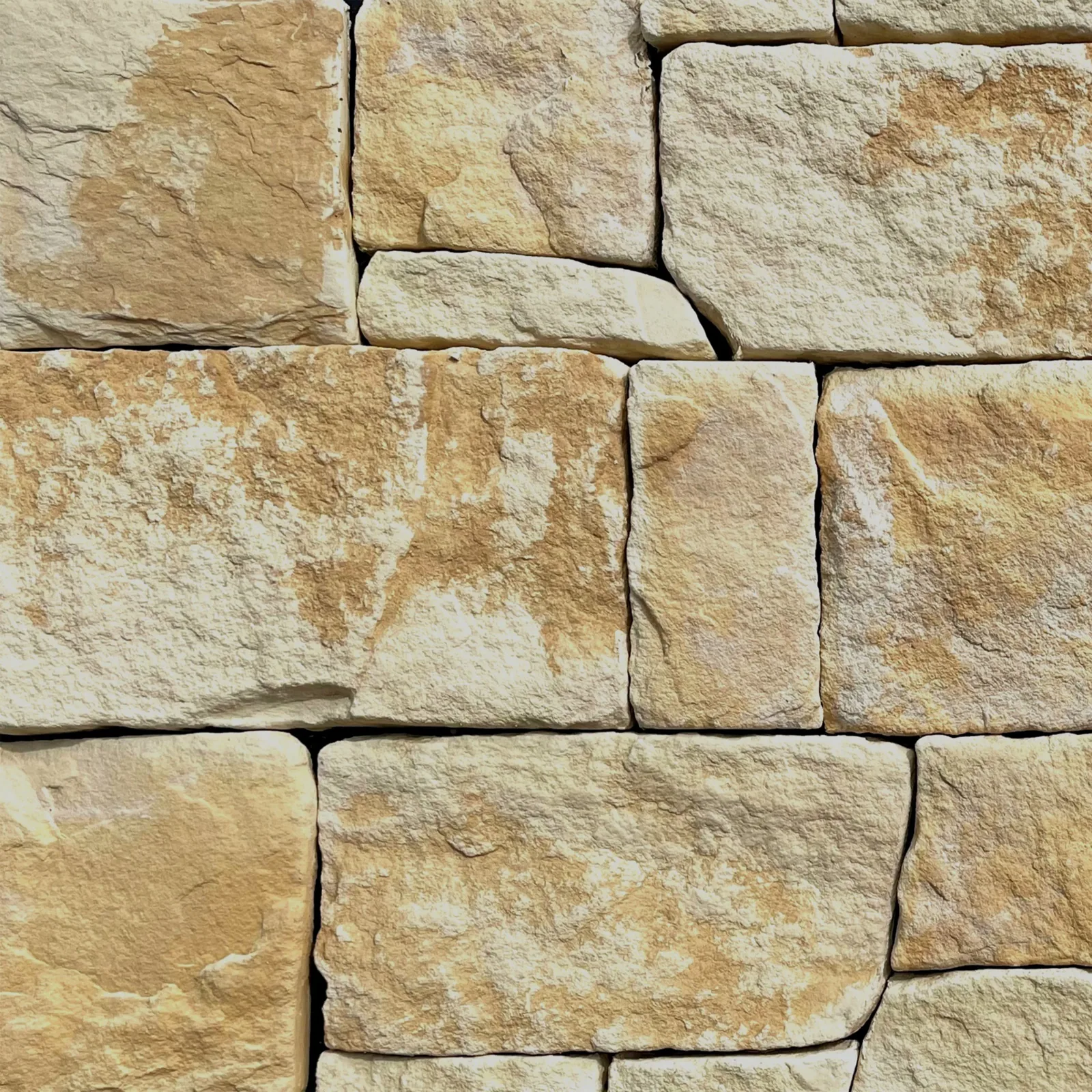
Sealing sandstone · Perth
Sandstone is our sweet spot.
Sandstone is a siliceous stone, and that is exactly what our chemistry was built for. MineralProtect is the one and only next-generation sol-gel surface coating in Australia: it bonds into the stone's own surface, stays colourless and breathable, and holds up through the cleaning, sun, salt and oil that wear ordinary sealers off. Nothing else works like this.
What goes wrong with raw sandstone
Beautiful, thirsty, and left unprotected.
Sandstone is soft, open and porous. That is what gives it its look, and it is also what lets it drink in everything that lands on it. In Perth conditions, raw sandstone has a hard life, and the sealer most people reach for does not fix it for long.
The stone
It drinks in stains
Open pores pull in water, red wine, barbecue grease, dropped oil and leaf tannin. On paving and around the barbecue, a spill left for an afternoon can set into a mark that will not scrub out, because it has soaked below the surface where a cloth can't reach.
The climate
It goes green and salty
Where sandstone stays damp and shaded, reticulation overspray, a north wall, the splash zone of a pool, it goes green and black with growth, because porous stone holds water. Near the coast and under bore-water reticulation, salt drives into the pores and works away at the face.
The usual seal
The seal fails first
A cheap acrylic film looks good for a season, then blushes milky, yellows and peels, and has to be stripped before it can be redone. A pore sealer soaks in and fades from the inside within a year or two of WA sun and cleaning, with no warning that it has gone.
How our coating protects it
It bonds into the stone's own surface.
For decades there were only two ways to seal stone: lay a film on top, or soak a sealer into the pores. Both wear out in Perth, so you reseal again and again. MineralProtect is a third way, and sandstone is the substrate where it works best of all.
A genuine bond, because sandstone is siliceous
Sandstone's surface carries the same reactive chemistry as glass and quartz. Our water-based mineral sol-gel condenses into a dense inorganic network and bonds into that surface as it cures. It isn't stuck on top like a film, and it isn't hidden down a pore. It anchors into the mineral itself.
Protection where the wear actually happens
The coating sits right at the surface, a nano-thin layer where cleaning, traffic, sun and spills all land. A pore sealer builds its protection millimetres down, in the wrong place for how a paver is really used, so the face you walk on and scrub is left effectively bare.
And the stone still breathes
Because it works at the surface instead of capping the pores, moisture can still escape. A film that seals moisture in can wreck sandstone from behind: trapped salt crystallises beneath the seal and flakes the face off. Our coating protects the surface and lets the stone keep breathing.
The real test isn't the rain
Built to survive how sandstone gets used.
A paver in service is scrubbed, pressure-washed, walked on, splashed with pool chemistry, baked under the sun and marked with oil. Every one of those loads acts at the surface, which is exactly where our coating lives and where a pore sealer's protection never reaches.
Cleaning & abrasion
Survives the scrubbing
Sandstone gets pressure-washed and stiff-broomed to clear growth and grime. Our dense inorganic network sits right where that happens, so it keeps working through the cleaning that wears other sealers off. It fades slowly and predictably, and renews with a top-up rather than a strip.
Chemical resistance
Designed for cleaning, not just water
The bonded inorganic surface stays stable through the alkaline detergents and pool chemistry of real maintenance, the same exposure that breaks down a pore sealer from inside the stone. It is more resistant, not immune, so we will not leave a strong cleaner pooled to dry.
UV stability
Sun is what breaks most sealers
Perth sun is what ages a coating. Ours is inorganic, so it does not yellow or chalk the way an organic film does, and it holds up under the UV that quietly cleaves the water-repelling part of a pore sealer while you get no warning it has gone. Far more UV-resistant, not UV-proof.
Oil & grease
Barbecue and pool-side marks lift
Oil and grease sit on the surface and lift in cleaning instead of soaking in, so a dropped-oil, sunscreen or barbecue mark on your paving wipes away rather than setting. A standard pore sealer repels water only, leaving the surface open to the exact contaminant that stains it. And we do it PFAS-free by design.
Proven, not promised
One rate, one job, done properly.
Sandstone is the kind of siliceous stone this chemistry bonds to best, so it is where we lead hardest. The proof is in the preparation and the record we leave behind, not in a slogan.
- Prepared first, then bonded. A full professional clean so the coating anchors to sound, open stone, then MineralProtect applied to spec by a certified applicator.
- Degrades slowly, not suddenly. No hidden failure point and no strip to renew. It eases back toward untreated over years, and tops up on clean stone.
- Independently tested chemistry. The JUMBOGUARD coating stack is tested at independent houses including TÜV Rheinland, SGS, Intertek and under REACH.
Straight talk
What sealing sandstone does not do.
Sandstone is an optimal fit, and it is still worth being clear about the edges. A seal that promises everything is the one to read twice.
- It is not permanent or maintenance-free. It is a long-lasting treatment that fades slowly and needs a top-up in time. It makes cleaning far faster and less frequent; it does not end it.
- It does not stop growth landing. Green and black growth needs damp and shade. Sealing keeps the stone drier so growth is slower and far easier to clean off, but a shaded, wet spot will still need the occasional wash.
- It will not lift an existing deep stain. If oil or tannin has already soaked into raw sandstone, sealing locks in a clean, sound surface; it is not a stain remover. We assess the stone first and tell you straight.
Sandstone questions
The things people actually ask.
Does sealing change the colour of sandstone?
No. MineralProtect is colourless and non-pigmenting. Same colour, same finish, same feel. The only change is that water and oil no longer grip the surface. It is not an enhancer or a wet-look sealer, and it will not darken your stone.
Why does my sandstone go green, and does sealing help?
Sandstone goes green or black where it stays damp and shaded: reticulation overspray, pool splash, a north-facing wall. Growth takes hold because porous stone holds water. Sealing the surface means it takes on far less water and dries faster, so growth is slower to establish and much easier to clean off. It makes cleaning faster and less frequent; it does not remove the need to clean.
Is sandstone prone to acid etching like limestone or marble?
No. Sandstone is a siliceous stone, so it is naturally far more acid-resistant than calcareous stones like limestone, travertine and marble, which etch when acid touches them. That is a property of the stone itself, not of any sealer. It is one reason sandstone is such a good match for our coating.
How long does the seal last, and will I need to reseal?
There are two clocks. The easy-clean and beading you can see fade slowly over years of sun, cleaning and traffic, and a top-up renews it without stripping anything back. Separately, every Extera seal is registered under a 10-year performance guarantee on the repellency function. It is a long-lasting treatment, not a permanent one, and it makes cleaning far less frequent rather than removing it.
Can you seal sandstone cladding and pool coping, not just paving?
Yes. Because the protection is built at the surface and stays breathable, it works on paving, pool surrounds and coping, and vertical cladding and feature walls. On a wall it sheds the water and airborne grime that streak sandstone, and it lets the stone keep releasing moisture rather than trapping it behind a film.
Will sealing make sandstone slippery underfoot?
Our coating is not a film. It bonds into the surface as a nano-thin layer rather than laying a slick membrane on top, so it does not add the smooth coating a topical sealer can. We never rate a surface for slip or call anything non-slip, and we will talk you through the finish before we book.
Keep reading
Related stone, and the science.
Sandstone sits in the natural-stone family. If yours is one of these instead, or you want the full chemistry, start here.
Natural stone
Travertine
The pool-surround favourite. How we anchor into porous carbonate stone and keep it breathing.
Read the guideNatural stone
Limestone (Tamala / natural)
Perth's local stone, and the textbook case for a breathable, colourless surface seal.
Read the guideNatural stone
Granite
Another siliceous stone we bond into genuinely, from benchtops to cobblestone paving.
Read the guideNatural stone
Quartzite
Hard, siliceous and oil-prone on benchtops and coping. A close cousin to sandstone for how we treat it.
Read the guideSame family
Bluestone & basalt
Dense volcanic stone for paving and cladding. Low porosity, but still worth protecting from oil and salt.
Go deeper
The science of sealing sandstone
The sol-gel chemistry, the siliceous covalent bond, the four resistances with their honest bounds, and the head-to-head against every legacy sealer.
Go deeper on the scienceProtecting pool surrounds → · Back to The Sealing Library to find any other surface.
Get a quote
Seal your sandstone once.
We will prepare and seal your sandstone with MineralProtect, colourless and breathable, registered under a 10-year guarantee. Confirmed price before you book.