
We clean it. Then we protect it.
Driveway and concrete cleaning in Perth, cleaned to a sealing standard.
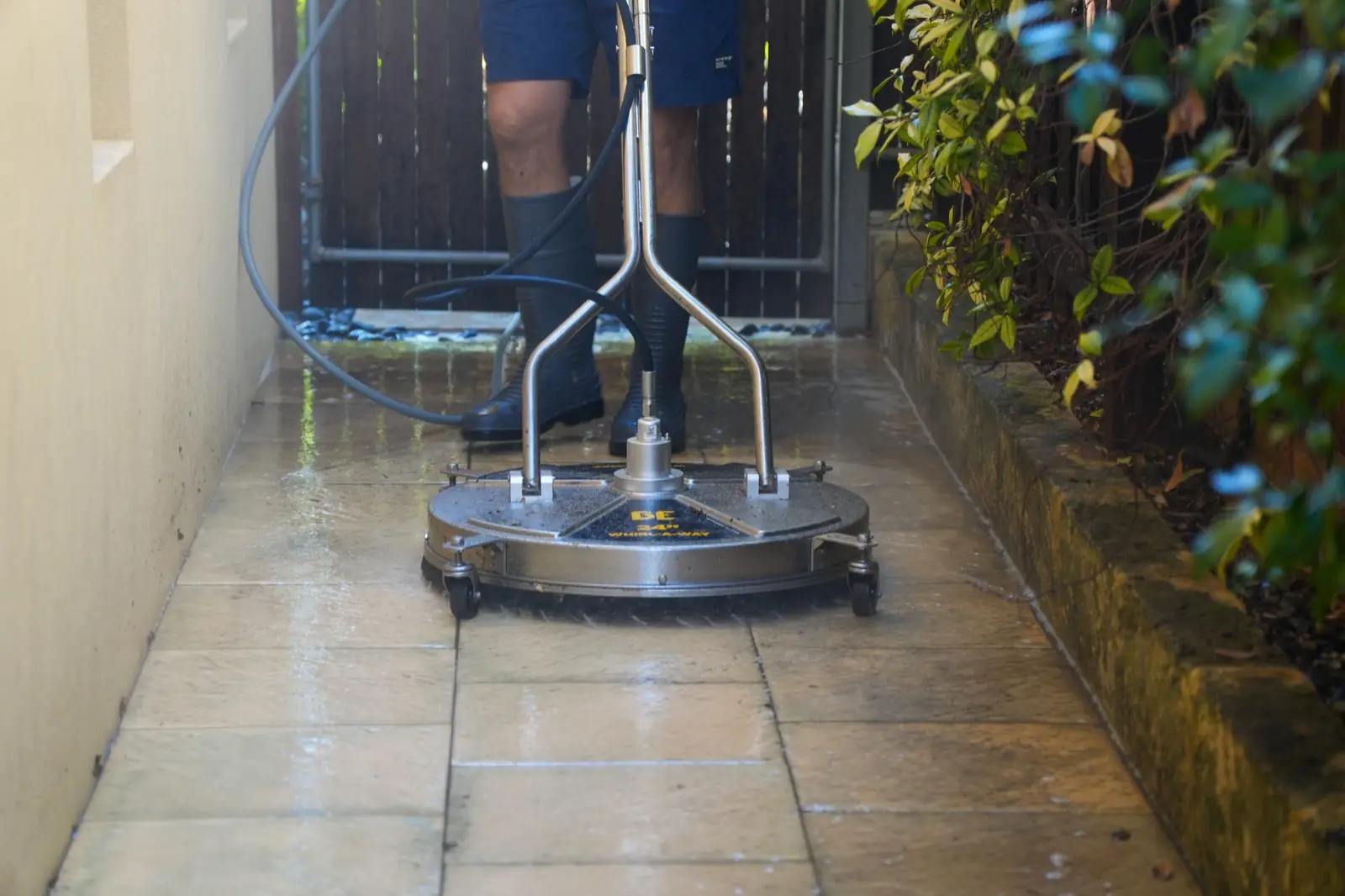
We clean driveways, patios, paths, pavement and concrete right across Perth, and you see the result the same day. A wide 860mm surface cleaner is walked evenly across the slab for a controlled, even finish, not a lance blasting away at it, with every stain matched to the right treatment first, edges detailed and your plants and surrounds protected. No hot water needed. Send a few photos of your driveway for a free, no-obligation quote. WA-owned, fully insured, and a damage-free approach on every surface, from plain concrete to soft liquid limestone.
Why it matters in Perth
What Perth does to a driveway.
Perth is hard on hard surfaces in ways a generic pressure wash never accounts for. Bore water rusts them, the soft local stone can't take the pressure most operators use, shaded slabs go green all winter, and the summer sun bakes anything left bare. Cleaning them properly starts with knowing which one you're dealing with.
Bore water rust
Iron in reticulation and bore water oxidises into orange and brown staining on concrete, limestone and render. It's the number one exterior mark we see in Perth.
Soft limestone
Perth's local stone is soft and porous. The high pressure that suits concrete will chew a limestone face open, so it needs a lighter, matched approach.
Winter green and black
Shaded, south-facing and damp slabs stay wet through the wet season, so moss, mould, algae and lichen take hold, and the surface turns slippery.
Summer UV
Perth's 40-degree summer sun degrades unsealed and cheaply sealed surfaces, fading the colour and breaking down a failing acrylic film.
How we do it
Cleaned properly, not just blasted.
A pressure washer at full noise is a blunt instrument. Turned up too high on the wrong surface it drives water under pavers, strips the face and forces spores deeper into the pores. We don't blast everything and hope. We match the method to the surface, which is the same discipline our sealing work runs on.
One even surface-cleaner pass
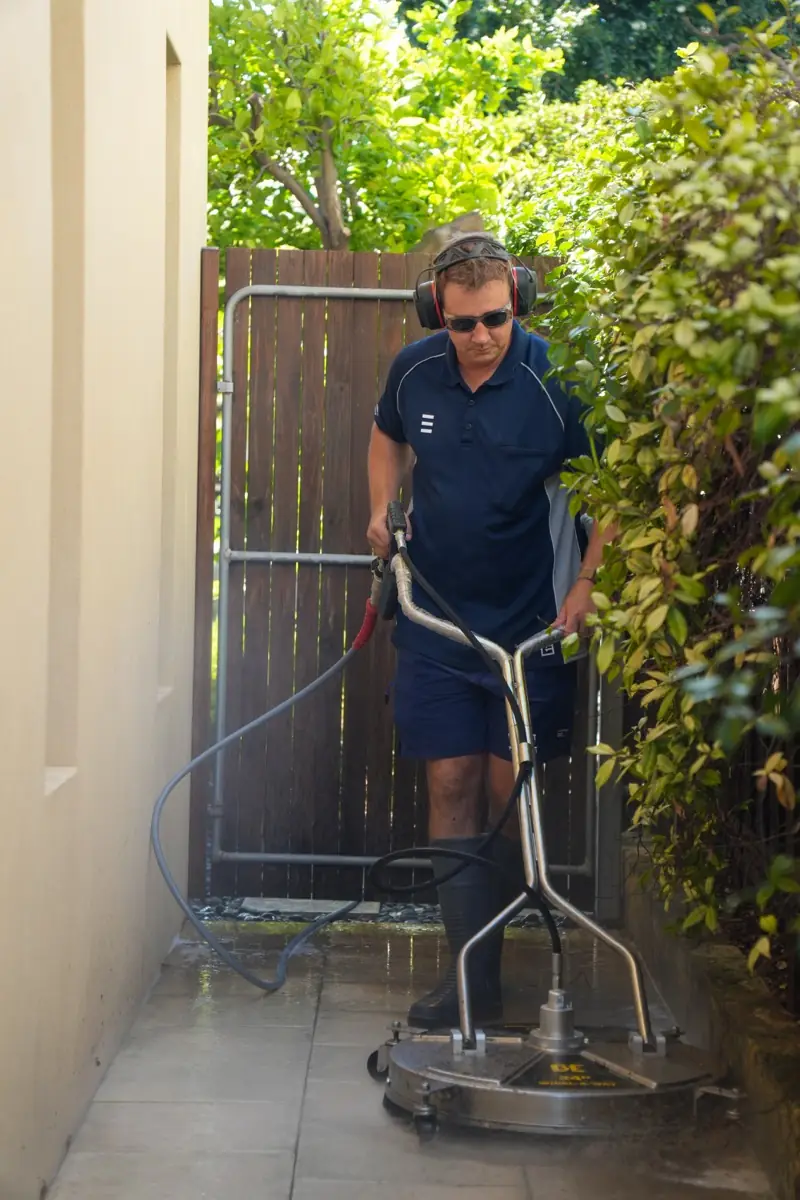
A wide 860mm flat rotary surface cleaner is walked evenly across the whole slab, so concrete and aggregate come up uniform, with no wand stripes, no patchiness and no gouging. No hot water.
Pressure matched to the surface
Controlled on hard concrete, dialled right down to a low-pressure soft wash on soft limestone, travertine and anything delicate. The pressure follows the surface, never the other way around.
Stains treated, not driven in
Oil, rust and organic growth are pre-treated with the matched chemistry and given dwell time to lift, so they release rather than getting spread around and forced deeper by raw pressure.
Will it damage my concrete?
Only if it's over-cleaned. Too much pressure, the wrong nozzle or the lance held too close is what etches concrete, pits the surface and washes the sand out of paver joints, and it's why a cheap blast can leave a driveway looking worse. Correct pressure, the right nozzle, the right distance and an even pass keep it safe. We clean the surface back, we don't carve into it.
Soft washing, where it belongs
On soft, porous and delicate surfaces we soft wash instead of blast: low pressure, a wide fan, and the cleaning done by treatment and dwell time rather than brute force. It clears salt bloom, algae and grime off limestone and travertine without tearing the face, which high-pressure blasting can't do without leaving damage behind.
The process
How a clean runs, start to finish.
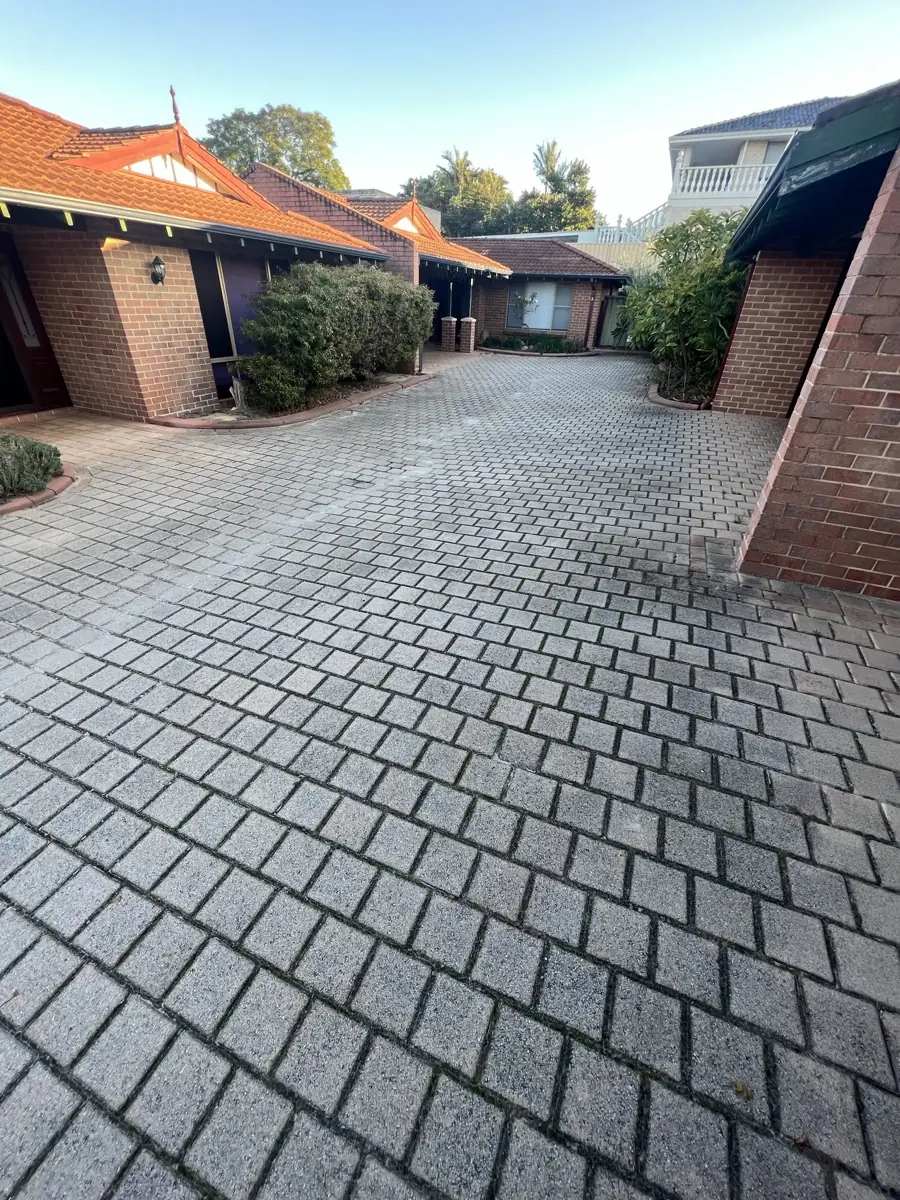
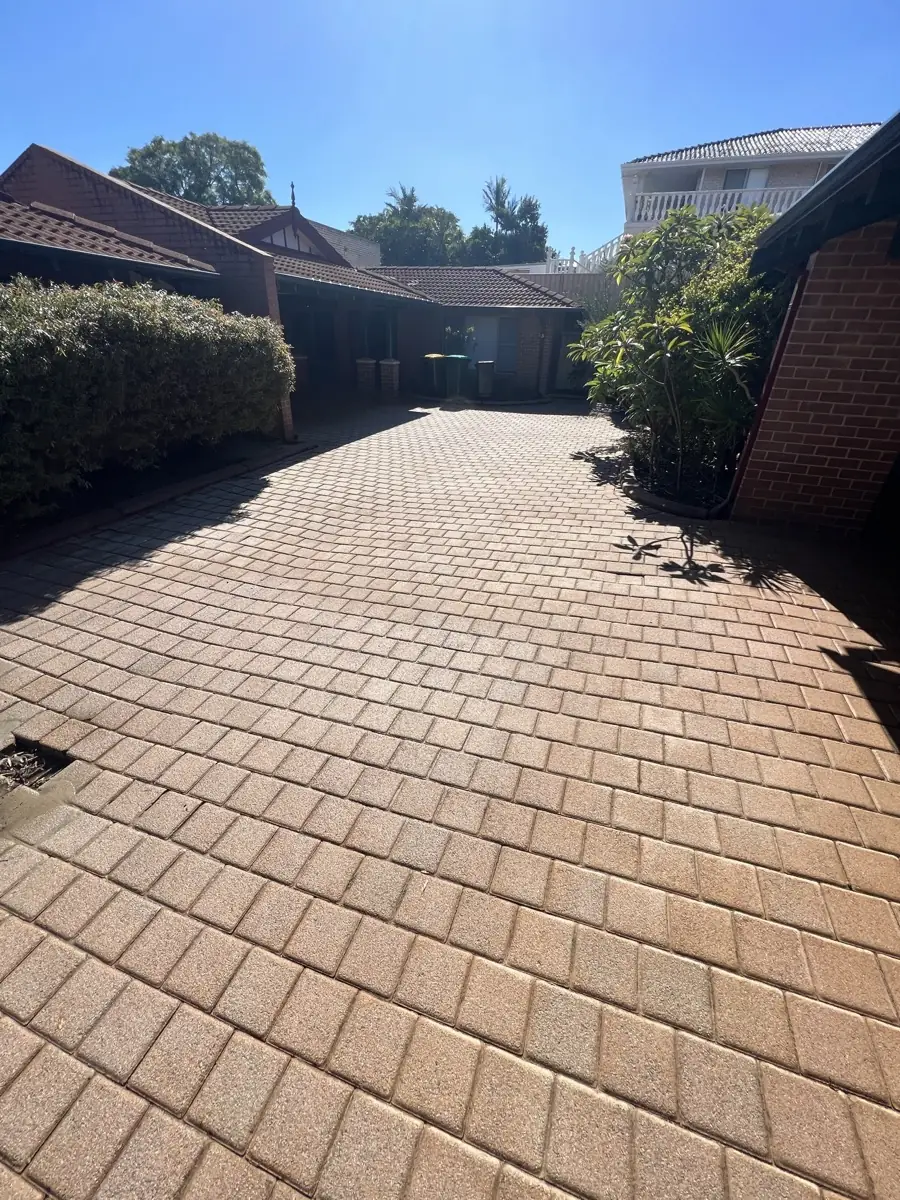
Every job follows the same order, so nothing is rushed and nothing around it gets damaged, and you see the result the same day. It's chemical-considerate throughout, run with biodegradable soaps, and safe for pets, kids, plants and the garden once the area has dried.
Assess the surface
We read the surface, its condition and the staining, then set the method, the pressure and the right cleaning chemistry to suit it.
Protect the surrounds
We wet down and cover the plants, lawn, garden beds and drains before any treatment goes near them.
Pre-treat with sodium hypochlorite
We pre-treat the surface with sodium hypochlorite to break down the moss, mould, algae and organic staining before the surface cleaner ever touches it.
Match the chemistry to the stain
The right cleaner for the mark: alkaline for oil and grease, acidic for mineral, iron and efflorescence, enzymatic for organic staining, all run with biodegradable soaps.
The 860mm surface-cleaner pass
A wide 860mm flat rotary surface cleaner is walked evenly across the whole area for a controlled, even finish. No hot water, no blasting, just a uniform pass at ambient temperature.
Detail the edges
We hand-clean the borders, joints and tight spots the machine can't reach, so there's no dirty frame left around a clean slab.
Rinse it all down
The surface and the surrounding plants and paths are flushed clean so nothing is left sitting.
Biocide post-treatment
Once it's clean we apply a biocide as a post-treatment that keeps killing the moss, mould, lichen and algae to slow the regrowth.
Let it dry
The surface dries for 24 to 48 hours before any sealing, and new concrete is left to cure before its first seal.
Then protect it
While it's clean and prepped is the ideal moment to seal it with MineralProtect, so the result lasts. This step is optional.
Every surface, the right way
From plain concrete to soft limestone.
The technique changes with the surface. Each of these is cleaned to the standard sealing demands, and each links through to how we protect it once it's clean.
Plain & broom concrete
Standard driveways, paths and slabs. The 860mm surface cleaner brings the colour back evenly, no wand stripes. How we seal concrete
Exposed aggregate
Cleaned without dislodging the stones. Matched pressure and a surface cleaner clear the grime without gouging the matrix. How we seal aggregate
Brick & clay pavers
Cleaned and, where the joints have washed out or greened up, re-sanded so the pavers lock up again. How we seal pavers
Liquid & natural limestone
Soft washed at low pressure so the soft face isn't chewed. Salt bloom, algae and grime lifted, not blasted. How we seal limestone
Travertine & natural stone
Gentle, matched cleaning that clears grime from the pores and joints without etching or dulling the stone. How we seal stone
Paths, patios & pool surrounds
Patio cleaning and pavement washing for the whole hard-surface area around the home, cleaned to the same standard and safe around the pool. How we seal pool paving
Every stain
The marks Perth leaves behind.
Different stains need different treatment. Blasting them all the same just spreads oil and drives growth deeper. We match the treatment to the stain, and we'll tell you honestly up front what will clear fully and what will only lighten.
Oil & grease
An alkaline degreaser draws the oil up out of the pores, given dwell time, then lifted off with the surface cleaner rather than smeared around.
Tyre marks & rubber
Pre-treated to soften the rubber, then lifted off with the surface cleaner, where a plain pass on its own only polishes them.
Moss, mould, algae & lichen
Pre-treated with sodium hypochlorite and washed away, then a biocide post-treatment that kills the moss, mould, algae and lichen and slows the return. It's organic, so a light scheduled clean keeps it clearer for longer.
Bore water & rust
An acidic, iron-dissolving treatment draws the stain out, then a controlled surface-cleaner pass finishes it. A hose alone only lightens it and leaves ghosting.
Old paint & spills
Spot-treated and cleaned back where the surface allows, assessed at the quote so you know what to expect.
Efflorescence
An acidic treatment clears the white, powdery salt bloom off the face, common on limestone and pavers drawing salt up from behind.
Timing
Clean any time.
Cleaning isn't weather-dependent. We clean driveways and concrete right through the year, so if it's gone green over winter or you want it fresh before summer, there's no wrong time to book the clean itself.
Seal in the window
Seal in mild, dry weather.
Sealing is the part that wants the right conditions. Late spring and autumn are ideal. We avoid sealing in 40-degree summer heat, which makes the coating flash off too fast and bubble, and over a wet winter surface, which traps moisture underneath. New concrete cures for about 28 days before its first seal.
Why your last sealer failed
A clean lasts a month. The right seal lasts years.
Here's the honest part most operators won't tell you: a clean makes a bare driveway look new for about a month, then the open pores start pulling in the next round of oil, rust and grime. What you seal it with afterwards is what decides whether that fresh look holds, or whether you're back to square one.
The standard clean-and-seal
Most Perth operators finish with a solvent-based acrylic sealer. It lays a film on top of the surface instead of bonding into it, so under Perth's UV and trapped moisture it clouds, blushes milky white, flakes and peels. Then it has to be stripped and redone every few years, a recurring cost you didn't sign up for.
MineralProtect
The other way. A penetrating sol-gel, the one and only sol-gel coating in Australia, that bonds into the surface rather than sitting on top. There's no film to peel or go milky, it stays breathable and UV stable, and it's registered under a 10-year guarantee, not stripped and resold to you every few years.
Now protect it
While it's clean, protect it.
A bare surface starts re-staining the day it's clean. The clean is the wedge, not the finish: it strips the driveway back and preps it, and that's the ideal moment to seal it so it stays that way. MineralProtect is our water-based, penetrating sol-gel for porous concrete, aggregate, pavers and limestone. It re-engineers the surface so water, oil and salt stay on top and wash off, and it's registered under a 10-year guarantee.
Across Perth
Where we clean and seal.
We clean and seal driveways across Perth and the wider metro, including Joondalup, Canning Vale, Rockingham, Baldivis, Fremantle, Midland, Mandurah and Yanchep. See the full Perth service area, or browse the rest of our work below.
Driveway & concrete sealing
The money page: how we protect concrete and aggregate after the clean. Seal your driveway
Limestone sealing
Keeping soft liquid and natural limestone from going white, flaky and green. Seal your limestone
Paver sealing
Locked joints, resisted stains, colour held. Brick, clay and concrete pavers. Seal your pavers
All our cleaning
Every surface we clean across Perth, and how the clean leads into the seal. Browse cleaning
The Performance Guarantee
What the 10-year sealing guarantee covers, and how it sits over your ACL rights. Read the guarantee
All surfaces we seal
Stone, pavers, concrete, driveways and glass, done properly. Browse surfaces
Questions
Driveway cleaning, answered.
How much does driveway cleaning cost in Perth?
Driveway cleaning in Perth is quoted per job, not off a fixed rate, because the price depends on the surface, the size and how much staining is in it. A tidy plain concrete driveway is quick, while heavy oil, bore water rust or thick moss takes pre-treatment and more time. Send a few photos and your suburb and we will give you a clear, no-obligation price before any work starts, with nothing added on the day.
Do you do patio and pavement cleaning as well as driveways?
Yes. Patio cleaning and pavement washing are the same controlled work we do on driveways. A wide 860mm surface cleaner is walked evenly across patios, paths, alfresco paving and pavement for a clean, even finish, and soft limestone or delicate pavers are dropped down to a low-pressure soft wash. No hot water, and nothing is gouged.
Will pressure cleaning damage my concrete driveway or exposed aggregate?
Not when it is done properly. Damage happens when a surface is over-cleaned: too much pressure, the wrong nozzle, or the lance held too close etches concrete, pits the surface and washes the sand out of paver joints. We match the pressure, nozzle and distance to the surface and use a wide 860mm flat rotary surface cleaner for an even finish, so exposed aggregate is cleaned without dislodging the stones. We clean it back, we do not carve into it.
Do you use hot water or high pressure to clean driveways?
No hot water, and we don't blast. We clean at ambient temperature with a wide 860mm flat rotary surface cleaner walked evenly across the slab, so the finish is controlled and even rather than gouged. It is still pressure-fed, just matched to the surface and never turned into a lance chewing at the concrete, and delicate surfaces like limestone are dropped right down to a low-pressure soft wash.
Is it safe to clean liquid limestone and natural limestone, and what pressure do you use?
Limestone is soft and porous, so high-pressure blasting will chew the surface, open it up and leave it worse than before. We drop right down and soft wash it instead: a low-pressure, wide-fan approach with the cleaning done by dwell time and technique rather than brute force. That lifts the salt bloom, algae and grime off liquid and natural limestone without tearing the face, and leaves it sound and ready to protect.
How do you remove oil, grease and tyre marks from a driveway?
Oil and grease sit down in the pores, so blasting alone just spreads them and drives them deeper. We pre-treat the marks with an alkaline degreaser, give it dwell time to draw the oil up, then lift it off with the surface cleaner under matched, controlled pressure, no hot water needed. Older, set-in stains can shadow slightly because they have soaked deep into the concrete, and we will always tell you honestly what will clear fully and what will only lighten before we start.
Can you remove bore water and rust (iron) staining, and will it come back?
Bore and reticulation water carries iron that oxidises on concrete, limestone and render as an orange or brown rust stain, and it is the number one exterior marking we see in Perth. A hose and a scrub will only lighten it and leave ghosting. We use a purpose iron-dissolving treatment to draw the stain out, then finish with controlled pressure. If your reticulation keeps throwing bore water over the same spot the staining can return, so we will also point out where adjusting the sprinklers, and sealing the surface, keeps it clearer for longer.
Why has my driveway gone green or black over winter?
Shaded, south-facing and damp slabs stay wet through Perth's wet winter, and that is exactly what moss, mould, algae and lichen need to take hold, which is why they show up on the cold side of the house and under trees. It also makes the surface slippery. We pre-treat it with sodium hypochlorite and wash the growth away, then apply a biocide post-treatment that kills the moss, mould, algae and lichen and slows its return. It is organic, so it can come back over time, and a light scheduled clean keeps it clearer for longer.
How often should I have my driveway cleaned?
For most Perth driveways about once a year keeps on top of the grime, moss and general build-up before it sets in, and shaded or south-facing areas that green up over winter often suit a clean each spring. A sealed surface stays cleaner between visits because dirt and stains sit on top instead of soaking in, so you are cleaning less often and the job is easier when you do.
Should I seal the driveway after cleaning, and is it worth it?
A clean makes a bare driveway look new for about a month, then the pores are wide open again and it starts pulling in the next round of oil, rust and grime. Sealing is what makes the result last: it closes the surface so water, stains and salt stay on top and wash off instead of soaking in. Cleaning is the preparation, the seal is the protection, and doing both while the surface is clean and prepped is the point at which it makes the most sense.
Why did my old sealer peel, blush or go milky white?
That is the classic failure of a solvent-based acrylic sealer, the standard clean-and-seal most Perth operators apply. It lays a film on top of the surface rather than bonding into it, so under UV and trapped moisture it clouds, blushes milky white, flakes and peels, and then it has to be stripped and redone every few years. MineralProtect is different: a penetrating sol-gel that bonds into the surface, so there is no film to peel or go milky, it stays breathable and UV stable, and it is registered under a 10-year guarantee.
When is the best time of year to clean and seal a driveway in Perth?
You can clean any time of year. Sealing is the part that wants the right weather: mild, dry conditions in late spring or autumn are ideal, because sealing in 40-degree summer heat can make the coating flash off too fast and bubble, and sealing over a wet winter surface traps moisture underneath. New concrete also needs to cure for about 28 days before its first seal. We time the seal to the conditions so it goes down and cures the way it should.
Do you use harsh chemicals, and is it safe for my pets, kids, plants and garden?
We are chemical-considerate. Most of the work is done by the surface cleaner, matched pressure and technique with biodegradable soaps, and where a treatment is needed for oil, rust or organic growth we use the least aggressive product that will do the job. Before we start we wet down and protect the surrounding plants, lawn and garden beds, and rinse everything down afterwards, so it is safe for your pets, kids and garden once the area has dried.
Are you insured, and do you guarantee the work?
Yes, we are WA-owned and fully insured, and we clean to a damage-free standard: the right method for the surface so your driveway comes up clean without being etched, pitted or stripped. Cleaning itself is quoted per job. Where we go on to seal the surface, that sealing is registered under our 10-year guarantee, which sits on top of your rights under Australian Consumer Law.
Get a quote
Clean it. Then protect it.
Send your suburb, the surface and a few photos of the driveway, marks and all. We'll confirm the right method and a clear, no-obligation price before we book you in, and show you what sealing it afterwards would take so it stays clean for years, not weeks.