
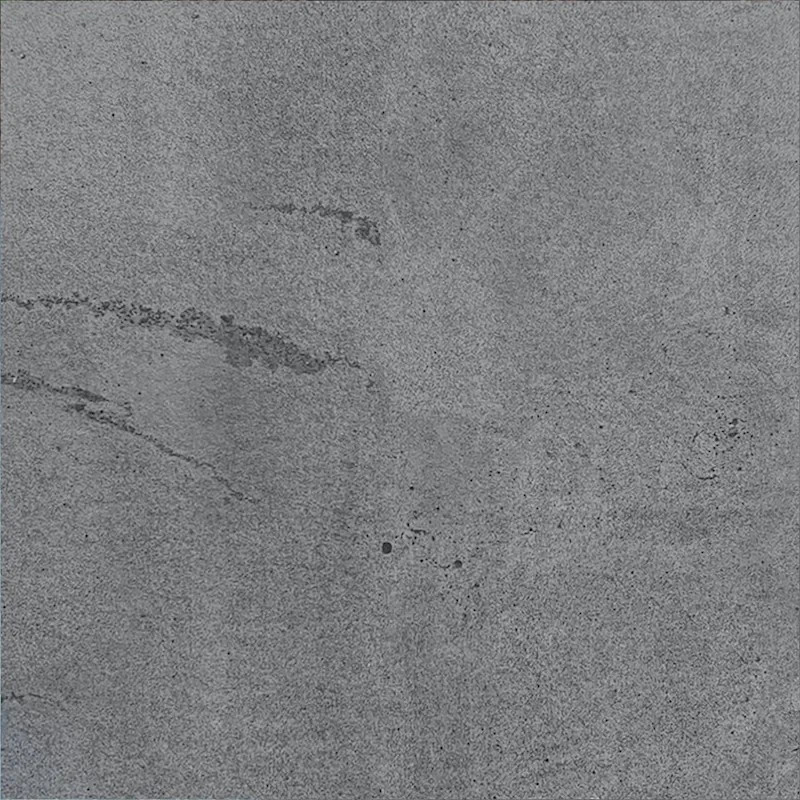
Sealing bluestone & basalt · Perth
Keep the blue in your bluestone.
This is the one and only next-generation sol-gel surface coating in Australia, and nothing else works quite like it. On bluestone and basalt it bonds into the stone itself, so water marks, white bloom and oil have far less to grip, and the deep natural colour you chose stays exactly as it is.
What actually happens to bluestone
A hard stone with a thirsty surface.
People assume basalt is so dense nothing can touch it. It is hard underfoot, but the face is open-grained and it drinks. That is why bluestone coping and paving looks patchy after rain, throws a pale bloom near pools and reticulation, and holds onto oil. Here is what we see on Perth jobs, and why the usual seal does not fix it.
The blotch
Water marks and rain patches
Bare bluestone wets unevenly and dries in dark and light patches, so a shower of rain or a splash off the pool leaves it looking blotchy for hours. It is the surface soaking up water at different rates, not dirt, and no amount of scrubbing settles it.
The bloom
The white chalky film
Salt and lime carried up by moisture, from reticulation, pool splash and coastal air, dries as a pale film on the face. Seal it under a film and that salt crystallises beneath the surface instead, and the pressure flakes the stone. The stone needs to breathe, not be smothered.
The stain
Oil, sunscreen and barbecue marks
The open grain that drinks water drinks oil faster. Sunscreen and body oil off the pool, a dropped snag off the barbecue, a dribble from a planter box: on bare bluestone these soak straight in and set as a dark mark you cannot wash out.
And the usual fix makes it worse. An enhancer sealer darkens bluestone to a wet look most people never asked for, and it does not wash back off. A film sits on top, then peels and yellows under hot coping. A pore sealer fails from inside within a year or two in WA sun. All three miss where the wear actually happens: at the surface.
How our coating protects bluestone
It bonds into the stone. It does not sit on top.
Basalt is a silicate stone, which means its surface carries the reactive chemistry our coating is built to grab. MineralProtect is a colourless mineral sol-gel that cures into an inorganic network right at the face, bonding into the surface rather than laying a film over it or hiding down a pore.
Bonds in, not on
On a silicate stone like basalt the coating anchors into the surface itself and cures as a thin inorganic network. There is no film sitting on top to peel, chalk or yellow, and nothing to strip back when it is eventually due for a top-up.
Protects where the use is
Everything that marks bluestone, rain, cleaning, oil, pool salt and foot traffic, acts at the surface. That is exactly where the coating sits, so it meets those loads head on. A pore sealer builds its protection millimetres down, out of reach of how the stone is actually used.
And it still breathes
Because it works at the surface instead of plugging the pores, moisture can still escape. That is the whole answer to the white bloom: salt keeps moving out and clears off the face, instead of being trapped under a film where it crystallises and flakes the stone from behind.
The real test is how you use it
Built to survive real bluestone life.
A coating on a pool surround is not a lab sample. It gets scrubbed, splashed with pool chemistry, baked by Perth sun and dripped with oil, and every one of those hits the surface. That is exactly where our protection sits, so it meets them where they land. This is the edge a pore sealer cannot have.
Cleaning & abrasion
Survives the scrub and the pressure wash
Bluestone coping and paving gets scrubbed, brushed and pressure washed. Our coating is a dense inorganic network right at the surface, so it keeps working through the cleaning that wears ordinary sealers off. It fades slowly and predictably, and renews with a top-up rather than a strip back to bare stone.
Chemical
Made for cleaning, not just for rain
The bonded inorganic surface stays stable through the routine alkaline cleaners and pool chemistry that maintenance throws at it, the same exposure that hydrolyses a pore sealer and makes it fail from inside the stone. More resistant, not immune: it is stable to real cleaning, never acid-proof.
UV
Perth sun does not yellow it
Sun is what breaks most sealers down. Because our surface is inorganic, it does not yellow or chalk the way an organic film does, and it holds up under the UV that ages other coatings on exposed coping and paving. Far more UV-resistant than a film, though not UV-proof and not permanent.
Oil
Sunscreen and barbecue oil lift off
This is where bluestone owners feel it most. Oil and grease sit on the surface and lift in cleaning instead of soaking into that open grain, so sunscreen off the pool, a barbecue splatter or a planter drip wipes away rather than setting into a dark mark. And it does this PFAS-free, by design.
Proven, not promised
One price, one visit, on the record.
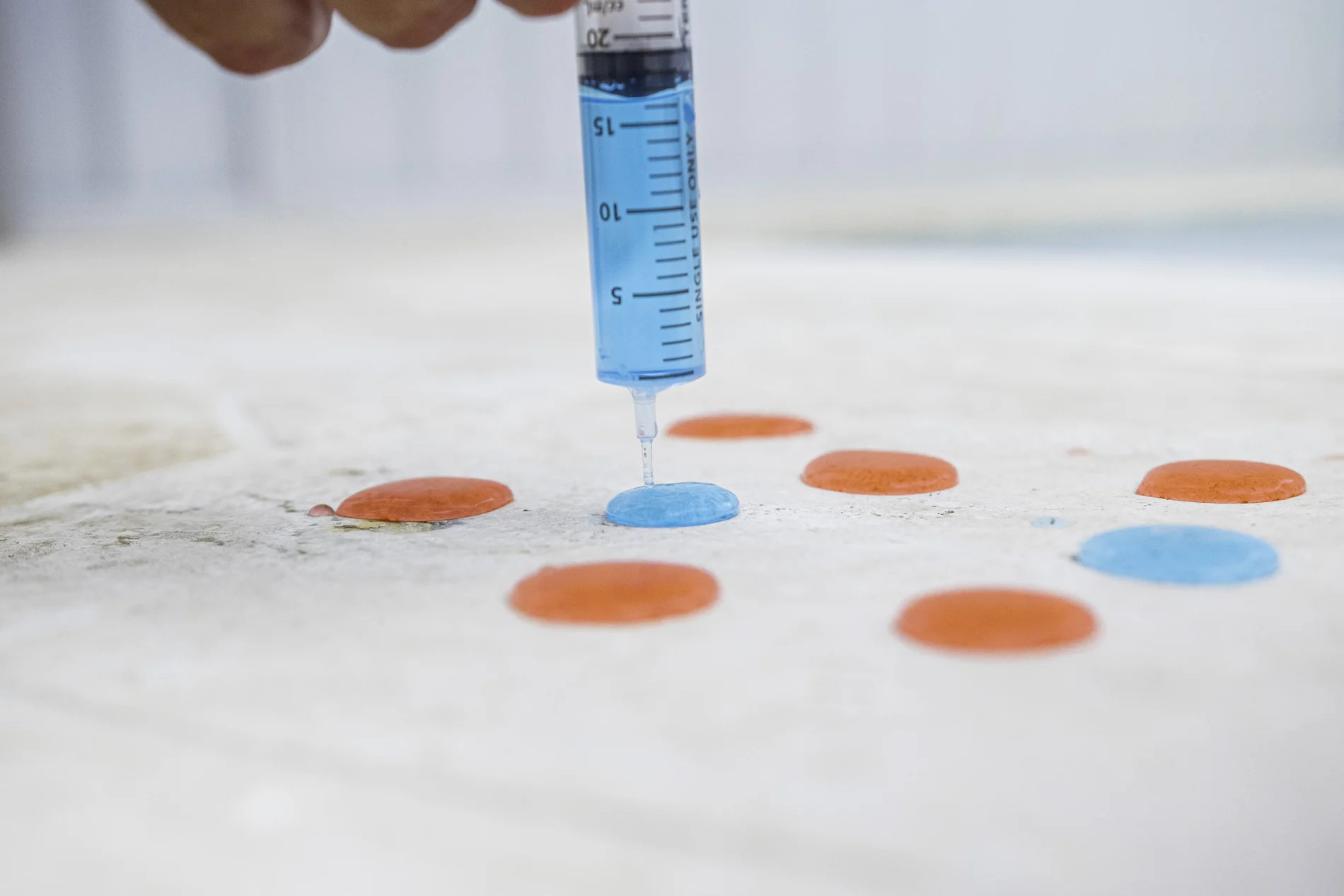
You do not have to take the chemistry on faith. What goes onto your bluestone is water-based, colourless and independently tested, and it is registered under a guarantee before we leave.
- Colourless and breathable. It changes nothing you can see and lets the stone keep releasing moisture, so no darkening and no salt trapped under a film.
- Independently tested. The JUMBOGUARD coatings are tested at independent houses including TÜV Rheinland, SGS, Intertek and under REACH.
- Registered guarantee. Every seal is documented and backed by a 10-year registered guarantee, on top of your Australian Consumer Law rights.
Where we are straight with you
What sealing bluestone will not do.
A good coating earns trust by naming its limits, so here they are plainly. Bluestone is a strong fit for what we do, and it is still a treatment, not magic.
It is not permanent or waterproof
It is a long-lasting, water-repellent treatment that degrades slowly and needs a top-up in time. It makes cleaning far easier and less frequent. It does not remove the need to clean, and a puddle left sitting can still mark.
It will not darken or enhance
It is colourless by design, so it keeps bluestone exactly as it is. If you actually want a permanently darkened, wet-look finish, that is a different product and not what this is. We will tell you that rather than sell you the wrong thing.
It will not fix a moisture source
If bloom is being driven by a leak, poor drainage or reticulation soaking the base, a coating helps the face shed and breathe but it cannot cure the cause. Where that is the real issue, we will say so at the quote.
The questions we actually get asked
Bluestone sealing, answered.
Should you seal bluestone?
Bluestone is a hard basalt, but it is not the closed, glassy surface people assume. It has an open grain that drinks up water, oil and salt, which is why coping goes blotchy after rain and picks up barbecue and sunscreen marks. Sealing changes how the surface behaves, so marks lift instead of setting in. Outdoors in Perth, on pool coping and paving, it is well worth doing.
Why does my bluestone go white or get a chalky bloom?
That pale film is mineral salt carried up out of the stone and the bedding beneath it by moisture, then left on the surface as the water dries. Reticulation, pool splash and coastal air all feed it. A breathable coating lets that moisture keep moving out, so the surface stays far easier to wipe clear, without trapping the salt under a film where it can crystallise and flake the face.
Will sealing darken my bluestone?
No. Our coating is colourless and non-pigmenting, so the deep grey-blue you chose stays exactly as it is: same colour, same matte finish, same feel. If you are chasing a permanently darkened, wet-look bluestone instead, that is a different product and not what this is, and we will tell you that up front.
Does sealing stop water marks on bluestone?
It greatly reduces them. Bare bluestone wets unevenly and dries patchy, which is the blotchy look after rain or a pool splash. Sealed, water beads and sheds instead of soaking in, so the surface dries far more evenly and the dark patches largely go. It is a water-repellent treatment, not a waterproof one, so water left sitting can still leave a faint ring.
How long does sealing bluestone last?
Two clocks, kept separate on purpose. One coat of MineralProtect performs for roughly one to three years depending on how hard the surface is used, and it tops up on clean stone with no stripping back. The guarantee is a 10-year registered guarantee on the sealed system performing as described, and it sits on top of your Australian Consumer Law rights.
How much does it cost to seal bluestone?
$16 per square metre, all in: the full preparation clean, MineralProtect applied by certified applicators, and your registered guarantee. There is a $960 minimum for a job, and you get a confirmed price before you book, never a surprise on the day.
Related stone in the library
Sealing a stone next to your bluestone?
Travertine
The classic Perth pool surround. How we seal it without darkening it. Read the guide →
Limestone (Tamala / natural)
Coastal WA limestone, salt and flaking, and why breathable matters. Read the guide →
Sandstone
Another silicate paver we bond into. Stops it going green and staining. Read the guide →
Granite
Benchtop, cobbles and cladding. The oil and stain resistance edge. Read the guide →
Get a quote
Seal your bluestone once.
We will prepare and seal your bluestone or basalt with MineralProtect, colourless and breathable, registered under a 10-year guarantee. Confirmed price before you book.