
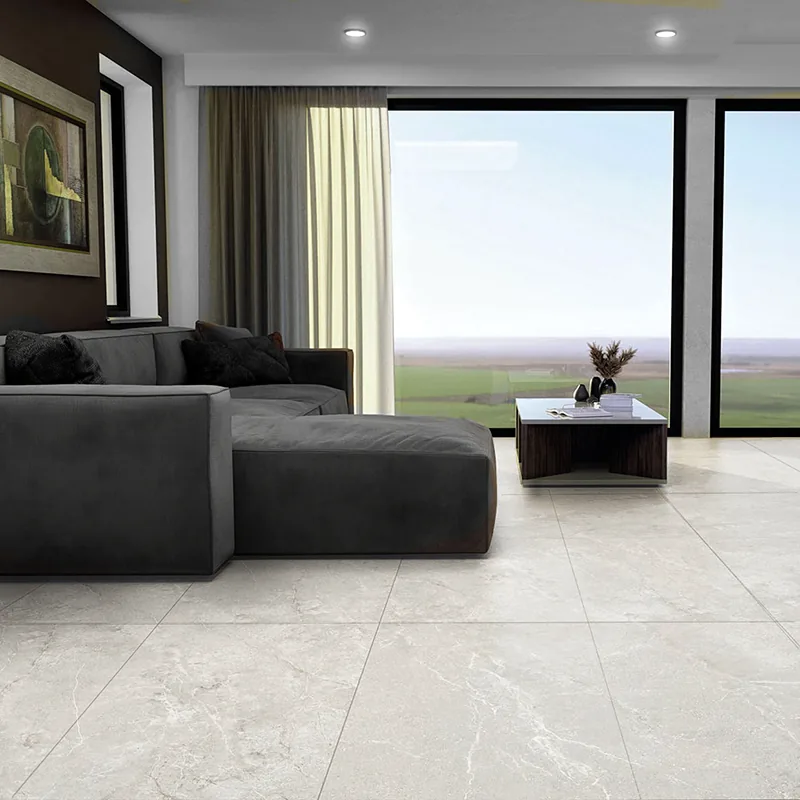
Sealing matte & honed porcelain · Perth
The matte look, without the marks.
Matte and honed porcelain looks superb until it starts holding every footprint, mop streak and greasy shadow. We seal it with GlassProtect, the one and only next-generation sol-gel surface protective coating in Australia, so the marks lift instead of clinging and the finish stays exactly as matte as the day it was laid.
What matte porcelain does after a year
Beautiful finish. Hungry surface.
Matte and honed porcelain is made matte by a fine micro-texture across the surface. That texture is what kills the glare and gives you grip underfoot. It is also thousands of tiny valleys that grab skin oil, mop film and grime, so a floor that looked flawless in the showroom slowly starts to shadow up.
The everyday one
Footprints that won't wipe
Bare feet and body oil leave prints that a quick wipe just smears around. On a matte tile the oil settles into the texture rather than sitting on top, so you end up on your knees with a cloth for something that should take a second.
The frustrating one
Mop film and a grey haze
Mopping a matte floor often makes it look worse. Cleaner residue and dirty water dry into the texture as a dull grey film across the traffic path, the exact area you were trying to freshen up.
The kitchen one
Greasy halos near the bench
Cooking splatter and dropped oil drift onto the floor near the kitchen and living zones. On raw matte porcelain that grease keys straight into the texture and leaves a shadow you can see from across the room.
And the usual seal does not fit it. Porcelain is vitrified, so there is almost no pore for a penetrating sealer to soak into. It hazes or does nothing. A topical film can gloss up the matte finish you deliberately chose, then wears off the traffic lane in patches. Matte porcelain needs a different answer.
How GlassProtect works
It bonds to the surface, not the pores.
Porcelain is fired hard and dense with next to no open pore, so the answer was never to soak something in. GlassProtect condenses a clear, nano-thin layer of inorganic Si-O-Si onto the tile's own vitreous surface and lowers its surface energy, right across the matte micro-texture. Water, oily marks and grime lose their grip and lift in a normal clean.
Bonds in, not on
A clear layer only nanometres thick chemically bonds to the vitreous surface. It is not a film sitting on top that can peel or gloss up your finish, and it is not a haze left in a pore that was never there. It changes the surface energy, nothing you can see.
It wins the fight in the texture
The marks grip in the micro-texture that makes the tile matte. GlassProtect lowers the surface energy across that whole texture, so footprints, mop film and greasy shadows sit on the surface and release when you clean, instead of settling into the valleys.
Stays matte, stays colourless
It is colourless and does not add gloss. The tile keeps the exact matte or honed look you paid for, it just stops holding the marks. And because it is inorganic, Perth sun does not yellow or chalk it the way an organic film ages.
Built for how a floor is actually used
Protection where the wear happens.
A floor is not a lab sample. It gets mopped, scrubbed, walked on in grit, splashed with cleaner and, near a kitchen, hit with grease. Every one of those lands on the surface, which is exactly where GlassProtect sits, so it meets the real use instead of hiding from it.
Cleaning & abrasion
Survives the mopping and traffic
Mopping, scrub pads and daily foot traffic wear ordinary coatings off the walk lane first. GlassProtect is a dense inorganic network right at the surface, built to take that cleaning. On glass it is tested three times more durable than the leading brand and still beading after 3,000 scrub cycles. It fades slowly and predictably, and tops up without stripping.
Chemical
Designed for cleaning, not just water
The inorganic surface stays stable through the routine alkaline floor cleaners and mopping that break organic sealers down from the inside. It is more resistant, not immune, so it is not a licence for neat acid or harsh strippers. But it shrugs off the normal maintenance a floor actually gets.
UV & sun
Holds up in the light
On a sunlit floor, a sunroom or a tiled wall, an organic film yellows and chalks. GlassProtect is inorganic, with no chain for the sun to break down, so it does not discolour the tile and holds up under the UV that ages other coatings. Far more UV-resistant, not UV-proof.
Oil & grease
Lifts the greasy marks
Standard water-repellent treatments do nothing for oil, and oil is what leaves the shadows on a kitchen or living floor. GlassProtect repels oil, not just water, so cooking splatter and body oil lift in a wipe instead of soaking into the texture and setting.
Proven, not promised
It survives the cleaning.
The real test of a floor coating is not the water. It is the mop, the scrub pad and the cream cleanser people reach for. That is what wears sealers out. GlassProtect is built for it, so it keeps working for years, not months.
- Still beading at 3,000 scrub cycles. Around three times slower repellency loss than the leading brand, in comparable cream-cleanser abrasion testing.
- Three times more durable than the leading brand. Tested on glass, the same GlassProtect chemistry we bond to your porcelain.
- Independently tested. Assessed at recognised houses including TÜV Rheinland, SGS, Intertek and REACH.
Where we are straight with you
What sealing matte porcelain will not do.
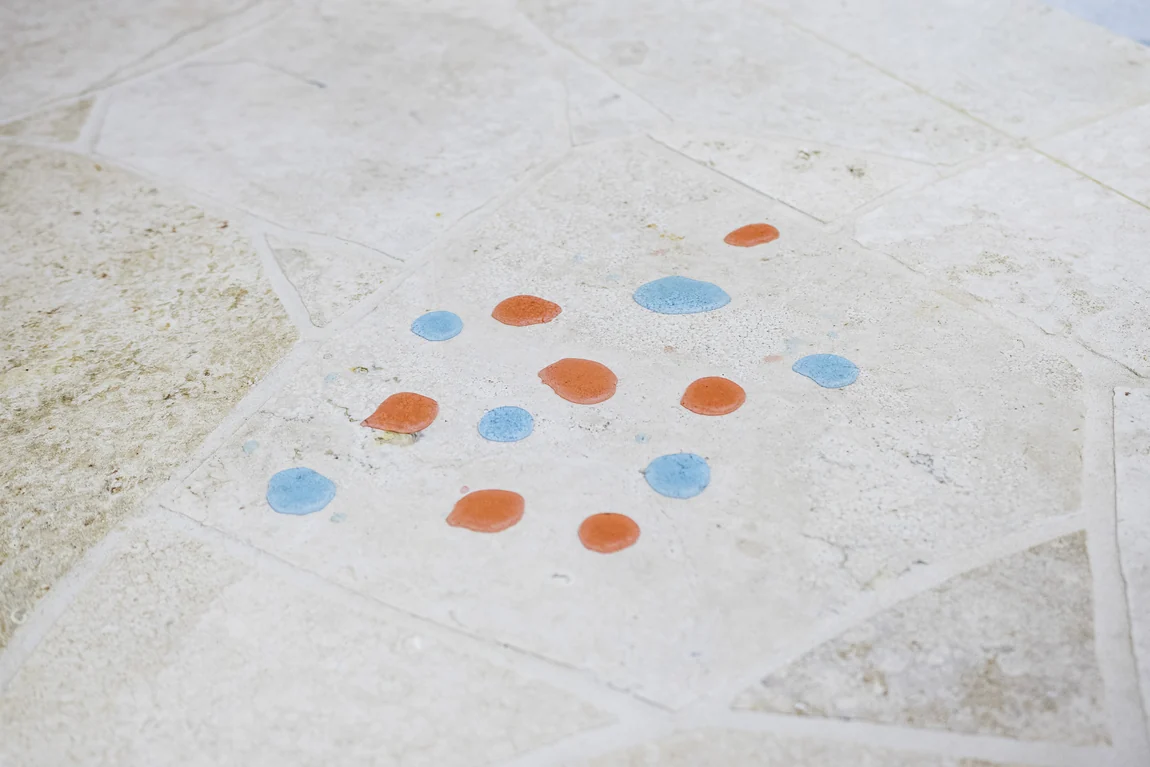
We would rather tell you the limits up front than have you find them later. Sealing matte porcelain is a strong result, and here is exactly what it is and is not.
It is still a matte texture
It will not turn into a wipe-and-forget gloss tile. It makes the marks lift and cuts the cleaning right down, but a busy matte floor will still want a proper clean now and then. Just far less of a fight than before.
Beading fades before protection
The beading you can see wears back before the coating does. When water stops beading, treat it as a prompt to re-test and top up, not proof the protection has failed.
Long-lasting, not permanent
It is a treatment that degrades slowly and predictably, and tops up without stripping when it is due. It is on the record too: every Extera seal is registered under a 10-year guarantee.
Straight answers
Matte porcelain, answered.
Will sealing make my matte porcelain shiny?
No. GlassProtect is colourless and does not add gloss. It bonds a nano-thin layer to the vitreous surface and changes only the surface energy, so your tile keeps the exact matte or honed finish you chose it for. It simply stops holding the marks.
Why does my matte floor mark so easily?
The finish is made matte by a fine micro-texture on the surface. That texture kills the glare and adds grip, but it is also thousands of tiny valleys that grab skin oil, mop film and grime. That is why footprints and greasy shadows show up and will not simply wipe away.
Can you seal porcelain if it is very dense and barely porous?
Yes, and that density is exactly why GlassProtect is the right tool. Porcelain is vitrified, so there is next to no pore to soak a sealer into. GlassProtect bonds to the glassy surface itself rather than needing pores, which is the same way it works on glass.
Will sealing stop my floor needing cleaning?
No, and we will not pretend it does. It makes cleaning far faster and less frequent. Footprints, mop film and grease lift in a normal clean instead of setting into the texture, so you spend a lot less time fighting the floor.
Does it work on porcelain walls and splashbacks too?
Yes. GlassProtect suits matte and honed porcelain on both floors and walls, including feature walls and splashbacks, where it keeps grime and greasy film from gripping the surface.
How long does it last?
It is a long-lasting treatment, not a permanent one. It degrades slowly and predictably and tops up without stripping when it is eventually due. Every Extera seal is registered under a 10-year guarantee.
Related surfaces
More in porcelain.
Different porcelain, different fit. Here is how we grade the ones people ask about most, and where to find the rest.
Glazed porcelain tile
A smooth glazed face is our sweet spot for GlassProtect, easy-clean and lasting clarity. Read the guide
Polished / lappato porcelain
Glossy polished porcelain shows smears and water spots. See how the coating makes them lift in a wipe. Read the guide
Full-body / technical porcelain
Unglazed through-body tile is more open, so the fit is moderate and we say why. Read the guide
Sintered stone / porcelain slab
Large-format slabs and matte benchtops that mark with fingerprints. Read the guide
Not sure which one you have? Browse The Sealing Library to find your exact surface, or get a quote and we will assess it and tell you straight.
Get a quote
Seal it once. Keep the matte.
We will prepare and seal your matte or honed porcelain with GlassProtect, the right coating for a vitrified surface, registered under a 10-year guarantee. Confirmed price before you book.