
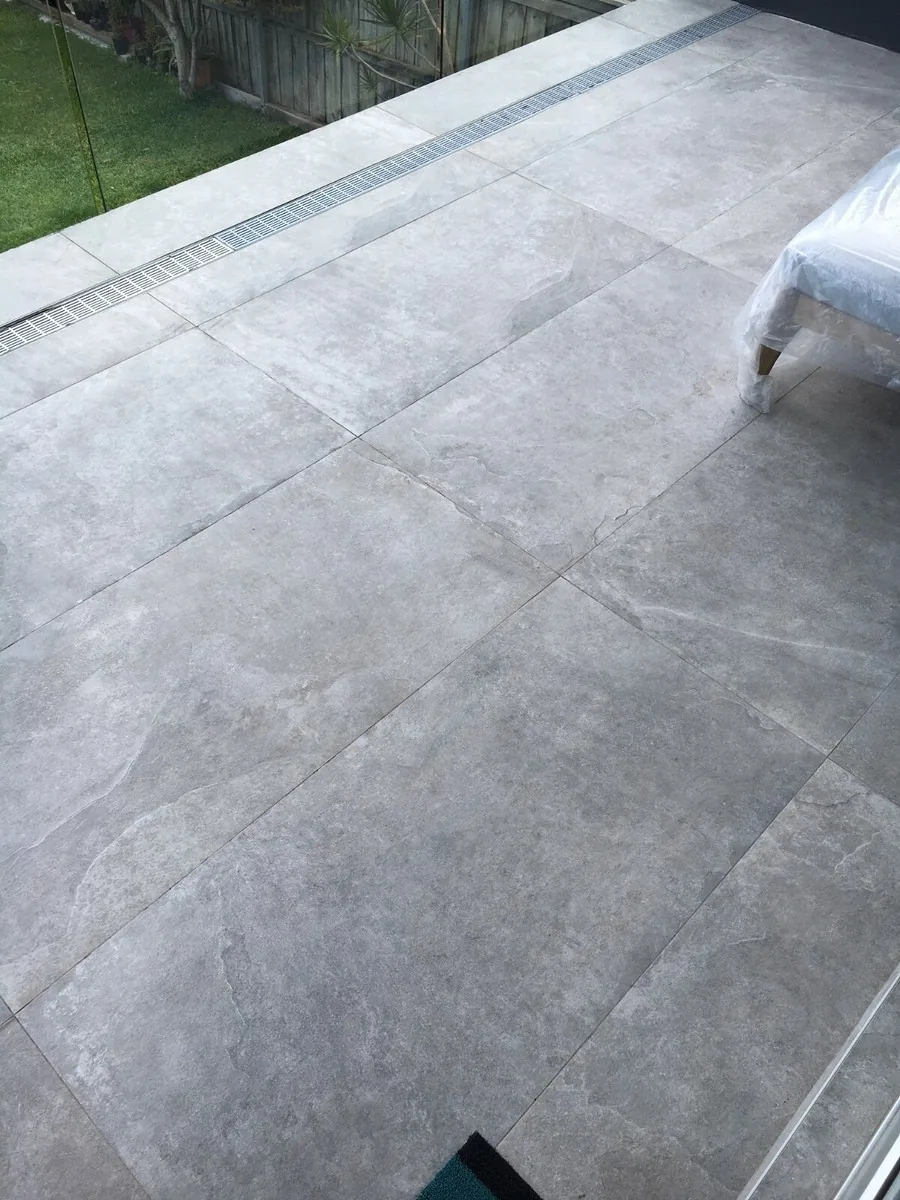
Sealing glazed porcelain · Perth
The self-cleaning coating for glazed porcelain.
Glazed porcelain is one of our sweet spots. We seal it with GlassProtect: the one and only next-generation sol-gel surface protective coating in Australia. It bonds a clear nano layer onto the glaze so water, soap scum, mineral spotting and greasy footmarks can no longer bond to it. Water beads and sheets off instead, so the glaze largely keeps itself clean: rain and a quick rinse do most of the work, and what does land lifts away with a wipe instead of etching in.
The tile that looks indestructible
Glazed, and still hard to keep clean.
People assume glazed porcelain needs nothing. It barely absorbs, so it doesn't stain from below the way stone does. But that isn't why a tiled floor or wall ends up looking tired. The trouble sits on top of the glaze, and no amount of mopping quite lifts it.
On the floor
Footmarks and mop haze
A glazed floor holds a thin greasy film off shoes and bare feet. Mopping smears it around and it dries as a dull haze, so the tile looks grubby an hour after you cleaned it. The more matte the glaze, the more it grips.
On the wall
Soap scum and water spots
On a splashback or a tiled shower wall, Perth's hard water leaves mineral spotting, and left to dry on a bare glaze it bonds on and slowly etches the glassy surface for good. Soap turns to a greasy scum that clings on top. Water alone won't shift either, because the film that fouls the surface is oily, not watery.
Everywhere
The cleaning never ends
Because the glaze lets grime, scum and minerals key straight onto it, keeping the tile looking right becomes a constant chore of cream cleanser and hard work. That is the real cost, and it is the exact thing a low-energy surface fixes.
The point most people miss: glazed porcelain doesn't have an absorption problem. It has a surface-energy problem. Everything that makes it look dirty is sitting on the glaze, waiting to be released or waiting to be cleaned off by hand.
How GlassProtect works on the glaze
A clear layer bonded to the glaze.
A porcelain glaze is a vitrified, glassy surface. Like glass, it carries reactive silanol groups, and that is what GlassProtect is built to grip. It condenses a clear Si-O-Si nano layer, around 75 to 100 nanometres, right onto the glaze, and drops the surface energy so contamination can no longer bond and key in.
Bonds onto the glaze, not on top of it
The coating chemically condenses to the glaze's own silanols as it cures. It isn't a film laid over the tile that can peel or cloud. There is nothing sitting on top to lift, so the finish doesn't haze or cloud.
Lowers the surface energy
Water sheets and beads off with far less dwell, so fewer minerals are left behind, and the ones that do land no longer key in. On a bare glaze, hard water scale bonds on and eventually etches the glassy surface for good. On a coated glaze it sits loosely and rinses or wipes off before it can attack, where on bare glass that same scale bonds on and etches in for good. By keeping mineral water from dwelling long enough to attack, GlassProtect resists and delays that etching. The oily soap scum that a water-repellent-only surface can't shed gets released too, so it wipes instead of clinging.
Colourless, so it changes nothing you can see
It is optically clear at around 99 percent, so the colour, the pattern and the finish of the tile stay exactly as they are. The only difference is that the surface now sheds what used to stick.
Where the edge really lives
Built for how a tile is actually used.
A floor gets mopped, scrubbed and walked on every day. A wall gets hit with detergent, hard water and greasy soap. The protection has to live at the surface, where all of that happens. That is exactly where GlassProtect sits, and it is why it keeps working long after a spray-on repellent has worn away.
Cleaning & abrasion
Survives the mop and the scrub pad
This is the load that wears most coatings off. GlassProtect is tested 3× more durable than the leading brand, and it is still beading around 100 degrees after 3,000 cream-cleanser scrub cycles, where a spray-on repellent is gone within a month. When it does eventually ease back, it renews with a top-up, no stripping.
Chemical
Stable through real cleaning
The bonded inorganic surface stays stable through the alkaline floor detergents and bathroom cleaners of ordinary maintenance. It is more resistant than an organic coating, not immune, so we tell you plainly not to leave a strong cleaner pooled on it to dry.
UV
Doesn't yellow in the light
On an alfresco floor or a big north-facing window of tile, sun is what ages a coating. GlassProtect is inorganic, so it doesn't yellow or chalk the way an organic film does. It holds up under the UV that clouds lesser treatments, far more UV-resistant, though never UV-proof.
Oil & grease
Lifts the greasy film, not just water
The film that dulls a glazed floor and clouds a tiled shower is oily: skin oils, cooking splatter, soap scum. A water-repellent-only surface still gets wetted by it. GlassProtect repels oil as well, so that film sits on top and lifts in cleaning instead of clinging to the glaze.
The whole wedge in one line: we protect the surface where the surface is used. A spray-on repellent that wears off in a wash never gets the chance to.
Proven, not promised
Still beading after the scrubbing.
The real test of a tile coating isn't the day it goes on. It is whether it survives the cream cleanser and the scrub pad people attack a floor and a shower with. That is what wears a coating out, and it is exactly what GlassProtect is built for.
- 3× more durable than the leading brand. Around 3× slower repellency loss in comparable cream-cleanser abrasion testing.
- Still beading at 3,000 scrub cycles. Retaining roughly a 100-degree water contact angle where many coatings wipe off within a month.
- Independently tested. At recognised houses including TÜV Rheinland, SGS, Intertek and REACH, and registered under a 10-year guarantee on the coating's repellency function.
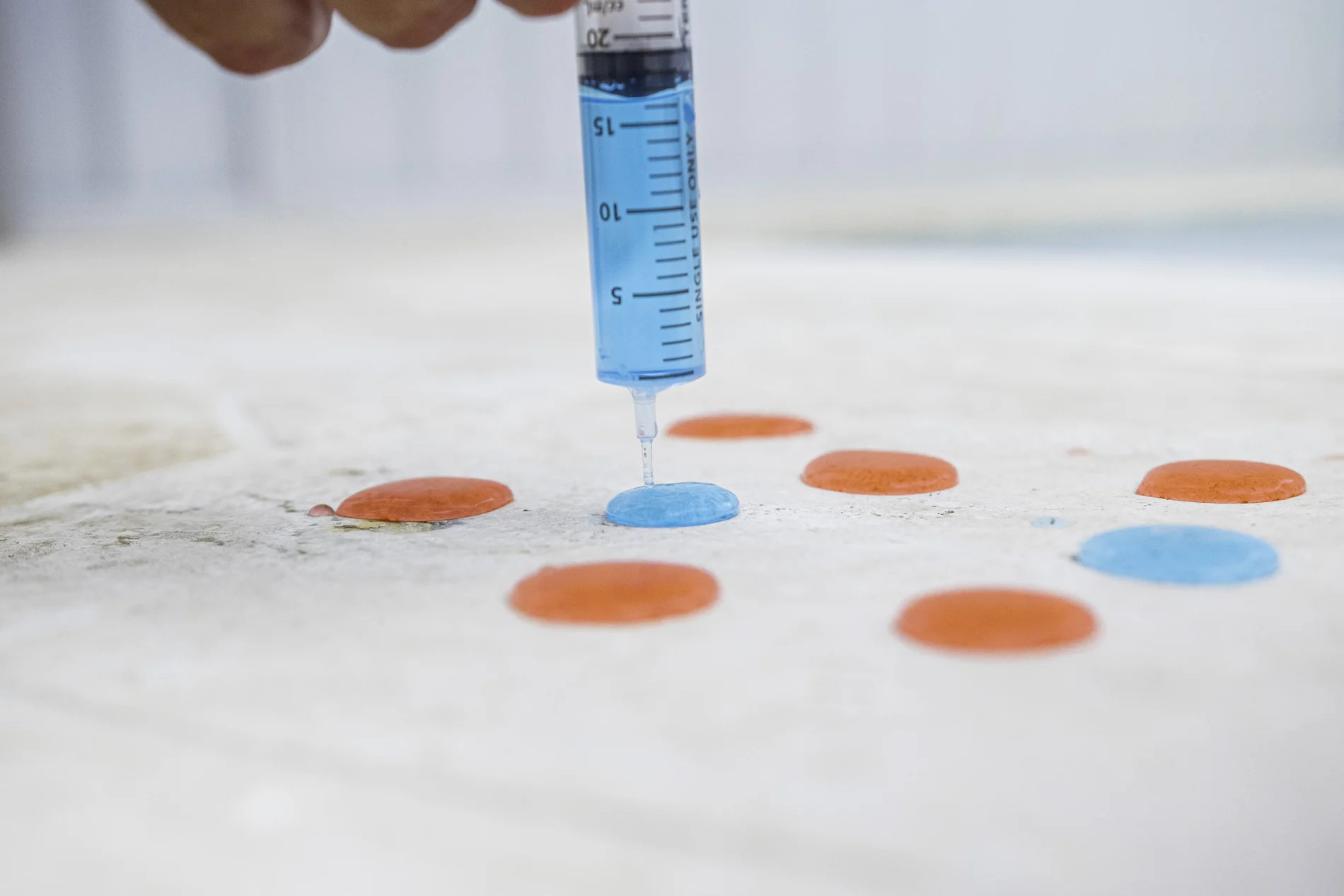
The honest limits
What it does, and what it doesn't.
We would rather you knew the edges up front. A coating that keeps a tile clean is a genuinely good thing; it just isn't magic, and anyone telling you otherwise is overselling.
It isn't armour
It changes surface energy, not hardness. It resists and delays the hard-water etching that permanently ruins bare glass, but it won't make a tile scratch-proof, and dragging grit or furniture across a floor still marks the glaze. It is a self-cleaning coating, not a shield you can feel.
Beading fades before protection does
The visible bead is the first thing to ease off, and it fades faster than the shed-and-wipe performance underneath. When the water stops beading, that is your cue to have us re-test, not proof it has failed.
The grout is a separate job
Grout lines are cementitious and porous, so they take our MineralProtect coating, not the glass-family one that goes on the tile. We assess both at the quote and seal the surface as one system.
Long-lasting, not permanent
It is a treatment that degrades slowly and predictably and tops up over time. The hard part is done: it turns keeping the tile clear from hard work with cream cleanser into a quick rinse or wipe, and water beads and sheets off so the glaze largely keeps itself clean between times. It is genuinely easier to keep clean, never effortless.
Common questions
Glazed porcelain, answered.
Does glazed porcelain tile even need sealing?
Not in the way porous stone does. The glaze barely absorbs, so it isn't about stopping stains soaking in. It is about the surface energy: footmarks, soap scum, mineral spotting and greasy film all grip the glaze and make it look dirty. GlassProtect lowers that surface energy so they can no longer bond and key in, and the tile clears with a quick wipe instead of hard work.
Why does my glazed porcelain floor still look grubby right after I mop it?
Because the film fouling it is oily, not watery. A glazed surface has enough surface energy that a thin greasy layer off shoes and feet, plus mopping residue, clings to it and dries as a dull haze. Water and a mop just move it around. GlassProtect lets that film lift instead of smear, so the floor dries clear.
Will it change the colour or finish of my tiles?
No. It is a clear nano layer, roughly 75 to 100 nanometres thick and optically clear at around 99 percent. The colour, the pattern and the finish stay exactly as they are. The only change is that water, scum and minerals no longer grip.
How long does it last on a floor that gets used every day?
It is a long-lasting treatment, not a permanent one. GlassProtect is tested 3× more durable than the leading brand and is still beading after 3,000 cream-cleanser scrub cycles, and when it eventually eases back it renews with a top-up rather than a strip. Every job is registered under a 10-year guarantee on the coating's repellency function, which sits on top of your rights under Australian Consumer Law.
Does sealed porcelain still need any upkeep?
Yes, and that is the honest promise. The hard part is done: minerals and soap scum can no longer bond to the glaze, so keeping it clear goes from hard work with cream cleanser to a quick rinse or wipe. Water beads and sheets off, so the glaze largely keeps itself clean: outdoors, rain and a quick rinse do most of the work. Constant hard, bore or reticulation water left to dry can still leave spots, on any surface on earth, but on a coated glaze those minerals sit loosely and rinse or wipe off, where on bare glaze they bond on and etch in for good. It is genuinely easier to keep clean, never effortless.
Is it slippery once it's coated?
It is a nano-thin surface treatment, not a film build, so it doesn't change the feel of the tile underfoot the way a topical coating can. We don't make a slip rating claim either way; if the floor is a wet area, tell us at the quote and we'll walk you through what to expect.
Can you seal the grout as well?
Yes, and we usually should. Grout is cementitious, a porous mineral, so it takes our MineralProtect coating rather than the GlassProtect that goes on the tile. We assess both at the quote and seal the floor or wall as a single system, so the grout lines stop going dark too.
Keep reading
Related surfaces & the science.
Go deeper
The science of sealing glazed porcelain
The chemistry in full: the silanol bond to the glaze, the four resistances with their honest bounds, the head-to-head versus spray-on repellents, and the test standards. Read the technical version
Same family
Polished / lappato porcelain
A polished porcelain face shows every smear and fingerprint. How GlassProtect keeps it clear. Read the guide
Same family
Matte / honed porcelain
The matte finish that grips grime hardest of all, and what a low-energy surface does for it. Read the guide
Same family
Full-body / technical porcelain
Unglazed, through-body porcelain: a less vitreous face, an honest limit we'll walk you through. Read the guide
Same family
Sintered stone / porcelain slab
Large-format porcelain benchtops and the fingerprint-and-smear problem on a matte slab. Read the guide
Same family
Vitreous enamel
Fired glass-on-metal, from baths to cladding panels. A glazed surface with its own care notes.
Read the guideBrowse everything
The Sealing Library
Every common hard surface in WA, graded by how well our coatings protect it. Find your surface
Get a quote
Seal your porcelain once.
We'll prepare and seal your glazed porcelain, tile and grout, with the right JUMBOGUARD coating for each, registered under a 10-year guarantee. Confirmed price before you book.