
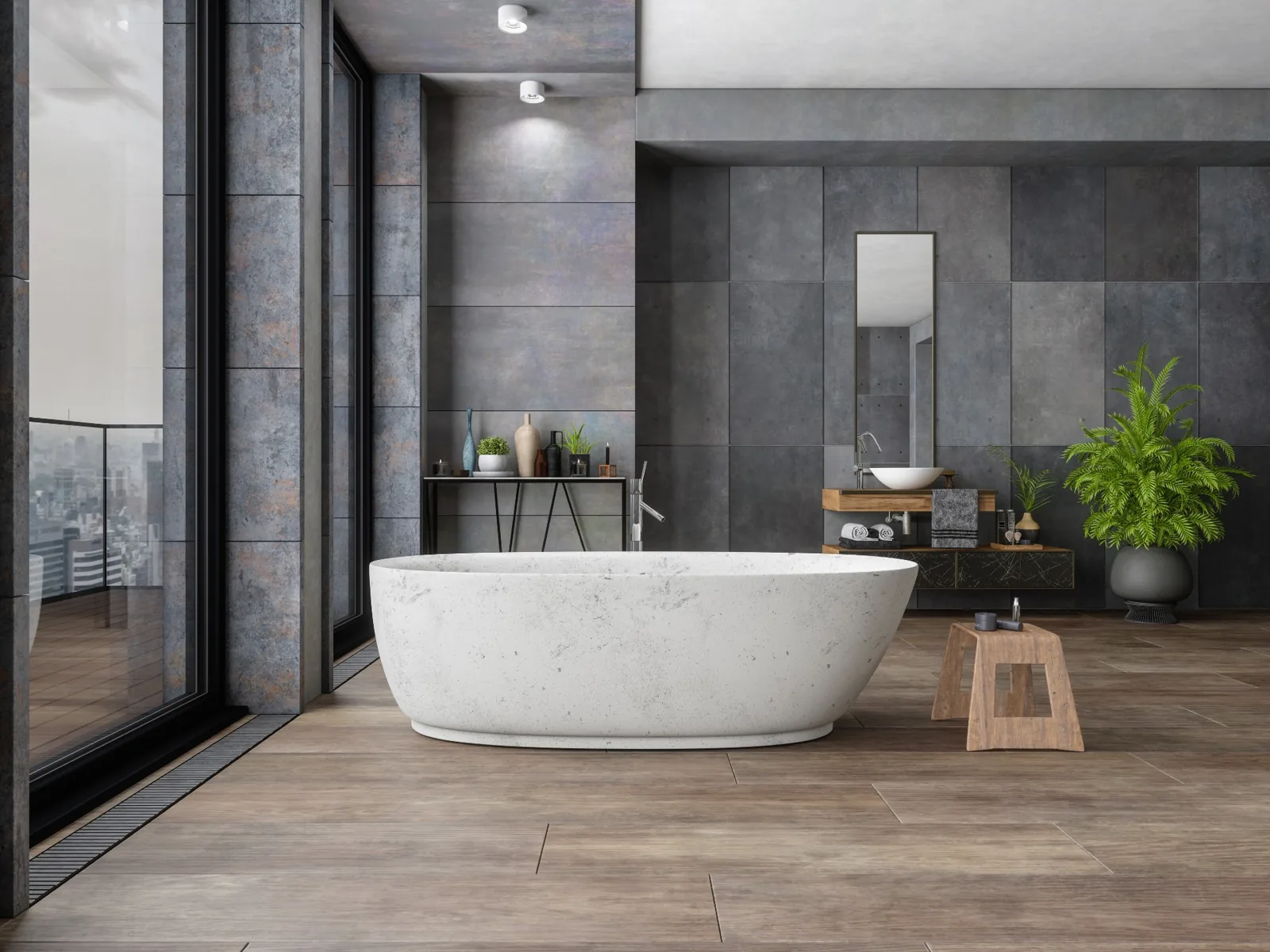
Sealing full-body technical porcelain · Perth
The floor that fights cleaning.
Full-body technical porcelain is about the toughest floor you can lay. But the unglazed, faintly textured face that makes it so hard-wearing is exactly what grabs grease, scuff and mop film and fights every clean. GlassProtect is Australia's one and only next-generation sol-gel surface coating, and on porcelain it lowers the surface energy so grime lifts instead of keying in. This is a moderate fit, not our slickest surface, and I will tell you where the honest limit sits.
What goes wrong
Bulletproof tile, grubby floor.
People specify full-body technical porcelain because it is dense, frost-proof and wears like iron, and in a busy commercial floor or an outdoor alfresco that matters. The catch is the finish. To pass slip on a wet floor the surface is left unglazed, with a fine micro-texture instead of the glassy skin a glazed tile has. That texture is where the trouble lives.
The daily grind
Soil keys into the texture
Grease from a kitchen, black rubber scuff off shoes and trolley wheels, food, coffee, the general traffic of a commercial floor. The micro-texture that stops you slipping also holds all of it, so the floor looks tired long before it is worn.
The grey film
Mopping just moves it around
On a textured, unglazed surface, dirty mop water dries into a dull grey film in the low points instead of wiping off clean. You mop, it looks worse, so it gets mopped harder, and the film builds. The floor reads as dirty straight after a clean.
The usual fixes fail
A film wears, nothing grips
A topical floor coating lays a film over the texture that clouds and wears through in the traffic lanes, then has to be stripped. And a pore sealer built for stone has nothing to grip on a dense, near-zero-porosity porcelain body. Neither is built for this surface.
How it protects porcelain
It doesn't coat the tile. It bonds in.
Porcelain is a vitrified, glass-rich ceramic. GlassProtect condenses a clear, inorganic nano layer onto that glassy surface and lowers its surface energy, so water, grease and grime lose their grip. It is not a film laid over the top. It bonds into the surface itself, which is why it does not cloud, peel or need stripping the way a floor coating does.
Bonds into the surface, not onto it
A clear inorganic layer chemically bonds to the vitrified porcelain body, so there is nothing sitting on top to wear through, cloud or peel. When it eventually eases back, it renews with a top-up, no strip.
Lowers the surface energy
Grime and grease sit on top and lift in cleaning instead of keying into the micro-texture. Less soil gets a grip in the first place, so a routine clean does far more of the work.
Protects at the surface, where use happens
A floor is scrubbed, buffed and walked on at its face. GlassProtect is inorganic and lives right there, so it holds up through the cleaning and traffic that wear ordinary treatments away.
The real edge
Built for the way a floor is actually used.
A floor in service is not a showroom sample. It is scrubbed, machine-buffed, walked on, hit with cleaning chemicals and marked with grease. Because our protection lives at the surface, it meets all of that where it happens. This is the wedge an ordinary treatment cannot have.
Cleaning and abrasion
Survives the scrubbing
Commercial porcelain gets scrubbed with pads, run over with a machine and walked on all day. GlassProtect is inorganic and sits right at the surface, so it keeps working through the cleaning that wears ordinary treatments off. It fades slowly and predictably, and renews with a top-up rather than a strip.
Chemical
Designed for real cleaning
The bonded inorganic surface stays stable through the routine alkaline cleaners of commercial floor maintenance, the same chemistry that breaks down organic coatings from the day they go on. It is more resistant, not immune, so I keep contact times and strengths sensible.
Oil and grease
Grease lifts, it doesn't set
Cooking grease, food spills and rubber scuff sit on top and lift in cleaning instead of soaking into the texture. On an unglazed floor, that is the difference between a mark that wipes away and one that gets ground in a little deeper every day.
UV and light
Won't yellow or chalk
On a sunlit atrium, shopfront or alfresco floor, an organic film yellows and chalks under UV. GlassProtect is inorganic, so it does not go that way. It is far more UV-resistant than an organic film, not UV-proof, and it stays colourless.
Proven, not promised
The chemistry stands up to the cleaning.
GlassProtect is the same coating chemistry we put on shower and balustrade glass, and it is tested for exactly the kind of repeated cleaning a hard floor gets. That is what tells you it will hold up on a busy porcelain floor rather than wipe off in a month.
- Still beading at 3,000 scrub cycles. Around 3 times slower repellency loss than the leading brand, in comparable cream-cleanser abrasion testing.
- Stable under routine alkaline cleaning. The everyday chemistry of commercial floor maintenance, where organic coatings break down.
- Degrades slowly, not suddenly. No hidden cliff-edge. It eases back toward untreated over time and renews with a top-up, tested at independent houses including TÜV Rheinland, SGS and Intertek.
The honest limit
Where a moderate fit actually sits.
I would rather you booked knowing the truth than felt oversold afterwards. Unglazed technical porcelain is a moderate fit for us, and here is exactly why.
- The texture still holds some soil. On a glazed or polished porcelain, GlassProtect has a smooth, glassy face to work with and the result is slicker. On an unglazed technical tile the micro-texture that stops you slipping still grips a little soil mechanically, so this is easier cleaning, not a floor that cleans itself.
- It is not a slip treatment, and I give it no rating. Because it bonds in rather than laying a film over the texture, it does not smooth the floor the way a topical coating can. But it is not a non-slip product and I will not put a number on slip. If that matters for a commercial space, we test it on the actual tile first.
- Nothing is permanent or stain-proof. This is a long-lasting treatment that fades slowly and needs a top-up in time. The beading you can see will ease before the protection is spent, which is normal, and it renews without stripping.
Straight answers
Technical porcelain, questioned.
Can you seal unglazed, full-body technical porcelain?
Yes. GlassProtect bonds a clear nano layer into the vitrified porcelain body and lowers the surface energy so grime, grease and scuff lift more easily instead of keying into the texture. It is a moderate fit on unglazed technical porcelain rather than our slickest surface, because the same micro-texture that gives the floor its grip still holds some soil mechanically. I will tell you where that line sits before you book.
Why does my technical porcelain floor still look dirty after mopping?
Unglazed technical porcelain has a fine micro-texture, often chosen for slip resistance underfoot. That texture grabs grease, black scuff and the grey film mopping leaves behind, so the floor can read as dirty even straight after a clean. Lowering the surface energy means less of that soil gets a grip in the first place, so cleaning does more with less effort.
Will sealing make the floor slippery?
I never give it a slip rating and it is not a non-slip treatment. Because the coating bonds in at the surface rather than laying a film over the texture, it does not smooth the floor the way a topical coating can. If slip resistance matters for a commercial space, that is a conversation to have on the specific tile before any coating goes down.
Does it change the colour or finish of the porcelain?
No. GlassProtect is colourless and non-pigmenting. Same colour, same matte or textured finish, same feel. The only change is that water, grease and grime stop gripping the surface so easily.
How long does it last, and is it guaranteed?
It is a long-lasting treatment, not a permanent one. It fades slowly and predictably rather than failing all at once, and it renews with a top-up rather than a strip. Every Extera job is registered under a 10-year guarantee through Certified Applicators.
Is this just a coating that sits on top of the tile?
No. A film sits on top of the surface, and in traffic lanes it wears through, clouds and eventually has to be stripped. GlassProtect bonds into the vitrified surface itself as an inorganic layer, so there is nothing sitting on top to peel, and it renews with a top-up.
Keep reading
Other porcelain, sealed.
Not sure which porcelain you have? Browse the full Sealing Library and find your exact surface, graded honestly by material.
Get a quote
Make the floor wipe clean.
We will assess your porcelain, tell you straight where it sits, and seal it with GlassProtect under a 10-year registered guarantee. Confirmed price before you book.