
Sealing GRC and GFRC · Perth
Protect the panel, not just the look.
JUMBOGUARD is the one and only next-generation sol-gel surface coating in Australia, and GRC is exactly the material it was built for. Because a glass-reinforced concrete panel is cement-based, the coating bonds into the panel itself: colourless, breathable, and built to shed dirt and survive the weather for years, not a single season.
The problem with a bare panel
Why a GRC facade goes grubby.
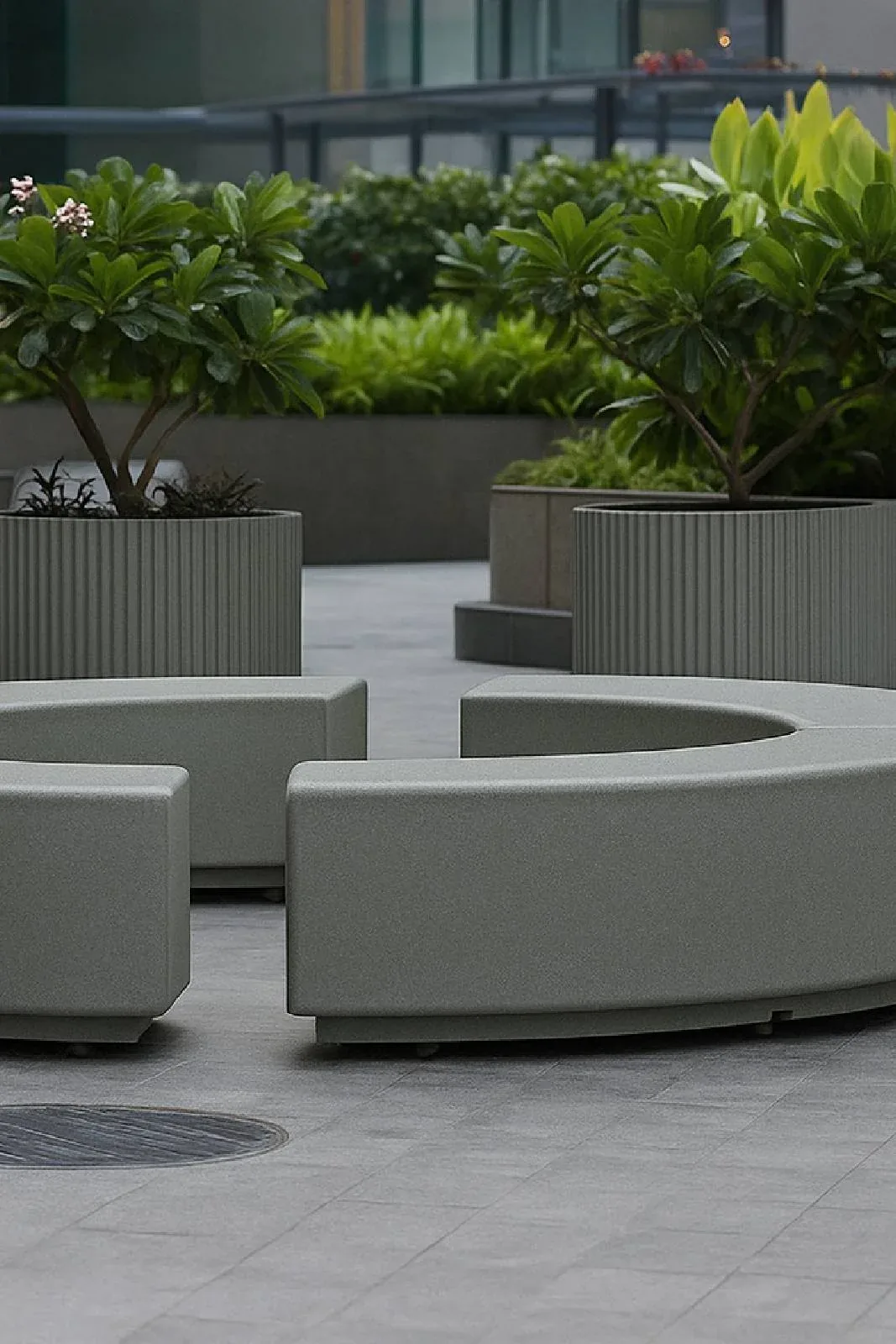
GRC and GFRC make a beautiful, lightweight facade. But it is still concrete: a fine, porous, cement-bound surface, sitting outside, taking everything Perth throws at it. Left bare, an architectural panel picks up the weather fast, and the usual fix quietly makes the panel's life harder.
Dirt and streaking
Grime keys into the pores
The fine cement surface grabs airborne dust, road film and carbon. Rain runs down a vertical panel and leaves dark tails and tide marks under every sill and joint. Within a couple of summers a crisp white facade reads dull and blotchy.
Going green and black
Shade plus moisture equals growth
A porous, damp cement face is ideal ground for algae, lichen and mould. On a south wall, a shaded return, or anywhere reticulation overspray keeps it wet, the green and black bloom sets in and locks into the surface where a hose won't shift it.
Efflorescence and film failure
The white bloom, and the peeling seal
Cement salts migrate out as a chalky white haze. And the common answer, a facade paint or acrylic film, chalks and yellows in the sun, then peels. On a thin panel a vapour-blocking film also traps moisture inside, and you can't easily strip it off a whole facade.
How our coating works on GRC
One coating. A different class.
For decades a facade had two ways to be sealed: a film laid on top, or a sealer soaked into the pores. Both wear out in Perth conditions. JUMBOGUARD is a third way. And because GRC is cement-bound, it is the strong case for it: the coating grafts into the panel the same way it does on concrete.
It bonds into the panel
A water-based mineral sol-gel wicks into the cement surface and cures into a nano-thin inorganic silica network, chemically anchored into the panel's cement matrix. It is not a film sitting on top waiting to peel, and it is not a sealer buried in the pores where it fails out of sight.
It stays colourless
The layer is around 90 to 100 nanometres thick and clear. It does not darken the panel, add a gloss, or shift the shade. The finish the architect specified stays exactly as designed, just protected.
And the panel still breathes
Because the protection works at the surface instead of plugging the pores, moisture can still leave the panel. On a thin GRC element that matters: a vapour-blocking film can trap moisture behind itself and damage the face. This protects the surface and lets the panel dry.
Where the edge shows
Built for the weather.
A facade lives its whole life outside, in full sun, and gets cleaned with pressure and chemistry. That is precisely where ordinary seals wear off. Because JUMBOGUARD protects at the surface, exactly where all of that happens, it holds up where the other two break down.
Cleaning and abrasion
Survives the maintenance wash
Facades get pressure-washed and scrubbed. That is what strips a film and wears a soaked-in sealer thin. Our surface network is engineered to stay put through it, and when it is eventually due it tops up on a clean panel with no stripping back to bare concrete first.
Chemical
Stable against cleaners and salt air
Routine alkaline facade cleaners and coastal salt spray break down organic coatings. An inorganic silica network is far more stable against them, so the protection is not quietly hydrolysed off the panel. More resistant, not immune, and we will always tell you the honest limit.
UV
Does not yellow or chalk in the sun
This is the big one on a facade. A west or north wall takes brutal Perth sun all day, and that is what makes an organic film yellow and chalk. Our coating is inorganic, so it does not go that way. Far more UV-resistant than a film, and it stays invisible.
Oil and grime
Dirt sits on top and lifts off
Traffic film, atmospheric carbon and greasy pollution sit on the coating instead of keying into the pores, so rain sheets down and carries the loose dirt with it, and a wash lifts the rest. The facade stays cleaner, longer, and cleaning day is a fraction of the work.
Proven, not promised
Sealed once, on the record.
One confirmed price, the right coating for a cement-based panel, and a seal that is registered rather than just promised. That is what a facade seal should be.
- Concrete-class anchoring. GRC is cement-bound, so the coating grafts into the panel's cement matrix the way it does on concrete. This is the strong case, not a stretch.
- Stable under alkaline cleaners and pressure washing. The exact conditions that hydrolyse and fail ordinary silane and siloxane sealers, invisibly, then all at once.
- Independently tested. The chemistry is verified at independent houses including TÜV Rheinland, SGS and Intertek, and it is PFAS-free by design.
Straight talk
What sealing won't do.
GRC is our sweet spot, and we would still rather you knew the edges before you book. Here is what a seal is not.
- It is not paint, and it does not hide existing damage. A colourless coating protects a sound, clean panel. It will not cover staining that has already crystallised into the surface, so we clean first and, where a panel is past it, we tell you straight.
- It does not remove the moisture that feeds growth. On a permanently shaded, constantly wet wall, sealing slows regrowth and makes cleaning far easier, but the water source is still there. That is a maintenance-and-drainage question as much as a coating one.
- New panels need to finish efflorescing first. The white bloom is cement salt working its way out as the panel cures. Let it run, clean it off, then seal, so the protection goes onto a settled surface.
- The beading fades before the protection does. Water stops sheeting off as dramatically well before the surface stops resisting dirt and cleaning. Beading is the demo, not the guarantee. The guarantee is registered, for 10 years.
The questions we get
GRC sealing, answered.
Can you seal a GRC or GFRC facade?
Yes, and it is one of the surfaces we seal best. GRC and GFRC are glass-reinforced concrete: a cement-bound composite. That means the coating grafts into the panel the same way it does on any concrete, anchoring into the cement matrix rather than just sitting on top.
Will sealing change the colour or finish of the panels?
No. MineralProtect is colourless and cures as a nano-thin layer, so it does not darken the panel, add a gloss or leave a visible film. The architect's specified finish stays as designed, only protected. If you want the panel to look different, that is a coating job, not a seal, and we will say so.
My GRC wall keeps going green. Will sealing stop it?
Sealing makes a real difference, but let's be honest about how. Algae and grime sit on the sealed surface instead of keying into the pores, so growth is slower to take hold and a wash lifts it far more easily. What sealing does not do is remove the moisture that feeds the growth. On a shaded, constantly damp wall you will still clean it, just less often and with a lot less effort. If reticulation overspray or drainage is keeping the wall wet, fixing that is part of the answer too.
Can the panels still breathe after sealing?
Yes, and that is the point. The coating works at the surface instead of plugging the pores, so moisture can still leave the panel. On a thin GRC element this matters: a vapour-blocking film can trap moisture behind itself and damage the face over time. A breathable, surface-only coating protects the panel and lets it dry.
What about efflorescence, the white bloom on new panels?
Efflorescence is cement salt migrating to the surface and crystallising as a new panel cures. The right move is to let that run its course and clean it off, then seal. Sealing a settled, clean panel then slows how readily future bloom and grime take hold. Sealing over active efflorescence just traps the problem.
How long does it last, and is it guaranteed?
It is built to last for years in Perth conditions, and to renew by topping up on a clean panel with no stripping back to bare concrete. Every Extera seal is registered under a 10-year guarantee. The seals in common use are typically redone every year or two out here, which is the real cost of the cheaper option.
Related surfaces
Same family, same chemistry.
Liquid limestone (poured)
Cement-bound and everywhere on Perth alfresco and pool surrounds. Concrete-class anchoring, same as GRC.
Read the guideReconstituted limestone
Cast, cement-bound blocks for retaining and cladding. Anchors into the surface the way concrete does.
Read the guideTerrazzo (cement-bound)
Poured or precast, cement-bound, appearance-critical. Protected and kept colourless the same way.
Read the guideReconstituted / agglomerate stone
Manufactured, cement-bound stone pavers and tiles. Another strong fit for the same coating.
Read the guideSame family
Fibre cement
Fibre-cement cladding and sheet, thirsty at the cut edges. What a breathable coating does for it.
Get a quote
Seal your GRC facade once.
We'll prepare and seal your panels with the right coating for a cement-based facade, registered under a 10-year guarantee. Confirmed price before you book.