
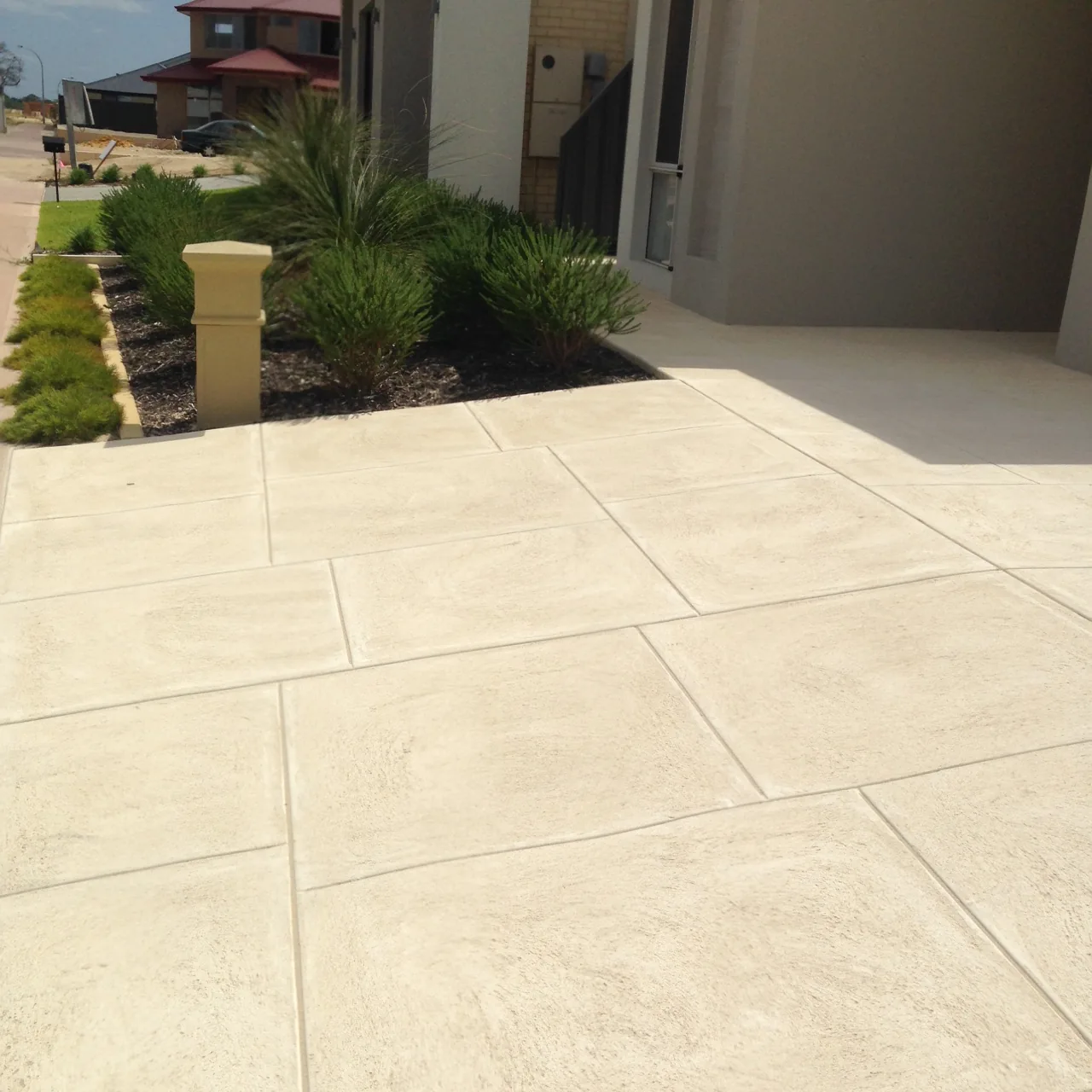
Sealing liquid limestone · Perth
Liquid limestone, sealed to stay pale.
Liquid limestone sealing is our sweet spot. We seal it with JUMBOGUARD, the one and only next-generation sol-gel surface coating in Australia. Because your surround is cement-bound, our coating anchors into it the same way it does on concrete, then holds up in the sun, the pool chemistry and the cleaning that wear ordinary seals off.
What actually goes wrong
Beautiful when it's poured. Then it starts to grey off.
Poured limestone is chosen because it's pale, cool underfoot and seamless. That same pale, open surface is exactly what shows every mark. It's a porous cement surface, so anything wet and dirty that lands on it soaks straight in. In Perth, on a pool surround or an alfresco, that's a lot of things. It is why our limestone sealing in Perth starts with a proper clean, then a breathable seal.
The slow grey
Sunscreen, oil and tannin sink in
Sunscreen off wet feet, barbecue splatter, spilled wine, leaf and jacaranda tannin. On raw limestone they wick into the open surface and set. The clean you used to do lifts the top and leaves the rest behind, and that trapped fraction is the slow greying people shrug off as the stone just ageing.
The driveway marks
Hot tyres and engine oil stain for good
On a poured limestone driveway the surface bakes, then hot tyres lift rubber onto it and the car drips oil into it. Both go into the open pore where cleaning can't reach, so you get the dark tyre arcs and the oil patch that no amount of scrubbing shifts.
The wrong fix
The wet-look seal that blisters
The usual answer is an acrylic wet-look coating. It looks great for a summer, then the Perth sun yellows and chalks it, hot tyres lift it, and because it's a film sealing the surface it can trap moisture and salt underneath and blister the limestone from behind. Then it has to be stripped before you can redo it.
The pattern underneath all three: a seal that sits on top of the surface, or soaks down into the pores, is in the wrong place for how a limestone surround is actually used. The wear, the cleaning and the staining all happen right at the face.
Why our coating fits this surface
It anchors into the surface, where the wear happens.
Here's the part that makes liquid limestone one of our best fits: it's cement-bound. That Portland cement matrix carries the same reactive chemistry as concrete, so our coating grafts into it, not just sitting on top and not hidden down the pores, but anchored into the surface itself.
Anchors in, concrete-class
MineralProtect is a water-based mineral sol-gel. It wicks into the open surface and cures into a dense inorganic Si-O-Si network, keyed into the surface and grafted to the cement the way it bonds to a concrete driveway. There's no film on top to peel and no seal buried down the pore to fail out of reach.
Protects at the surface
The protection lives in the top hundred nanometres, exactly where feet, furniture, tyres, cleaning and spills meet the surface. That's the location an impregnator can't defend, because it builds its repellency millimetres down the pore, below the zone that actually gets used and cleaned.
Colourless, and it still breathes
It's not pigmented and it doesn't wet-look the surface. Same pale colour, same finish. And because it works at the surface instead of plugging the pores, moisture can still escape, so it won't trap salt and blister the limestone the way a film can.
Where the edge shows
Built for the four things that kill a pool surround seal.
A seal on liquid limestone doesn't get tested by rain. It gets tested by the cleaning, the pool chemistry, the sun and the oil. That's where a coating anchored at the surface pulls away from a film or an impregnator. None of this is immunity, and we don't pretend it is. It's a genuinely bigger margin.
Cleaning & abrasion
Survives the traffic and the pressure washer
A pool deck gets walked wet, dragged furniture, and a pressure wash every season. That mechanical load strips the thin working layer off an impregnator and lifts a film. Our network is dense and sits right at the surface, so it takes the wear and, when it's eventually due, tops up over a clean surface with no strip.
Chemical
Stable to pool chemistry and routine cleaners
Splashed chlorinated or salt pool water, and the alkaline cleaners people use on pale stone, break standard silane seals down over a season. Our coating is far more resistant to routine pool chemistry and cleaning. It's more resistant, not immune, so we still say don't leave a strong cleaner pooled to dry.
UV
Won't yellow or chalk in the Perth sun
This is where acrylic wet-look coatings fail first: the sun oxidises the organic film and it goes yellow and chalky. Our backbone is inorganic, so there's no polymer chain for UV to break down. It's far more UV-stable, not UV-proof, and it stays colourless instead of ambering over.
Oil
Sunscreen and barbecue oil lift off the top
On raw limestone, oil and sunscreen soak into the surface and set dark. With the coating they sit up on top where cleaning reaches them, so a spill or a greasy footprint lifts in a normal clean instead of staining. It's an outcome, not a promise of permanent oil resistance, and no fluorine-free coating repels oil forever.
Proven, not promised
The seal, doing its job.
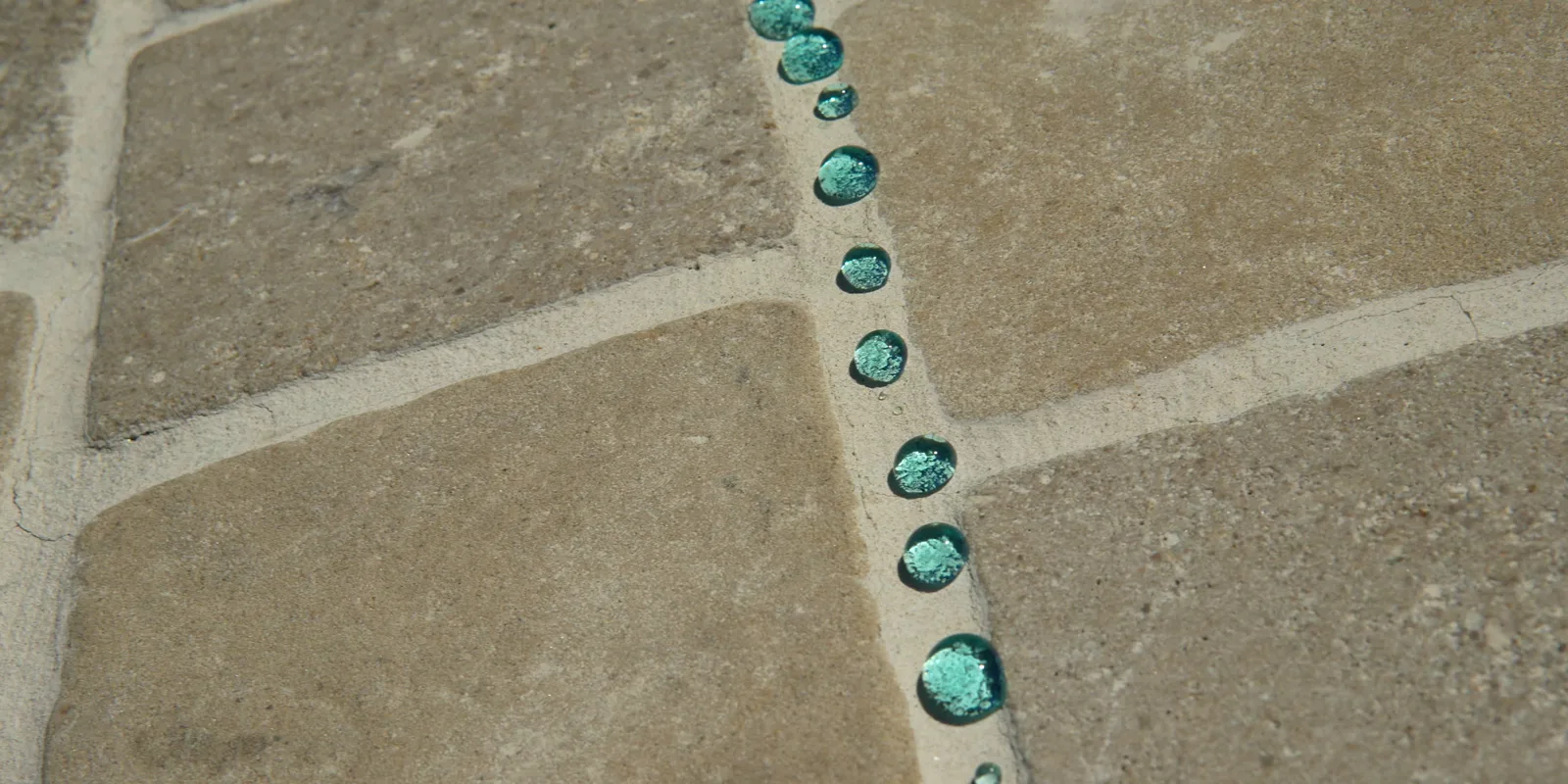
On a sealed liquid limestone surround, water beads and rolls off instead of darkening the surface. That's the surface energy dropped, so oil and dirt don't grip either. One price, all in, and it's on the record.
- Anchors like concrete. Liquid limestone is cement-bound, so our coating grafts into the cement matrix, not just resting on top. It's one of the strongest fits we seal.
- Colourless and breathable. Same pale finish, no wet-look, and the surface keeps breathing so it won't blister the way a film can.
- Registered guarantee. Every job is prepared, sealed to spec and registered under a 10-year JUMBOGUARD guarantee.
The proof is on the surface
Drag to see the seal working.
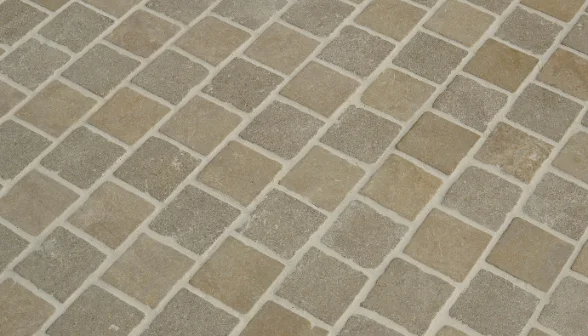
Sealed poured surface, dry and wet. Water beads and sheets off instead of soaking in and darkening the surface. The colour doesn't change, only how the surface behaves.
Where we tell you straight
What sealing liquid limestone can't do.
This is a category full of over-promises, so here's the honest edge of what a coating does. Knowing where the line sits is why you can trust everything on our side of it.
It doesn't stop acid etching
Liquid limestone carries carbonate fines, so neat pool acid, lemon juice or a strong acidic cleaner left to sit will etch the surface. That's the acid dissolving the material itself, and no surface coating stops it. It slows how fast a spill soaks in and buys you time to rinse, that's all.
It doesn't cure a bore-water problem
If your reticulation runs iron-heavy bore water straight onto the surround, minerals still deposit where the water dries. A coating keeps the deposit sitting on top so it cleans off more easily instead of setting in the pore, but the real fix for that is treating the water at the source. We'll say so.
The beading fades before the protection
Water beading is the most visible sign of a fresh coat, and it eases off before the surface protection does. When it stops beading it hasn't failed. The oil-shedding edge does fade first, and we tell you that up front rather than pretend it never wears off.
It isn't maintenance-free
It makes cleaning faster and far less frequent. It doesn't remove the need to clean. A sealed surface you still rinse and sweep stays looking new for years, which is the honest promise, not never touching it again.
Straight answers
Liquid limestone, answered.
Does liquid limestone need sealing?
Yes, if you want it to keep looking the way it did the week it was poured. Liquid limestone is a porous, pale, cement-bound surface, so oil, sunscreen, leaf tannin and dirt soak straight into the open surface and it slowly goes grey and patchy.
A colourless surface coating keeps that contamination sitting on top where cleaning reaches it, and keeps the surface breathing so it doesn't blister the way an acrylic film can.
Can you seal it around a saltwater pool?
Yes, this is one of the most common jobs we do. Our coating is inorganic and breathable, so it doesn't trap moisture and salt under a film the way a wet-look acrylic can, and the inorganic backbone isn't oxidised by chlorine and sun the way an organic film yellows and chalks.
We're honest that no surface coating cures a bore-water salt problem in the ground, but for keeping a pool surround clean and stable it's exactly the right chemistry.
Will sealing it change the colour?
No. MineralProtect is colourless and non-pigmenting. It doesn't wet-look or darken the surface the way an enhancer or acrylic sealer does. The only thing that changes is the surface energy: water, oil and dirt stop gripping. Same colour, same finish, same feel.
Does it stop tyre marks and oil on a driveway?
It changes where they end up. On raw liquid limestone, hot-tyre rubber and engine oil sink into the open surface and mark it for good. With the coating, oil and grease sit on top and lift in cleaning instead of soaking in, so a spill wipes up instead of staining.
It's an outcome, not a force field. Clean it up reasonably soon and it comes away.
How long does it last, and do you strip it to redo it?
It lasts for years rather than the season or two the cheap seals give you in Perth sun, and it degrades slowly by fine surface wear rather than failing all at once. When it's eventually due, it tops up over a clean surface.
There's no failed film to grind back to bare limestone first, which is the step that makes every acrylic re-coat cost more than the last. Every job is registered under a 10-year guarantee.
Can you seal freshly poured limestone straight away?
No, and any operator who says yes is doing you harm. Cement-bound surfaces need to cure, around 28 days, before sealing. Seal it green and you trap moisture and a weak surface skin under the coating and wreck the bond for any chemistry.
We seal it once it has cured and been prepared properly.
Keep reading
Related surfaces & the deep science.
Go deeper
The science of sealing liquid limestone
The full technical read: the cement-matrix anchor, the four resistances with their honest bounds, and the head-to-head against impregnators, films and PFAS coatings. Read the technical guide
Same family
Reconstituted limestone
Cast limestone-look blocks and retaining, also cement-bound. Why it goes black in shade and how the same coating keeps it clean. Read the guide
Cement-bound
Terrazzo
Poured and precast cement-bound terrazzo. Same anchoring, same stain and oil defence, tuned to a polished floor. Read the guide
Cement-bound
GRC / GFRC
Glass-reinforced concrete facade and cladding panels. How the coating protects a cement panel from weathering and grime. Read the guide
Protecting pool surrounds · Reconstituted / agglomerate stone · Back to The Sealing Library
Get a quote
Seal your liquid limestone once.
We'll clean, prepare and seal your poured limestone with the right JUMBOGUARD coating for a cement-bound surface, registered under a 10-year guarantee. Confirmed price before you book.