
Sealing reconstituted stone · Perth
Manufactured stone, sealed by a whole new class.
We seal reconstituted and agglomerate stone with the one and only next-generation sol-gel surface coating in Australia. Nothing else works like it. It doesn't sit on top and it doesn't hide down the pores. It anchors into the surface itself, exactly where your paving gets stained, scrubbed, baked and splashed, and holds up there for years.
What actually goes wrong
The binder is a sponge.
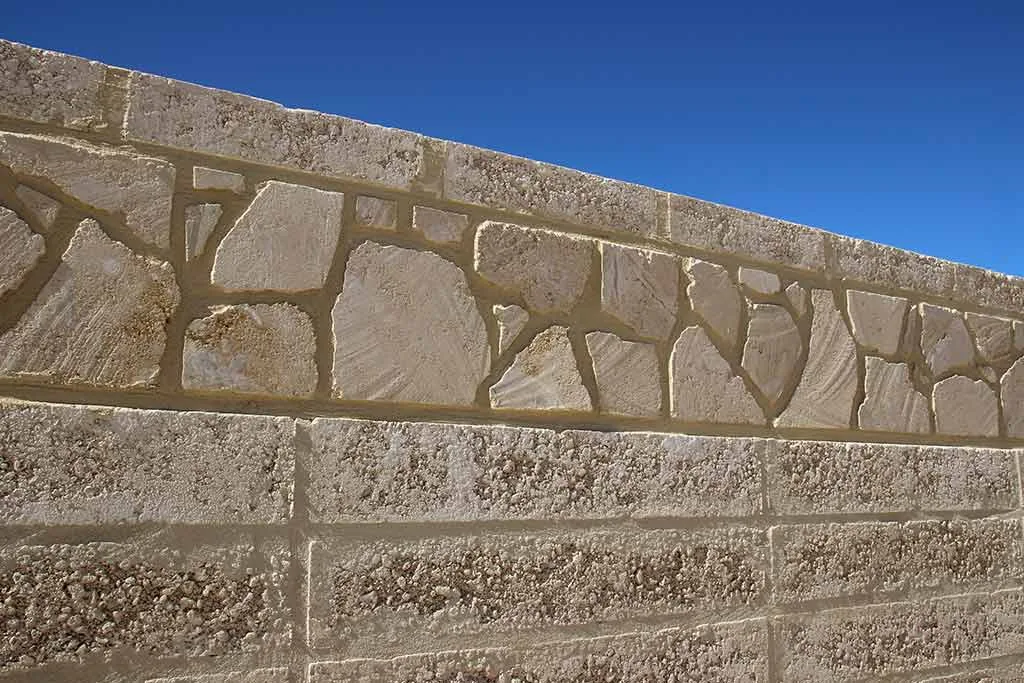
Reconstituted and agglomerate stone is manufactured: real stone chips cast into a cement binder, then pressed or poured into pavers and tiles. It looks solid, but that cement matrix between the chips is porous, and in Perth it takes a beating. Here is what we see on quotes.
It drinks in stains and oil
The cement binder soaks up water, red wine, cooking oil, sunscreen and dropped food like a sponge. On a raw surface a spill sinks in within minutes and sets as a dark mark you can't scrub out, because it's below the surface now, not on it.
It blooms white and goes patchy
Salts and lime wick up through the cement and dry as a white haze on top. That's efflorescence. Add reticulation, pool splash and coastal salt and the surface goes blotchy and uneven, lighter here, darker there, as different areas hold different amounts of water.
It greens up in the shade
A porous surface that stays damp is a garden bed for moss, lichen and black mould, especially on the southern side of the house or under trees. Once it's growing in the pores you're pressure washing it back every season.
And the usual seal doesn't last
Most sealers put on this stone are either a film that eventually whitens and peels, or a penetrating sealer that quietly fails from inside the pore within a year or two under WA sun and cleaning. Either way you're back on the reseal treadmill.
Why us
Not on top. Not in the pore. Anchored in.
The category had two ways to seal, and both are wrong for this surface. We built a third. Because reconstituted stone is held together by a cement binder, our coating grafts into that surface the same way it does on concrete, forming a dense inorganic network right at the face.
It bonds into the cement, not onto it
Our water-based sol-gel wicks into the surface and cures into a nano-thin Si-O-Si network. On a cement-bound surface like this it anchors into the mineral and grafts to the cement binder itself, so there's no film sitting on top to peel and nothing stranded deep in the pore where it can't do any good.
It protects where the wear happens
The protection lives in the top sub-millimetre, exactly where the scrubbing, splashing, staining and sun all land. A penetrating sealer builds its repellency millimetres down the pore, below the wear zone, so the surface you actually use is left effectively bare.
And it still breathes
Because it works at the surface instead of capping the pores, moisture can still escape. That matters on cement-bound stone: a film that traps moisture drives salt to crystallise under it and flake the face off. Ours protects the surface and lets the stone dry out. It's colourless too, so nothing about the look changes.
The real edge
It survives how the surface is actually used.
A paver isn't a lab sample. It gets scrubbed, pressure washed, splashed with cleaner, baked under the sun and marked with oil, and every one of those loads lands at the surface. That's the whole point of protecting at the surface instead of down the pore.
Cleaning & abrasion
Keeps working through the scrubbing
Our coating is a dense inorganic network sitting right where the brush, the pressure washer and foot traffic act, so it keeps protecting through the cleaning that wears ordinary sealers off. It fades slowly and predictably, and renews with a top-up rather than a strip back to bare stone.
Chemical
Built for cleaning, not just water
The inorganic backbone doesn't break down the way an organic resin does, so it stays stable through the alkaline cleaners and pool chemistry of real maintenance, the exact exposure that hydrolyses a pore-based sealer and makes it fail from the inside. More resistant, not immune.
UV
Doesn't yellow or chalk in the sun
Perth sun is what breaks most sealers down. Because our surface is inorganic, it holds up under the UV that yellows and chalks an organic film. It's far more UV-resistant than a film, not UV-proof, and it eases back slowly rather than failing all at once.
Oil
Oil sits up where you can clean it
On raw reconstituted stone a barbecue splash or dropped oil sinks straight into the thirsty binder and marks it for good. On a sealed surface that oil sits up on top and lifts in cleaning instead of soaking in, so alfresco and pool-surround marks wipe away rather than set. A standard penetrating sealer repels water only.
Proven, not promised
One job. One clear price.
You get the right coating for the material, prepared and applied properly, at a confirmed price before you book. No reseal-every-summer treadmill, no surprises.
- Cleaned, sealed and guaranteed. One flat rate covers the prep and the seal, registered under a 10-year guarantee.
- Colourless and breathable. Your stone keeps its natural matte look and the surface still dries out, so you're not trading staining for trapped-moisture damage.
- Independently tested. The JUMBOGUARD coating is tested at independent houses including TÜV Rheinland, SGS, Intertek and to REACH, not just claimed.
Straight talk
Where the honest limit is.
Reconstituted stone is a strong fit for us, and we'll say so plainly. But a good sealer earns trust by naming what it can't do, so here it is.
No penetrating sealer stops acid etching, and ours is no exception. A lot of agglomerate is made with marble or limestone chips, and those chips are carbonate. If a strong acid lands on them, spilled toilet or tile cleaner, neat citrus, some rust removers, it can etch the surface by dissolving the stone itself, and that happens beneath any coating. What we do is stop the everyday staining, oil and salt that mark the binder. If your surface is acid-sensitive we'll tell you before we quote, not after.
One more thing worth checking. Some manufactured stone is bound with resin rather than cement. That's a different material and it's rarely worth sealing, so if yours turns out to be a resin-bound product we'll tell you straight rather than sell you a coat it doesn't need.
Common questions
Reconstituted stone, answered.
Can you seal reconstituted or agglomerate stone?
Yes, and it's a strong fit. Because this stone is bound by a cement matrix, our MineralProtect coating anchors into it the same way it does on concrete: a colourless, breathable network right at the surface, exactly where staining and cleaning happen.
Why does mine stain and go patchy so easily?
The cement binder holding the stone chips together is porous, so it drinks in water, oil, drink spills and dirt. Left raw it stains, darkens in patches, and can bloom white with efflorescence as salts wick out of the cement. Sealing stops the surface drinking those in.
Will sealing make it look wet or change the colour?
No. Our coating is colourless and non-pigmenting. It changes the surface energy, not the appearance, so your stone stays matte and natural. A topical film is the thing that gives that wet-look or plastic sheen, then yellows and peels later. Ours doesn't sit on top.
Does it stop acid etching?
No, and no penetrating sealer does. If your agglomerate uses marble or limestone chips, a strong acid can etch the carbonate in those chips by dissolving the stone itself, and that happens beneath any coating. We'll tell you straight if that risk applies to your surface. What we do stop is the everyday staining, oil and salt marking.
How is it different from the sealer a paver company would use?
Most are either a film that eventually whitens, peels and has to be stripped, or a penetrating sealer that fails from inside the pore within a year or two in WA and gives no warning when it does. Ours is a third class: it anchors into the surface itself, protects where the wear and cleaning happen, and tops up without stripping.
How long does it last, and is it guaranteed?
It's built to last for years rather than the year or two most sealers manage here, and it renews with a top-up rather than a strip when it's eventually due. Every Extera seal is registered under a 10-year guarantee.
Related surfaces
Sealing other cast and cement-bound surfaces.
Not sure what your surface is? Browse the whole Sealing Library or ask us and we'll assess it and tell you straight.
Get a quote
Seal your reconstituted stone once.
We'll prepare and seal it with the right coating for the material, registered under a 10-year guarantee. Confirmed price before you book.