
Sealing reconstituted limestone · Perth
The limestone wall that stops going black.
Reconstituted limestone is cast from cement, which is exactly why our coating loves it. MineralProtect is the one and only next-generation sol-gel surface coating in Australia, and on a cement-bound wall it anchors into the surface the same way it does on concrete. Nothing else works like this. This is our sweet spot.
What actually goes wrong
Cast limestone drinks everything it touches.
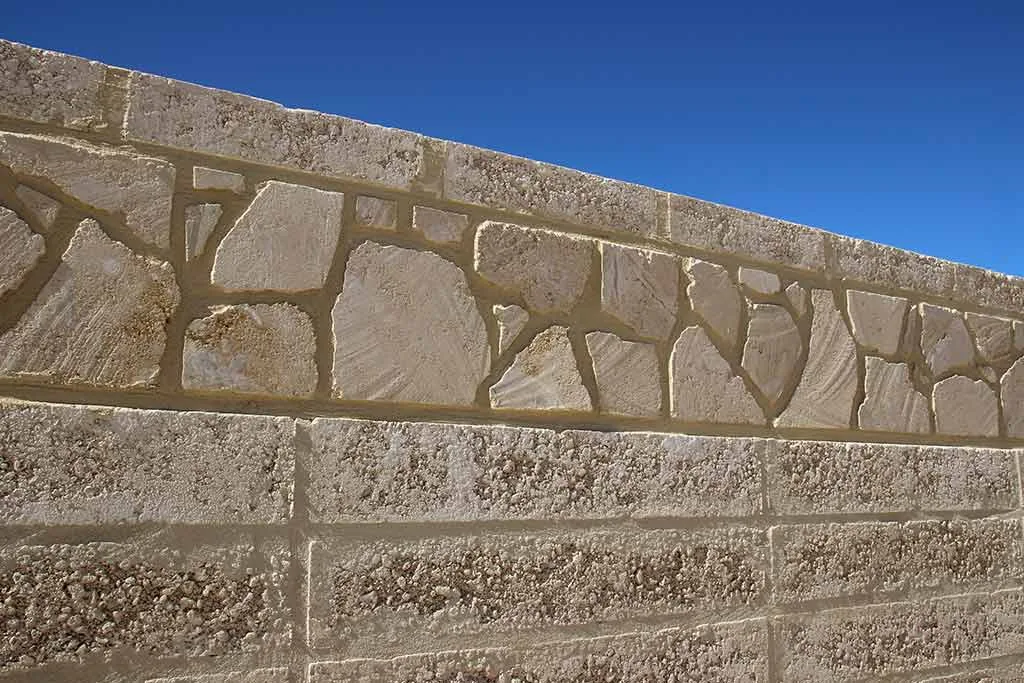
Reconstituted limestone is a manufactured block: limestone fines cast in cement into a clean, pale, porous face. That pale face is the whole appeal, and it is also the problem. Left raw, the pores pull in water, grime and salt, and a wall that looked crisp on install day starts looking tired within a couple of Perth seasons. Here is what we get called out for.
The most common call
It goes black and green
On a shaded retaining wall or a south-facing cladding panel, the porous surface stays damp and holds airborne grime, so algae and mould take hold in the pores. The pale block turns blotchy black and green, and a hose barely touches it because there is nothing stopping the dirt keying in.
The white bloom
Efflorescence and salt
A retaining wall sits against wet soil, so moisture is always moving through the cement from behind. It carries salt to the face, where it dries as a white bloom. A film-type sealer makes this worse: trap the moisture and the salt crystallises under the surface instead, which lifts and flakes the face off.
The slow grey-down
Rain streaking and dirt
On cladding, rain runs down the wall carrying road film and dust, and the porous surface soaks it into streaks under every window and joint. It does not wash off because it is in the surface, not on it. The wall greys down unevenly, and no amount of scrubbing fully brings it back.
Why the usual seal does not fix it: most limestone gets a pore sealer that soaks in and repels from a millimetre or two down, or a film that sits on top and traps the wall's moisture. On a cast, cement-bound surface fed with damp from behind, both are the wrong tool. One fails from inside the pore, the other flakes the face off.
Why this surface suits us
It is cement. So we seal it like concrete.
This is the part most people miss. Reconstituted limestone looks like stone, but it is bound by Portland cement, and cement gives our coating exactly what it wants to grip. MineralProtect is a water-based mineral sol-gel: it wicks into the surface and cures into a dense inorganic network, colourless and breathable, anchored into the mineral the same way it bonds into a concrete driveway.
It anchors into the surface, not onto it
Because the block is cement-bound, our sol-gel grafts into the surface the way it does on concrete, and it interlocks through the open pores the cast face is full of. It is not a film sitting on top waiting to peel. There is nothing on the surface to lift, blush or strip.
And it still breathes
This matters more on a retaining wall than almost anywhere. The coating protects at the surface instead of plugging the pores, so the wall can keep releasing the moisture that is always moving through it from the soil side. A film that seals that moisture in is what drives salt under the face and flakes it off. We protect the face and let the wall breathe.
It changes nothing you can see
MineralProtect is colourless and non-pigmenting. The pale cast look you chose the block for stays exactly as it is. The only change is behaviour: water, grime and algae stop gripping, so the wall sheds them instead of soaking them up.
The real edge
Protection where the wall actually gets used.
A wall is not a lab sample. It gets pressure-washed, hit with cleaner, baked in the sun and splashed with grime. Every one of those happens at the surface, in the top fraction of a millimetre. That is exactly where our coating sits, and exactly where a pore sealer is not. This is the wedge, and it is our biggest one.
Cleaning it back
Survives the wash-down
Getting a black-stained wall clean means a stiff brush or a pressure washer, and that is exactly what strips a pore sealer's thin working layer off the face. MineralProtect is a dense network right at the surface, so it keeps working through the cleaning that wears other sealers off. When it eventually eases back, it renews with a top-up. There is no film to strip first.
Cleaner and salt
Stable through the chemistry
The inorganic siloxane network does not break down under routine alkaline wash-down cleaners the way an organic sealer does, which is the exact chemistry people use to shift algae and grime off a wall. It is more resistant, not immune, and it holds up through cleaning that quietly hydrolyses a pore sealer from the inside.
The Perth sun
Does not yellow or chalk
A north-facing cladding wall bakes all summer, and UV is what breaks most coatings down. Our surface is inorganic, so it does not yellow or chalk the way an organic film does. It is far more UV-resistant than a film, not UV-proof, and it eases back slowly rather than failing all at once with no warning.
Grime and road film
Dirt lifts, it does not soak in
Atmospheric grime, road film and the oily dust that streaks a wall sit on the surface and lift in cleaning instead of soaking into the pores and staining. So the rain streaking that used to set into cast limestone washes off, and the wall stays closer to the colour you paid for for longer.
The seal, working
Colourless, breathable, on the record.
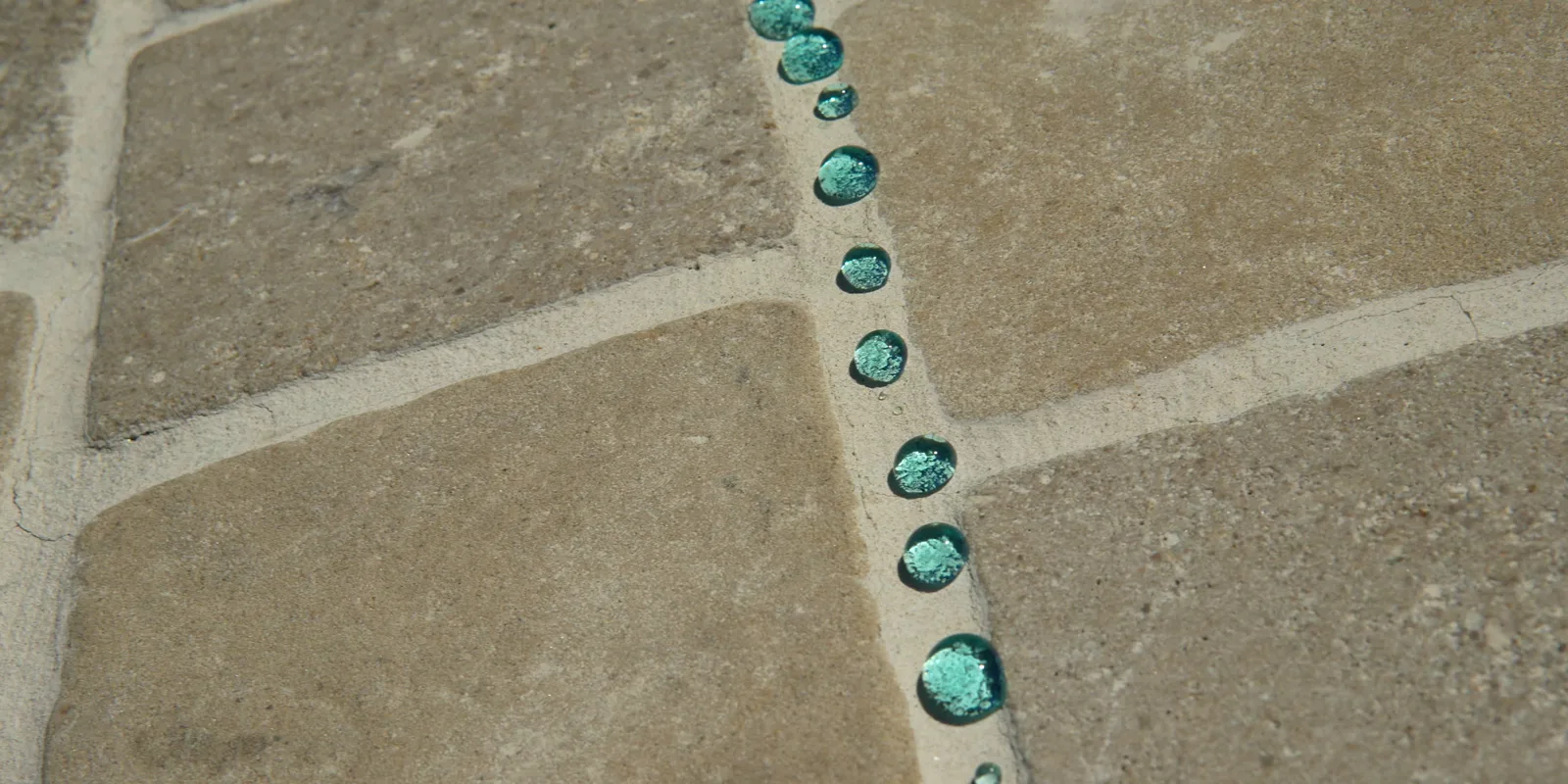
The proof is in how the surface behaves after we seal it. Water beads and rolls off instead of soaking in, grime lifts instead of keying in, and the pale cast look does not change at all. Then it is registered, so it is not just our word for it.
- Anchors like concrete. Because the block is cement-bound, the coating grafts into the surface the same way it does on a concrete driveway, then interlocks through the open pores of the cast face.
- Breathable by design. It protects at the surface and leaves the pores open, so a retaining wall can still release the moisture moving through it, rather than trapping salt beneath a film.
- Registered for 10 years. Every Extera job is documented and backed by the JUMBOGUARD Performance Guarantee, on top of your Australian Consumer Law rights.
See it behave
Drag to compare: dry, then wet.
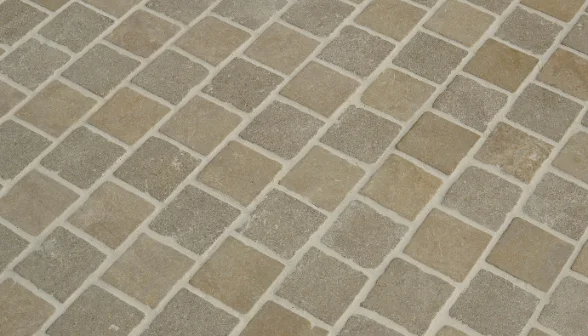
MineralProtect-sealed surface, dry and wet. Water beads and rolls off rather than soaking in. That is the seal doing its job. Notice the colour does not change, only how the surface handles the water.
Straight about the limits
What sealing this wall will not do.
- It is not a waterproofer. On a retaining wall, water and salt are driven through from the wet soil behind it. We protect and keep the face breathable, but we do not stop water coming through from the back, and no surface coating does. If a wall is soaking from behind, that is a drainage and tanking issue, not a sealing one, and we will say so.
- It does not stop efflorescence at the source. A breathable coating lets the salt bloom complete and wash off rather than trapping it destructively under a film, which is the honest win against a film. But where moisture keeps feeding salt from behind, the bloom can keep returning. We assess the salt load before we quote.
- Beading fades before the protection does. The visible water-beading eases off first, sooner than the underlying protection. Losing the bead is a prompt to book a top-up, not proof the seal has failed.
- It is long-lasting, not permanent. It reduces how often and how hard you clean. It does not mean you never clean again. When it is due, it tops up over itself, no strip.
Common questions
Reconstituted limestone, answered.
Why does reconstituted limestone go black?
It is a cast, porous surface. On shaded retaining walls and south-facing cladding it stays damp and holds airborne grime, and algae and mould take hold in the pores, which reads as black or green staining. Sealing does not kill algae, but it makes the surface shed water and grime, so the build-up is slower and washes back far more easily instead of keying into the pores.
Can you seal a reconstituted limestone retaining wall?
Yes, and it is a good fit. Because the block is bound by cement, MineralProtect anchors into the surface the same way it does on concrete, and it stays breathable so the wall can keep releasing moisture. We protect the face and keep it colourless. What we do not do is waterproof the wall or stop water driven through from the soil side, and we will tell you that at quote rather than after.
Will sealing change the colour or finish?
No. MineralProtect is colourless and non-pigmenting. Same colour, same finish, same feel. The pale cast look you chose the block for stays exactly as it is. The only change is that water, grime and algae stop gripping the surface.
Does sealing stop efflorescence and salt bloom?
Efflorescence is salt carried out of the cement by moisture. A breathable coating lets that process complete and wash off, rather than trapping it under a film where it turns destructive and lifts the face. On a wall fed with moisture from behind, no surface coating stops the salt at its source. We keep the face breathable and assess the salt load first, so you get the honest picture before you spend.
Is reconstituted limestone the same as liquid limestone or reconstituted stone?
They are cousins, all cement-bound, so they all seal well with MineralProtect for the same reason. Liquid limestone is poured in place as a floor or surround; reconstituted limestone is cast into blocks for walls and cladding; reconstituted stone is a manufactured stone-look product. If you are not sure which you have, send a photo and we will tell you. See liquid limestone and reconstituted stone.
How long does the seal last, and what is guaranteed?
Two things, kept separate. One application of MineralProtect is a long-lasting treatment that degrades slowly and predictably, and it renews with a top-up rather than a strip. The guarantee runs for 10 years, registered per job, covering the sealed system performing as described. It sits on top of your Australian Consumer Law rights, it does not replace them.
Related surfaces
Same family, same chemistry.
Reconstituted limestone sits in our cement-bound family. If yours is one of these instead, or you have a mix, here is where to read next. All of them seal well for the same reason.
Cement-bound
Liquid limestone (poured)
The poured, honed cousin used for alfresco, pool surrounds and driveways. Concrete-class anchoring, tyre marks and patchiness handled. Read the guide →
Cement-bound
Reconstituted / agglomerate stone
Manufactured stone-look pavers and tiles, cast and bound. Same surface-anchoring approach, tuned to how they are used. Read the guide →
Cement-bound
Terrazzo (cement-bound)
Poured or precast chip-in-cement floors and paving. Colourless protection that keeps staining out without darkening it. Read the guide →
Cement-bound
GRC / GFRC
Glass-reinforced concrete facade and cladding panels. Anchors into the cement matrix and stays breathable on the wall. Read the guide →
Get a quote
Stop the wall going black.
Send your suburb, the wall or cladding area and a photo. We will confirm whether it is cement-bound, assess the salt load if it is a retaining wall, and give you a fixed, all-in price before you book, cleaning included and registered under a 10-year guarantee.