
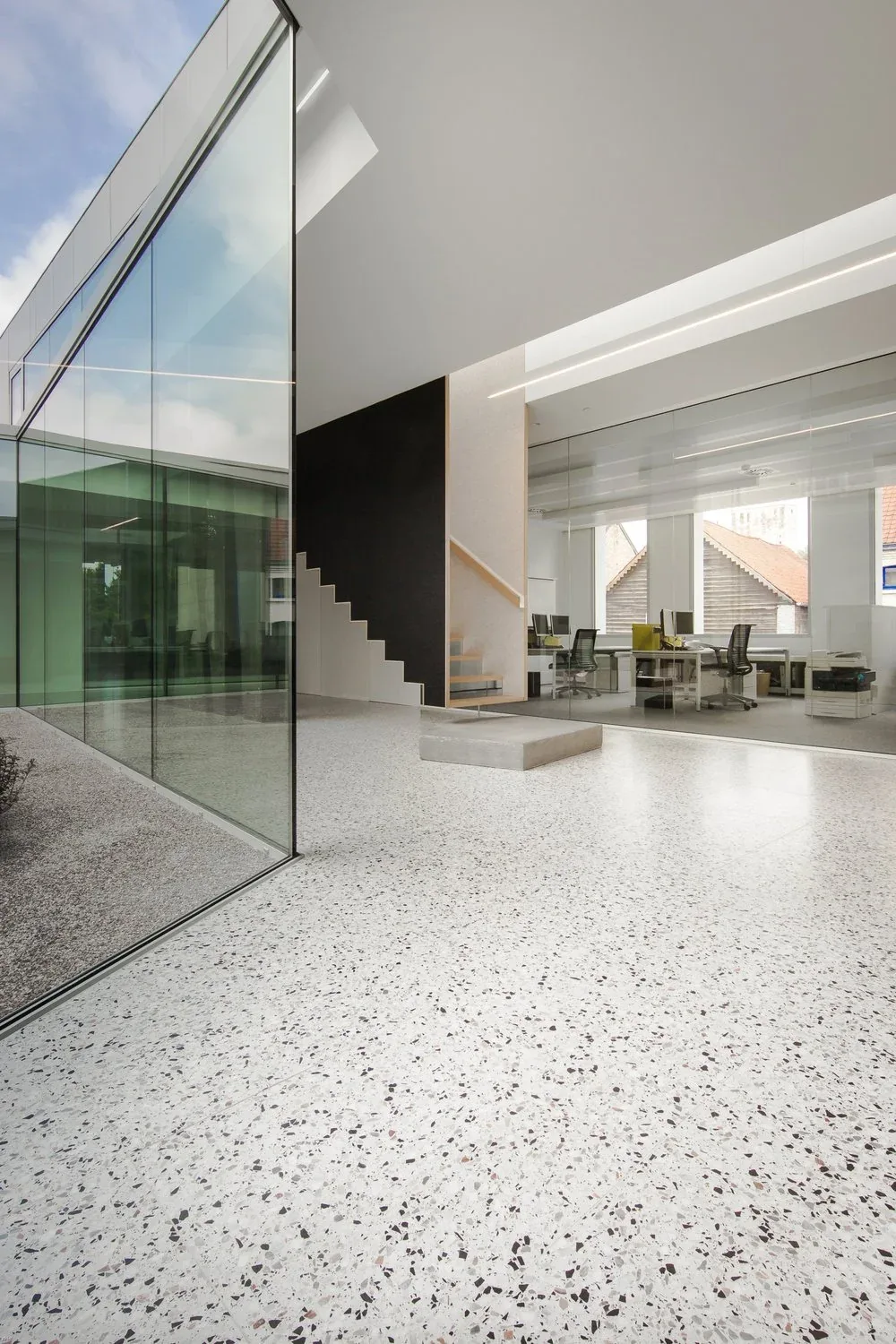
Sealing terrazzo · Perth
Seal the terrazzo. Keep the terrazzo.
Terrazzo is one of the surfaces we seal best. It is cement-bound, which means our coating bonds into it rather than sitting on top, and it does the whole job invisibly: same chips, same polish, same colour, just a surface that no longer drinks in the stains. We are the one and only next-generation sol-gel surface coating in Australia, and cement-bound terrazzo is squarely in its sweet spot.
What actually goes wrong
The chips are tough. The binder between them isn't.
Terrazzo looks bulletproof because the marble, granite and glass chips are hard and dense. But those chips are set in a cement binder, and cement is a porous mineral. Every stain that ruins a terrazzo floor goes into that binder, in the fine matrix around the chips, not into the stone.
The stain path
Oil, wine and coffee soak the binder
Spilled oil in a kitchen or foyer, red wine at an alfresco, coffee in a cafe fit-out: on unsealed terrazzo it wicks straight into the cement matrix around the chips and darkens it. The chips stay clean while the binder around them greys and blotches, so the pattern looks dirty even after you mop.
The old fixes
Wax and topcoats that yellow and build up
The traditional answer was a wax or an acrylic topcoat. It looks good for a season, then it yellows, scuffs under traffic, builds up in layers and clouds the polish. When it fails, it has to be stripped back before you can redo it, and each strip-and-recoat costs more than the last.
The pore-sealer trap
A sealer down the pore fails from inside
A penetrating sealer soaks below the surface and repels from down there. The trouble is that the mopping, scrubbing and cleaners a terrazzo floor gets all act at the top, above where that sealer is working, so the easy-clean you paid for wears off first while the chemistry sits stranded underneath.
How our coating works on terrazzo
It bonds into the surface, where the wear happens.
Cement-bound terrazzo is, in chemistry terms, concrete-class. Its binder carries the same reactive sites concrete does, and the chips are largely siliceous. That is exactly what MineralProtect is built for. It is a water-based inorganic sol-gel that cures into a dense Si-O-Si network right at the surface, so it protects where a floor is actually cleaned and walked on, not somewhere down the pore where none of that reaches.
Bonds in, does not sit on top
On the cement binder and the siliceous chips, the sol condenses genuine Si-O-Si bonds continuous with the surface as it cures. It anchors into the mineral surface rather than laying a film over it, so there is nothing on top to peel, cloud or need stripping.
Protects at the surface
The protection sits in the top layer, exactly where mopping, scrubbing, traffic and spills act. That is the whole difference from a pore sealer: its repellency is stranded below the wear zone, and yours is right where the wear is.
Colourless, and it still breathes
It changes only the surface energy, not the look, so the pattern, the polish and the colour stay exactly as they are. And because it does not plug the binder, moisture can still leave the slab, so it will not trap damp under the surface the way a film does.
Why it lasts on a floor
A terrazzo floor gets hammered. That is where we win.
Terrazzo goes into the hardest-working floors there are: foyers, kitchens, food courts, alfresco. It gets mopped daily, scrubbed, walked on and splashed. Every one of those loads acts at the surface, and that is exactly where our coating lives.
Cleaning and traffic
Survives the mopping and the scrubbing
The dense inorganic network sits right at the surface, so it keeps working through the daily mopping, the scrubbing pad and the foot traffic that wear ordinary sealers off. It fades slowly and predictably, and it renews with a top-up rather than a strip.
Chemical
Designed for cleaners, not just water
The inorganic backbone does not break down the way an organic resin does, so it stays stable through the routine alkaline cleaners a maintained floor gets, the same exposure that quietly hydrolyses a pore sealer and makes it fail from inside. More resistant, not immune, and we say so.
Oil and grease
Oil lifts instead of setting in
Oil and grease sit on the surface and lift in cleaning instead of soaking into the binder, so a fresh kitchen or alfresco spill is far easier to clean up and much less likely to set into a lasting mark. And it does it PFAS-free by design, not by reformulation, unlike the fluorochemical oil sealers now being regulated out.
UV, for the outdoor jobs
Inorganic, so it does not yellow or chalk
On exterior terrazzo paving under the Perth sun, an organic film yellows and chalks. Ours is inorganic, so it carries nothing for UV to break down that way, and it holds up under the sun that ages other coatings. Far more UV-resistant, not UV-proof.
Proven, not promised
Seal it once, at one honest price.
Water and oil stop gripping the surface, so a floor stays cleaner with a fraction of the effort, and the binder between the chips stops drinking in the marks that dull a terrazzo pattern.
- Colourless and non-pigmenting. Same chips, same polish, same colour. It changes how the surface behaves, not how it looks.
- Breathable, so it will not trap moisture. It leaves the binder open to release vapour, unlike a film that seals damp in and blushes.
- Registered and backed. Tested at independent houses including TUV Rheinland, SGS, Intertek and REACH, and every job is registered under a 10-year guarantee.
The honest part
What it does not do.
We would rather tell you the limit up front than have you find it later.
It does not stop acid etching the chips. If your terrazzo chips are marble or limestone, a splash of lemon, vinegar or a harsh acid cleaner dissolves the carbonate on contact. That is an etch, a physical mark in the stone itself, and no penetrating sealer stops it. Sealing slows absorption into the binder and buys wipe-up time, but it does not make the chips acid-proof.
It is not permanent, waterproof or maintenance-free. It is a long-lasting treatment that wears slowly and needs topping up in time. It makes cleaning faster and far less frequent. It does not remove the need to clean.
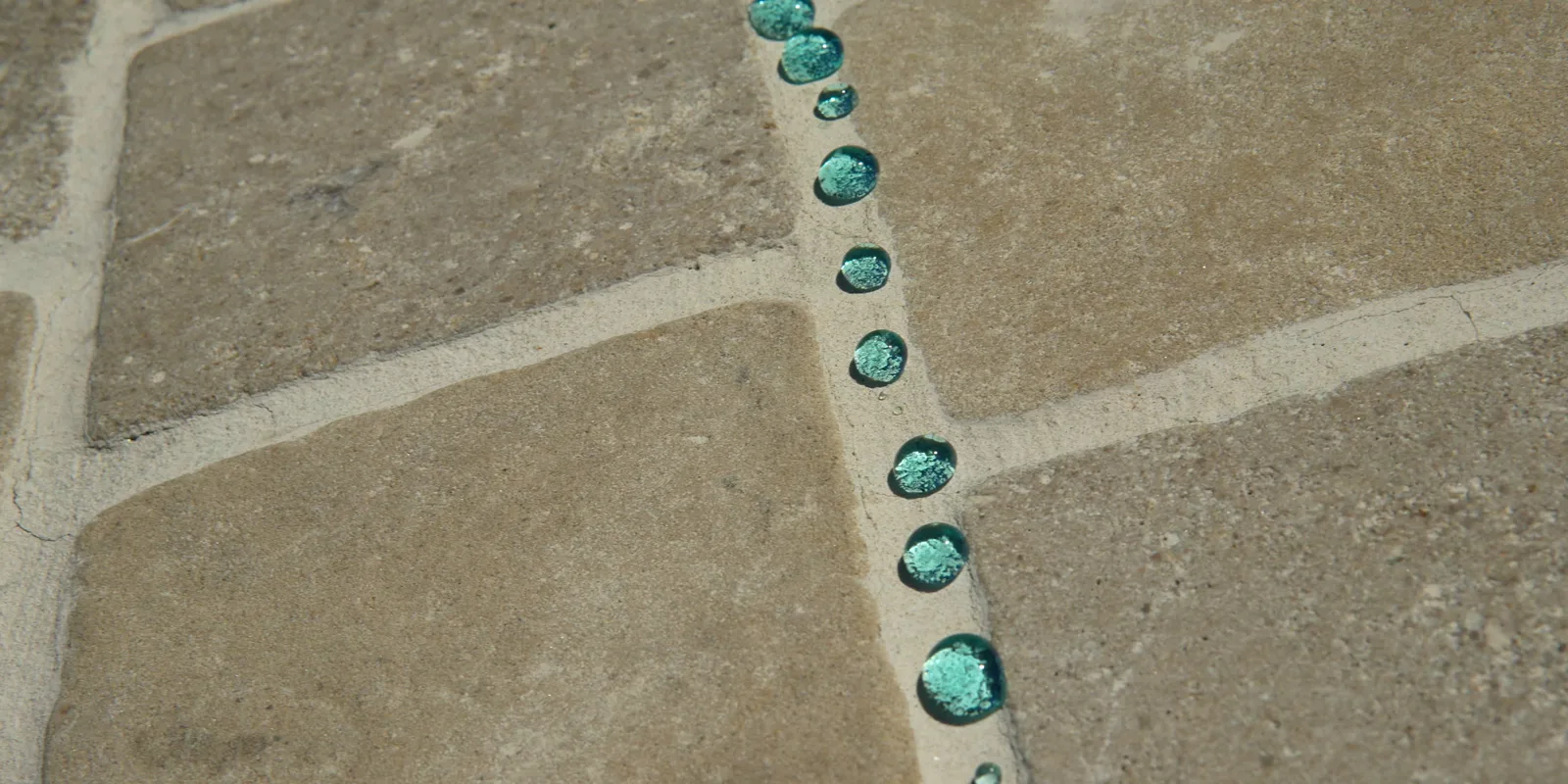
The beading fades before the protection does. When water stops beading on the surface, that is a prompt to have it re-tested, not proof the coating is gone. The protection outlasts the visible bead.
Terrazzo, answered
The questions we actually get.
Does cement-bound terrazzo need sealing?
Yes. The chips are dense, but the cement binder holding them together is a porous mineral matrix, and that is what drinks in oil, wine, coffee and traffic grime. Sealing the surface is what keeps those from setting into the binder around the chips and dulling the pattern.
Will sealing change the colour or the polish?
No. MineralProtect is colourless and non-pigmenting. Same colour, same finish, same feel. The only thing that changes is that water and oil no longer grip the surface. It does not add gloss or a wet look the way an enhancer sealer or an acrylic topcoat does.
Can you seal poured in-situ terrazzo and precast tiles?
Both. Poured granolithic terrazzo, precast terrazzo tiles and terrazzo pavers are all cement-bound, so they take the same coating. We assess the surface and its condition at the quote either way, indoors or out.
Will it stop lemon juice or vinegar etching the marble chips?
No, and no penetrating sealer can. If the chips are marble or limestone, acid dissolves the carbonate itself on contact, which is a physical etch, not a stain sitting on top. Sealing slows absorption into the binder and buys you wipe-up time, but it does not make the stone acid-proof. We would rather say that plainly.
How long does it last, and do you strip it to reseal?
It is a long-lasting treatment, not a permanent one. It wears slowly and predictably by fine surface abrasion rather than failing off a cliff, and it renews with a top-up on a clean surface. There is no failed film to grind back first, and every job is registered under a 10-year guarantee.
My terrazzo was waxed years ago. Can you still seal it?
Usually, but the old wax or topcoat has to come off first so the coating can bond to sound, open terrazzo. That prep is part of what the certified application buys you, and it is exactly why the same product lasts on one floor and fails on another. We assess it at the quote and tell you what it needs.
Keep reading
Related surfaces and the science.
Go deeper
The science of sealing terrazzo
The chemistry in full: sol-gel bonding on a cement binder, the four resistances with their honest bounds, and the head-to-head against film, impregnator and PFAS. Read the technical version
Same family
Other cement-bound surfaces
Terrazzo shares its chemistry with the rest of the cement-bound family, all in our sweet spot:
Get a quote
Protect your terrazzo, keep it exactly as it is.
We will prepare and seal your terrazzo with MineralProtect, colourless and breathable, registered under a 10-year guarantee. Confirmed price before you book.