
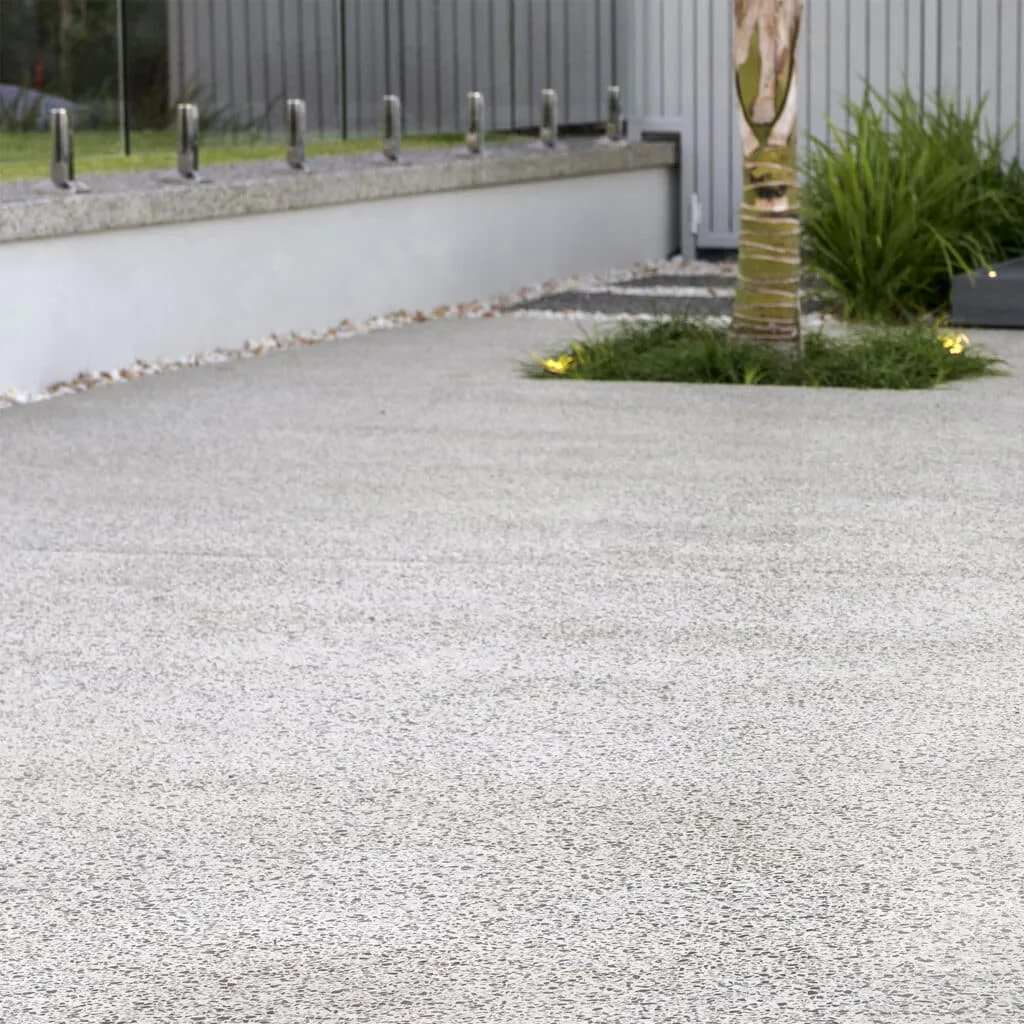
Sealing exposed aggregate · Perth
Exposed aggregate, sealed to outlast.
Exposed aggregate is our sweet spot. We seal it with MineralProtect, the one and only next-generation sol-gel surface coating in Australia, and nothing else works like it. Instead of laying a film on top that goes white and peels, it bonds into the concrete surface itself, so it holds up through the sun, the hosing and the tyres that wear ordinary sealers off.
What goes wrong
Why exposed aggregate goes white, green and patchy.
Exposed aggregate is a beautiful surface and a demanding one to protect. All those exposed pebbles mean a lot of open texture, a lot of surface area, and a lot of places for water, oil and grime to sit. And nearly every driveway is handed over with the wrong kind of seal on it already. Here is how our exposed aggregate sealing in Perth puts that right.
The seal it came with
The milky white film
Most exposed aggregate is finished with a cheap acrylic cure-and-seal at the payment gate. It is a film sitting on top, and in Perth sun and under a hose it blushes milky white, chalks and peels, often inside the first year or two. That white haze is not the concrete going off. It is a coating failing, and it has to be stripped before you can seal properly.
Thirsty new concrete
It stains before you notice
Raw exposed aggregate is at its most porous when it is new. It drinks in oil, rust off the pot plants, red wine from the alfresco and the black rubber off hot tyres within minutes. Left unsealed, those marks work down into the surface where a hose and a broom will never reach them.
Shade and reticulation
The green that keeps coming back
The same open texture that looks great holds moisture, so shaded sections and anything the reticulation hits go green with algae and darken with grime. Scrub it off and it returns, because there is nothing at the surface stopping it keying back in.
The pattern underneath all three: the surface is either bare and thirsty, or wearing a film that was always going to fail. The fix is a seal that protects the surface without sitting on top of it.
How our coating works
It doesn't sit on top. It bonds into it.
Concrete is a gift to our chemistry. Its cement paste and its quartz aggregate carry the exact reactive sites our sol-gel grabs onto, so on exposed aggregate MineralProtect forms a genuine bond into the surface, not a film laid over it. That one difference is why it protects where the others fail.
Bonds into the surface, not onto it
MineralProtect is a thin, water-based, inorganic sol-gel. On concrete it condenses into a dense mineral network keyed into the surface and bonded to the cement and quartz, about a ten-thousandth of a millimetre thick. There is no film on top to blush, chalk or peel, because there is no film at all.
Protection where the wear happens
The protection sits right at the surface, exactly where tyres, hoses, cleaning and spills act. A pore-filling sealer buries its protection millimetres down where none of that reaches, so the surface you actually use is left exposed while the good chemistry hides below.
And the concrete keeps breathing
Because it works at the surface instead of capping the pores, moisture can still escape. That matters in Perth: a film that seals moisture in traps efflorescence and salt beneath it and drives the milky blush and peeling you see everywhere. MineralProtect protects the surface and lets the slab breathe.
The real test
A driveway isn't a lab. It gets used.
Your exposed aggregate gets pressure-washed, driven on, splashed with cleaner, baked under the sun and dripped on with oil. Every one of those loads acts at the surface. That is exactly where MineralProtect sits, and it is why it wins on the four things that actually wear a driveway sealer out.
01 · Cleaning & abrasion
Survives the pressure washer
Exposed aggregate gets scrubbed and blasted hard, and that is what strips a normal seal off first. MineralProtect is a dense inorganic network bonded at the surface, so it keeps working through the cleaning that wears other sealers away. It fades slowly and predictably, and when it is due it renews with a top-up rather than a strip.
02 · Chemical
Built for cleaners, not just water
The alkaline detergents and driveway cleaners that break a pore sealer down from the inside do not consume an inorganic surface network the same way. It is more resistant, not immune, so we would not leave a strong cleaner pooled to dry on it, but it stands up to the real maintenance an exposed aggregate driveway gets.
03 · UV
Sun doesn't yellow it
Perth sun is what ages most driveway coatings. Because MineralProtect is inorganic, it has no organic film to yellow or chalk the way an acrylic does. It holds up under the UV that turns a cure-and-seal cloudy and brittle. Far more UV-resistant than an organic film, not UV-proof, and never permanent.
04 · Oil
Oil sits on top and lifts
This is the one most driveway sealers miss. A standard silane repels water only, so car oil, barbecue grease and rust still soak into raw concrete. MineralProtect controls the surface energy so oil and grease sit on top and lift in cleaning instead of soaking into the concrete. It is PFAS-free by design, not by reformulation.
A pore-filling sealer builds its protection millimetres down, in the wrong place for how a driveway is actually used. We protect the surface, where the use happens. Go deeper on the science
The seal, working
The proof is on the surface.
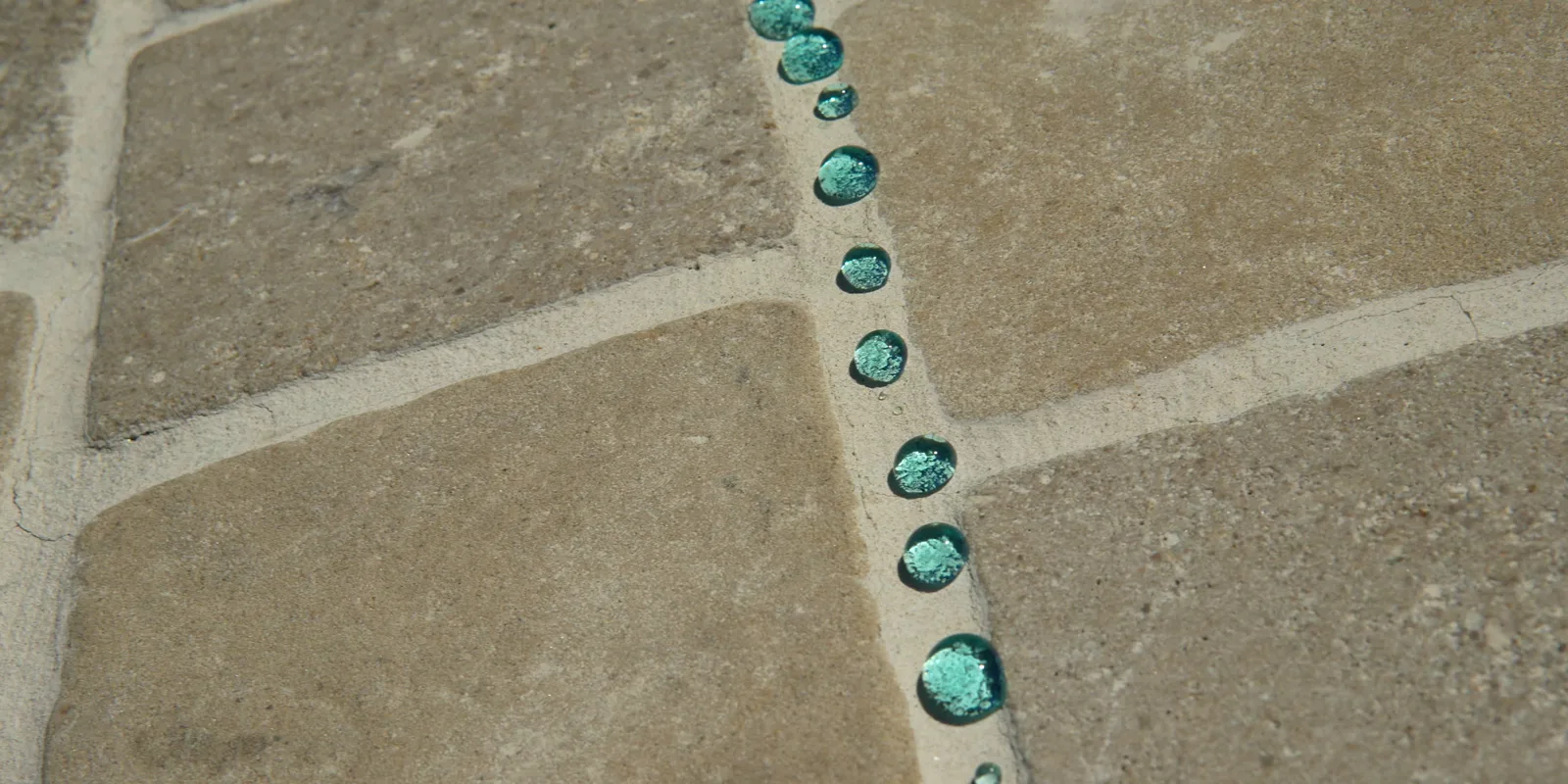
You do not have to take the chemistry on faith. On a sealed exposed aggregate surface, water beads and sheets off the texture instead of soaking down into it. That is the seal doing its job, keeping rain, oil and grime on top where a broom and a hose can shift them.
- One published price. $16/m², all-in: the full preparation clean, MineralProtect applied by certified applicators, and your guarantee registered. No surprises at the end.
- Stable under the cleaning that fails others. The alkaline cleaners and pressure washing that hydrolyse and fail standard silane sealers, invisibly then all at once, are the conditions MineralProtect is built for.
- Registered, not promised. Every seal is documented and backed by a 10-year JUMBOGUARD guarantee on its repellency function, registered to your job.
Dry to wet
Drag to see it bead.
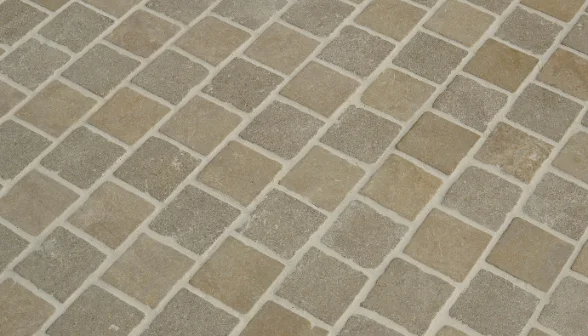
A MineralProtect-sealed surface, dry and wet. Water beads and runs off instead of darkening the concrete. That is the surface staying on top of the water, oil and grime instead of drinking them in.
Straight answers
What it does not do.
A sealer only means something if you know its edges, so here they are plainly. MineralProtect is a long-lasting treatment, not a permanent one, and it makes cleaning faster and far less frequent. It does not make a driveway maintenance-free.
- It is not permanent and not waterproof. Beading fades first and is your cue to top up, not proof it has failed.
- It will not resurface tired concrete or hide existing stains. It protects from here on, so the best time to seal is when the surface is clean and sound.
- A spill left for weeks can still mark. Oil and grease lift in cleaning, they do not disappear on their own.
- New concrete has to fully cure first, around 28 days. We will not seal green concrete and trap moisture in your slab.
Common questions
Sealing exposed aggregate, answered.
Why has my exposed aggregate gone white and patchy?
That milky white is a failing film, not the concrete. Most exposed aggregate is finished with a cheap acrylic cure-and-seal at handover. It sits on top, and in Perth sun and under a hose it whitens, blushes and peels, often inside the first year or two. It is a surface coating failing, and it has to be stripped before the surface can be sealed properly.
Can you seal over the sealer the concreter already put on?
Not over a failing film. If there is an acrylic cure-and-seal breaking down, it gets stripped back and the surface prepared first, because no coating bonds to a layer that is already lifting. Once the surface is sound and open, MineralProtect goes on and bonds into the concrete itself. The concreter did their job well; the film they used was just never built to last outdoors.
Will sealing make it darker or shiny?
No. MineralProtect is colourless and non-pigmenting. Same colour, same texture, same look. It changes the surface energy of the concrete so water and oil stop gripping, not the appearance. The wet-look gloss people know comes from a film sitting on top, which is a different product with a different failure mode.
Does it stop oil and tyre marks?
Oil and grease sit on the surface and lift in cleaning instead of soaking straight into raw concrete, so a dropped-oil or barbecue spill wipes up rather than setting into the surface. It makes cleaning faster and far less frequent. It does not remove the need to clean, and a spill left for weeks can still mark.
How long does it last on a Perth driveway?
The coating is rated up to 3 years in high-traffic use, and every job is registered under a 10-year guarantee on its repellency function. The beading you can see is a shorter clock that fades first, and on a west-facing driveway that gets hosed and pressure-washed it sits at the shorter end, so plan on a top-up in the first few years. That top-up goes on clean, with no stripping.
When can new exposed aggregate be sealed?
After it has fully cured, around 28 days. Sealing green concrete traps moisture and floats a weak skin that ruins the bond of any coating. New concrete is at its thirstiest and stains fastest, so the sooner after full cure the better, but not before.
Keep reading
Related surfaces and the deep dive.
Go deeper
The science of sealing exposed aggregate
The chemistry in full: how sol-gel bonds to concrete, the four resistances with their honest bounds, and how it compares to an impregnator and a film. Read the technical guide
Concrete
Plain & broom-finish concrete
The same chemistry on a plainer pour: sealing standard grey and brushed concrete driveways, paths and floors. Read the guide
Concrete
Coloured & oxide concrete
Charcoal and colour-through concrete, and keeping efflorescence from ghosting the colour. Read the guide
Concrete
Stamped & decorative concrete
Imprinted and stencilled concrete, and why the matte pattern coat peels the way it does. Read the guide
Concrete
Honed & grind-and-seal concrete
Ground and polished concrete floors and alfrescos, where colourless protection really earns its keep. Read the guide
Pool surrounds
Protecting pool surrounds
Exposed aggregate is a favourite pool surround. The pool-water science, salt, chlorine and mineral systems, and how each material copes. Read the guide
Browse
The Sealing Library
Every common surface in WA, matched to how well our coating protects it, and where it says so honestly when we are not the answer. Find your surface
Get a quote
Seal your exposed aggregate once.
We will prepare and seal it with MineralProtect, registered under a 10-year guarantee. One published price, confirmed before you book.