
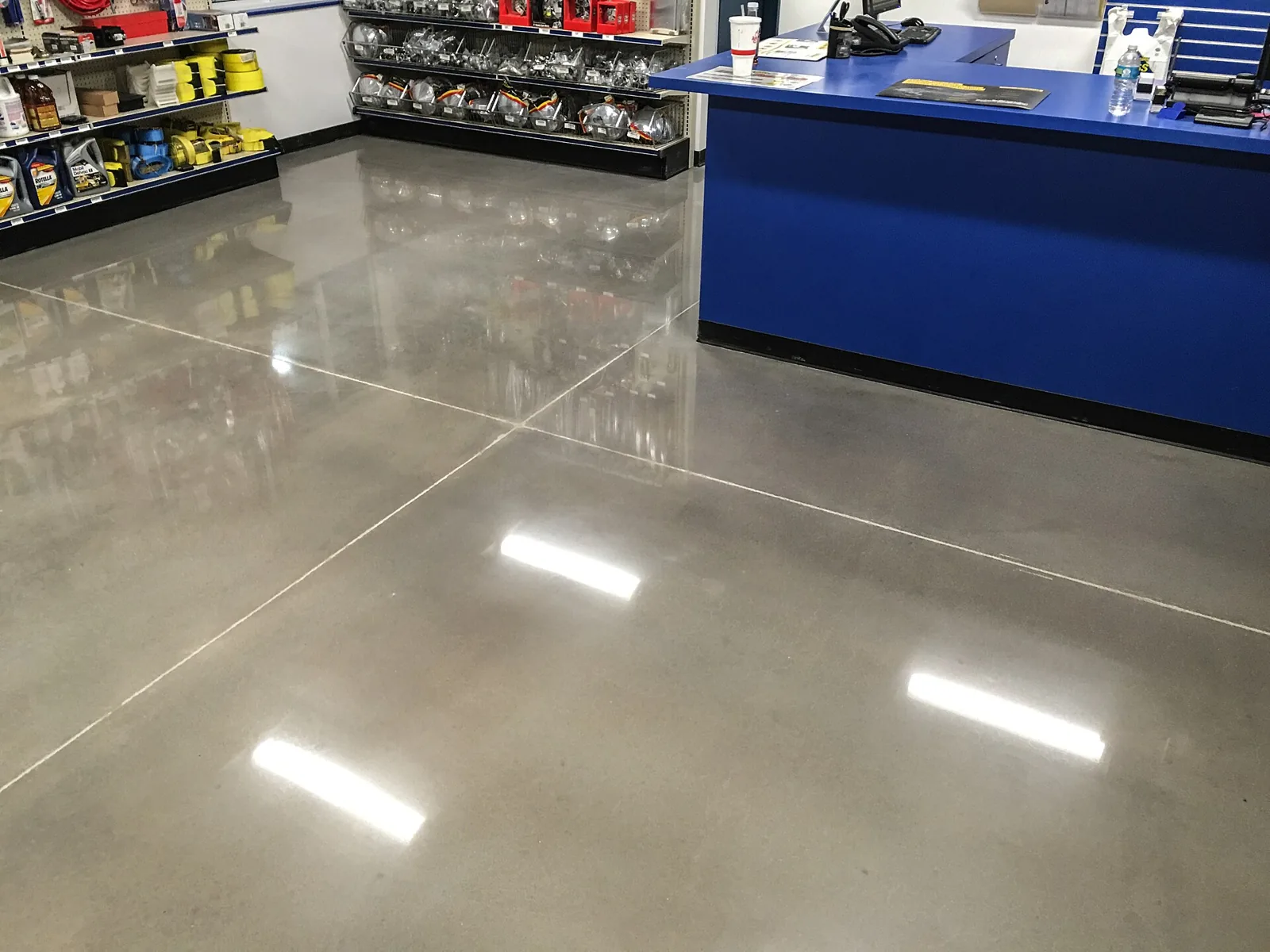
Sealing honed & grind-and-seal concrete · Perth
A honed floor worth keeping.
MineralProtect is the one and only next-generation sol-gel surface coating in Australia, and a honed floor is exactly where it belongs. It bonds into the concrete itself and protects right at the surface, so wine, oil and everyday traffic wipe away instead of soaking in. No topcoat sitting on top to scuff, grey or get ground back.
What actually goes wrong
Beautiful floor. Then the seal lets you down.
You paid a lot to have that slab ground back to a smooth, honest concrete finish. The problem is almost never the concrete. It is what went on top of it. Grind-and-seal floors are usually finished with a topical coat, and in a Perth home that gets walked on, cooked next to and sat out in the alfresco sun, that coat is on the clock from day one.
The topcoat problem
It scuffs and greys
A film sits on top of the floor, so it takes the wear. Chairs drag, feet track grit, the mop goes over it a thousand times, and the high-traffic lanes go dull and grey while the edges stay glossy. You end up looking at the wear pattern, not the floor.
Moisture and sun
It blushes and yellows
Concrete holds moisture, and a film that caps the surface can trap it and go milky white from underneath. Out in the alfresco, UV works on it too: the cheaper coats yellow and chalk, and the whole floor starts to look tired well before it should.
The repeat cost
You cannot just recoat it
When a topcoat fails, you cannot brush a fresh one over a peeling, greyed-out one. It has to be ground back to bare concrete and started again. That is the expensive part, and it comes around every few years. The cheap seal is the costly one.
And if it was left bare or sealed with a thin penetrating product instead, you have the opposite trap: an open surface where a spilt red or a dropped bit of oil soaks straight into the concrete and marks it for good.
Why ours is different
It doesn't sit on the floor. It bonds in.
For decades there were only two ways to seal concrete: lay a film on top, or soak a repellent down into the pores. Concrete is the ideal surface for a third way. Its cement paste and aggregate carry reactive silica, so our mineral sol-gel condenses a genuine bond into the surface itself, the same class of bond that holds glass and stone together.
It bonds in, it doesn't sit on
The coating cures into the concrete as a nano-thin mineral network, chemically integrated with the surface. There is no film on top to scuff, grey, blush or peel, because there is nothing sitting on top at all.
It protects where you use it
The protection lives right at the surface, exactly where wine, oil, feet and the mop actually meet the floor. A penetrating sealer hides its work millimetres down in the pore, where none of that reaches, so the part you use wears bare first.
And the floor still breathes
Because it works at the surface instead of capping the pores, moisture can still leave the slab. A film that seals it in is what goes milky white from underneath. Ours protects the surface and lets the concrete breathe, so it renews with a top-up on clean floor, no grinding, no strip.
The real test
A floor gets used, not looked at.
The reason this matters on honed concrete is simple: your floor is scrubbed, walked on, splashed and baked in the sun, and every one of those loads happens at the surface. That is where our coating is, and it is the wrong place for a sealer buried down the pore. Four things it stands up to, and none of them is a claim of immunity.
The cleaning it gets
Foot traffic, grit and the mop
The mineral network sits right at the surface, so it keeps working through the daily traffic, scrubbing and mopping that wears a topcoat into grey lanes. It has no film to abrade off. It fades slowly and predictably, and when it is time it renews with a top-up, not a grind-back.
The cleaners you use
Stable through real cleaning
The bonded surface is inorganic, so it stays stable through the everyday and commercial cleaners a floor actually gets, at normal strength and a normal wipe. It is more resistant than a pore-based sealer that quietly breaks down from the inside. More resistant, not immune: strong chemicals left to pool are still strong chemicals.
The alfresco sun
It doesn't yellow or chalk
Sun is what breaks most seals down. Because ours is an inorganic mineral network with no organic film to oxidise, it does not yellow or chalk the way an acrylic or urethane coat does out in the open. Far more UV-stable than an organic film, and it holds up under the light that ages the others.
Wine, oil and food
Spills lift instead of soaking in
This is the one most sealers miss on a floor. Oil and grease sit on the surface and lift in cleaning instead of soaking in, so a spilt red, a splash of olive oil or a dropped bit of dinner wipes up instead of marking the concrete. A water-repellent-only sealer leaves the surface open to the exact things that stain it.
Seen, not promised
The proof is on the surface.
You do not have to take the chemistry on faith. On a sealed floor you can watch water refuse to soak in and darken the concrete, and watch a spill sit on top long enough to wipe. That is the seal doing its job, at the surface, where you use the floor.
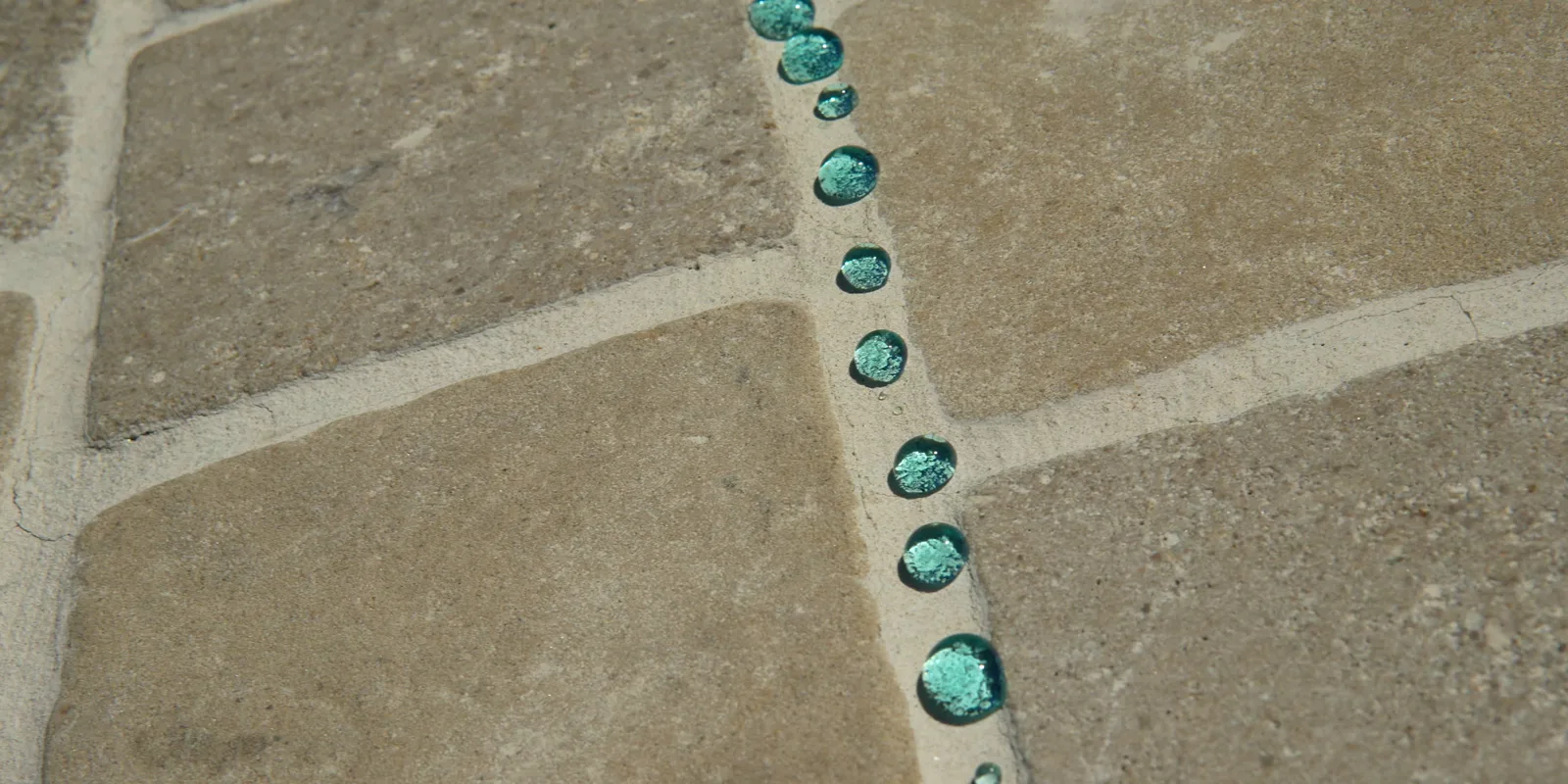
- Water sits up and sheets off. It stops soaking into the concrete and darkening it, so rain on the alfresco and splashes at the table stay on top of the floor.
- It changes nothing you can see. Colourless and non-pigmenting. Same honed colour, same finish, same underfoot feel. Only the surface energy changes.
- Registered, not just promised. Every job is documented and backed by the JUMBOGUARD Performance Guarantee, tested at independent houses including TÜV Rheinland, SGS, Intertek and REACH.
The seal, working
Drag to see it bead.
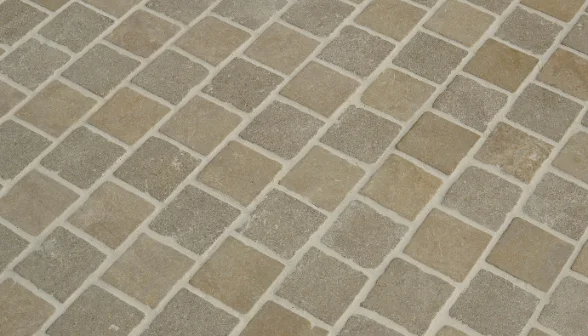
A MineralProtect-sealed concrete surface, dry and wet. Drag the handle: on the wet side, water beads and runs off along the surface instead of soaking in. That is the same behaviour that keeps wine, oil and grime on top of a honed floor rather than working into it.
Straight with you
What it will not do.
The operators who tell you a sealer makes concrete bulletproof are the ones to walk away from. Here is the honest edge of what our coating does, on your floor.
It is not an acid barrier
Wine, citrus and some strong cleaners are acidic, and acid attacks the cement in the surface itself. If a spill is left to sit it can still dull a mark into the floor. What the coating does is slow how fast it soaks in and buy you time to wipe it. It is not stain-proof and it is not permanent.
Beading fades before protection does
The visible beading is the first thing to soften, and it fades faster than the protection underneath. When the water stops beading that is your cue to have us re-test, not proof it has failed. Judge it on whether water still refuses to soak in and whether marks still wipe off.
It won't fix a failing topcoat
If your grind-and-seal has an old film that is peeling or greyed out, we cannot bond over it. That coat has to be ground back to sound concrete first. From then on, our top-ups go on clean with no grinding, but the first job is honest about the prep it needs.
It changes the surface, not the grip
We do not make your floor non-slip and we will never rate it. The coating is microscopically thin, so it changes the surface energy, not the texture underfoot. What it will not do is glaze the floor slicker the way a thick gloss topcoat can.
Common questions
Honed concrete, answered.
Will sealing darken or change my honed finish?
No. MineralProtect is colourless and non-pigmenting. Same colour, same honed finish, same feel underfoot. The only thing that changes is that water and oil stop gripping the surface. If you paid for a specific look, you keep exactly that look.
Does it stop wine and oil stains?
On oil and grease, yes in the way that matters: they sit on the surface and lift in cleaning instead of soaking in, so kitchen and alfresco marks wipe away rather than set. Wine is different because it is acidic. It will not soak in the way it would on a bare floor, but if it is left sitting it can still dull the cement in the surface. The coating buys you time to wipe it up. It is not an acid barrier, and we would rather tell you that than pretend otherwise.
My grind-and-seal topcoat is scuffing and greying. Can you just seal over it?
Not over a failing film. A worn topical coat has to be ground back to sound, open concrete first, and then MineralProtect bonds into the bare surface. The good news is that this is a one-time reset: once ours is on, it renews with a top-up on a clean floor, so you are off the grind-back-and-recoat cycle for good.
How long does it last, and is it guaranteed?
It is a long-lasting treatment, not a permanent one, and we will not quote you a made-up number of years. It wears slowly by fine abrasion rather than failing all at once, and it renews with a top-up rather than a strip. Every job is registered under a 10-year JUMBOGUARD Performance Guarantee on the repellency function, which sits on top of your rights under Australian Consumer Law. When we assess your floor we give you the honest refresh interval for how it is used.
Indoor floor or alfresco: does the same thing work for both?
Yes, and the alfresco is where the edge shows most. Because the coating is inorganic, it does not yellow or chalk in the sun the way an organic film does, and it stands up to the traffic and cleaning both an indoor and an outdoor floor get. We seal them the same way, prepared to the same certified standard.
My concreter sealed it for free. Why pay to seal it again?
The sealer a concreter finishes a floor with is the right tool for the day it is poured. It is usually a topical coat built for that first look, and in Perth conditions that kind of coat commonly starts scuffing, greying or blushing within a couple of years, and then it has to be ground off, not topped up. What you pay us for is a different class of coating that bonds into the surface and renews without grinding, a floor prepared to a certified standard so it actually lasts, and a job registered and guaranteed for ten years. Your concreter did their job; this is a different one.
Keep reading
More concrete, and the science.
Go deeper
The science of sealing honed concrete
The chemistry, the four resistances with their honest bounds, the head-to-head against films and impregnators, and the test standards behind it. Read the technical version
Concrete family
Exposed aggregate concrete
The washed, pebbly driveway finish that came sealed with a film that peels. How we seal it instead. Read the guide
Concrete family
Plain / broom-finish concrete
The everyday grey slab, and why sealing the surface beats soaking a repellent down the pore. Read the guide
Concrete family
Coloured / oxide concrete
Charcoal and colour-through slabs, kept their true colour with a coating that changes nothing you can see. Read the guide
Stamped & decorative concrete · Browse the whole Sealing Library
Get a quote
Seal the floor once.
We'll prepare and seal your honed or grind-and-seal concrete with MineralProtect, registered under a 10-year guarantee. Confirmed price before you book.