
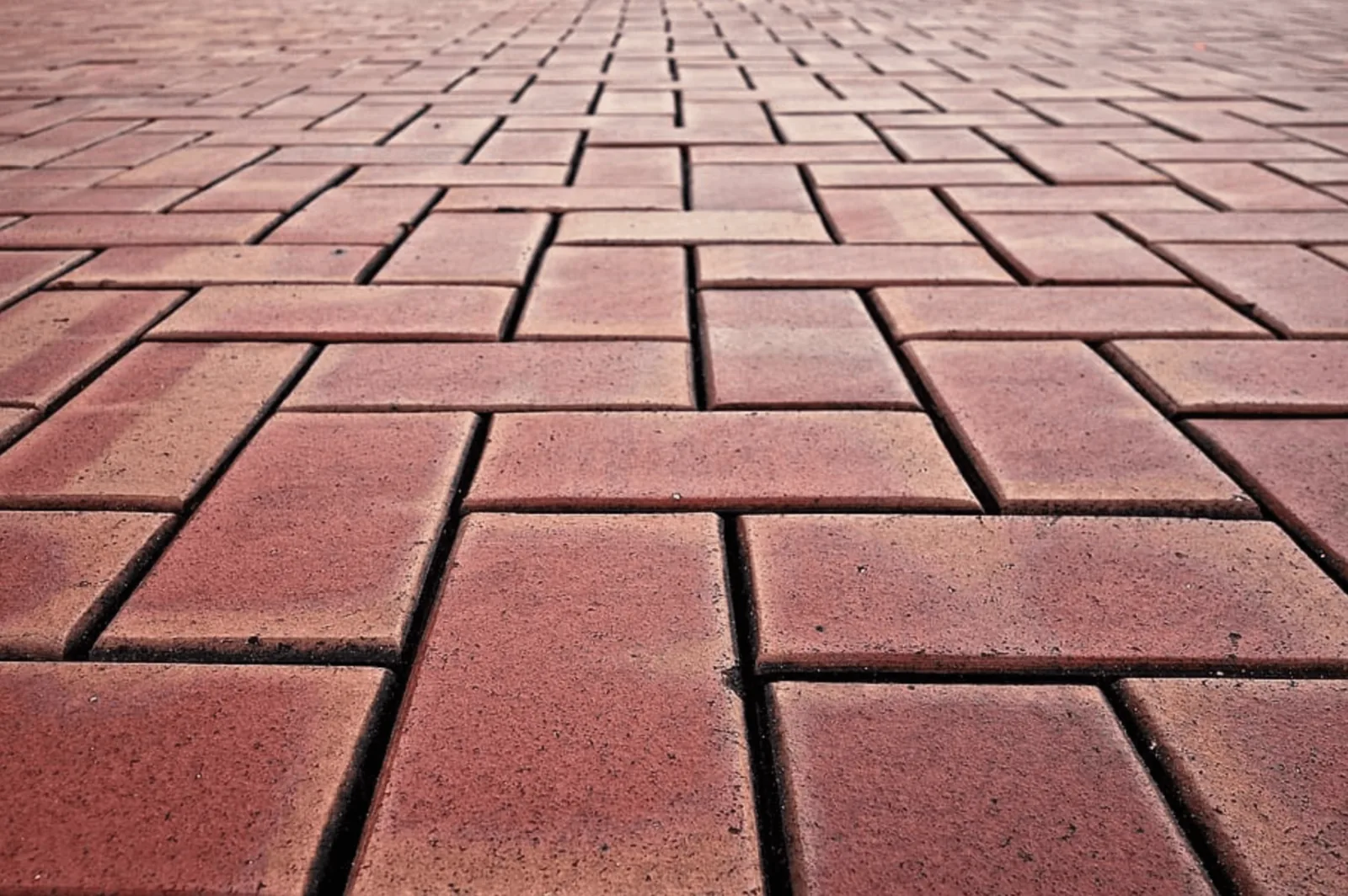
Sealing clay pavers · Perth
Seal clay pavers the right way.
MineralProtect is the one and only next-generation sol-gel surface coating in Australia, and it changes what a clay paver seal can do. Instead of laying a film on top or soaking a repellent down the pores, it anchors into the paver's own surface, breathable and colourless, so a driveway, path or courtyard sheds water, oil and grime and keeps doing it through years of Perth sun and cleaning.
What goes wrong with clay pavers
Clay pavers are porous. That is the whole problem.
Fired clay looks tough, and it is, but the face is full of fine pores that pull in water, salt, oil and dirt. Left bare in a Perth summer, on reticulation, near the coast, that porosity is exactly what makes a paved area look tired years before it should. Here is what we see on quotes.
The white haze
Efflorescence rising through the face
Moisture in the pavers and the bedding sand carries salt up to the surface, then leaves it there as a chalky white bloom as it dries. It is not dirt you can just wipe off, and a film-forming sealer makes it worse by trapping the moisture behind it until it blisters or clouds.
Going green
Algae and lichen in the damp
A shaded path, a courtyard under trees, or pavers that cop reticulation overspray stay damp, and a damp porous surface is where algae and lichen take hold. Come winter the whole path goes green and slippery, and scrubbing it back is a weekend you do not get back.
Oil and tyre marks
Driveway stains that soak straight in
On a bare clay driveway, a dropped-oil spot, an engine drip or hot tyre marks sink into the pore and set. Water-repellent-only sealers do nothing for oil, so the marks that actually bother you are the ones the usual seal leaves wide open.
The seal that gives up
Redone every year or two
The acrylic coating chalks, yellows and peels under the sun and hot tyres, and has to be stripped before you can redo it. The penetrating sealer fades quietly from inside within a year or two of WA cleaning and UV. Either way you are back on the same cycle.
How our coating protects the paver
It bonds into the surface, and then it breathes.
Fired clay is an aluminosilicate, so its surface carries the reactive chemistry a sol-gel is built to grip. MineralProtect cures into a dense inorganic Si-O-Si network right at the paver face, colourless and thin, then leaves the pore network open so the paver keeps releasing moisture. That combination is the whole game on clay.
It anchors into the surface, not on top of it
The coating condenses into the paver's own surface as a nano-thin mineral network. There is no film sitting on top to chalk, yellow or peel under tyres, and nothing that has to be stripped before it can be renewed.
It protects where the wear actually happens
A penetrating sealer builds its protection down the pore, well below where a broom, a pressure washer, a car tyre or the sun ever reaches. Ours sits at the surface, so it meets the cleaning and the traffic head on and renews there with a top-up on a clean paver.
It still lets the paver breathe
Because it works at the surface instead of plugging the pores, moisture and salt can still escape. That is the difference that matters on efflorescence: a film traps it and blisters, ours lets the bloom finish on the surface where it washes off.
The edge that actually shows up outside
A driveway is scrubbed, baked and driven on. We seal for that.
Pavers are not a lab sample. They get pressure-washed, hit with cleaner, cooked in the sun and dripped on. Every one of those loads lands at the surface, in the top skin of the paver, which is exactly where our coating lives and a pore sealer does not.
Cleaning & abrasion
It survives the way you clean it
Brooms, foot traffic, tyres and the pressure washer all act on the paver face. Our inorganic network sits right there, so it keeps working through the cleaning that strips an ordinary sealer off. It fades slowly and predictably, then renews with a top-up rather than a strip.
Chemical
Stable through real cleaning
The bonded surface stays stable under the routine alkaline cleaners a paved area actually gets, the same exposure that hydrolyses a pore sealer and makes it fail from inside. It is more resistant, not immune, so we do not leave strong cleaner pooled to dry on it.
UV
Perth sun does not yellow it
The coating is inorganic, so it does not carry the chemistry that makes an acrylic film chalk, blush and go yellow under UV. It is far more UV-resistant than an organic film, not UV-proof, so it holds up through the sun that ages the coatings sold for pavers.
Oil
Oil sits up and lifts off
A standard silane repels water only, so oil still stains a driveway. Ours changes the surface energy, so engine oil, a barbecue spill or a dropped-oil mark sits on top and lifts in cleaning instead of soaking into the paver and setting. PFAS-free by design, not by reformulation.
One price, on the record
Cleaned, sealed and guaranteed.
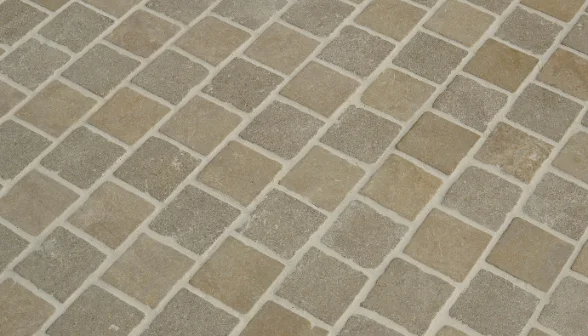
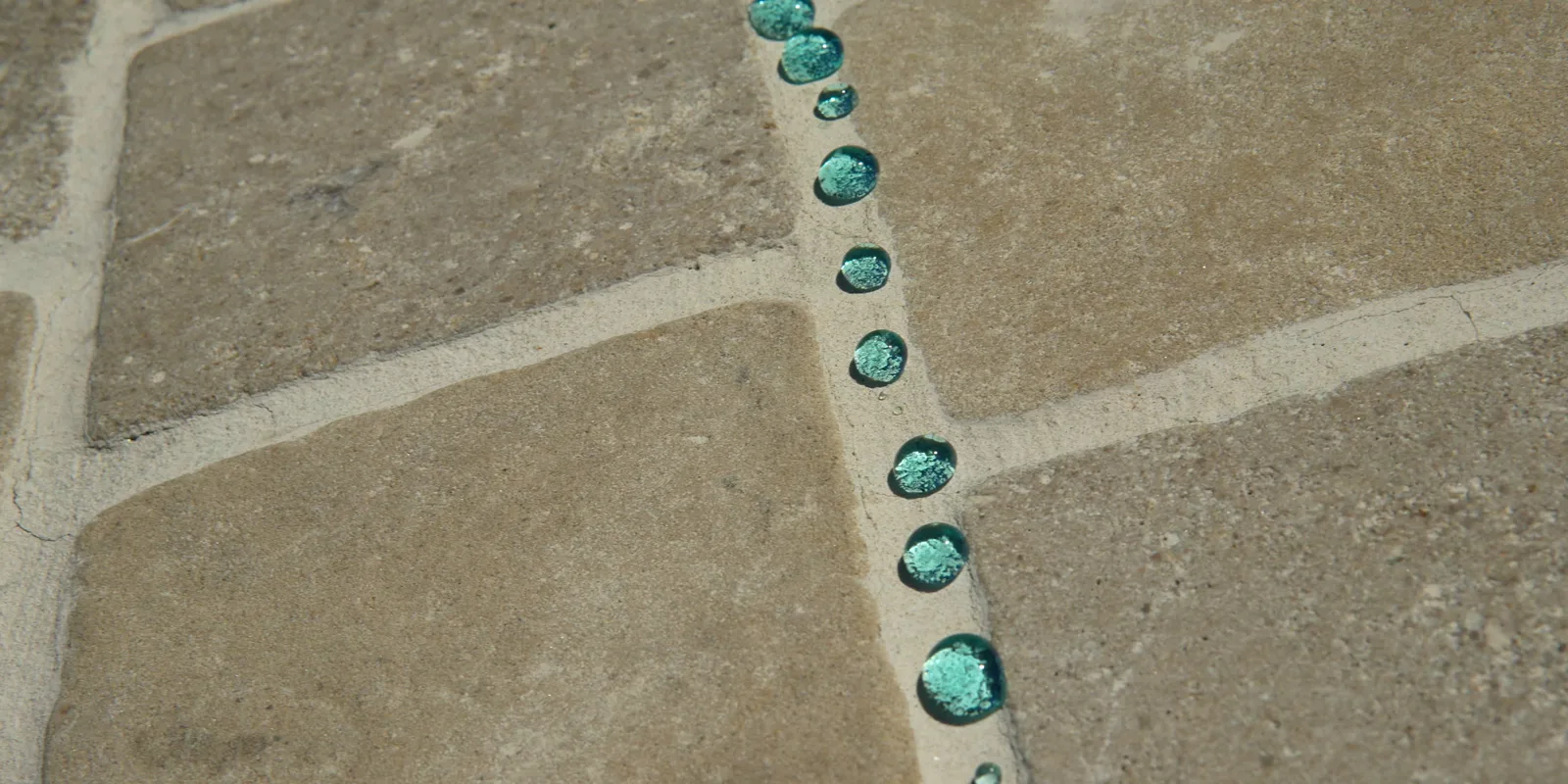
No quote games, no hidden clean fee. Clay pavers are sealed at one all-in rate, prepared and applied by certified applicators, and registered under a 10-year guarantee. Slide the panel: dry on one side, water beading on the other, on a real paved surface.
- $16/m² all-in, $960 minimum. The full professional clean, MineralProtect applied to spec, and your guarantee registered. The clean is never sold on its own.
- 10-year registered guarantee. Written to your job, covering the coating's water-repellency function, sitting on top of your Australian Consumer Law rights.
- Independently tested chemistry. The JUMBOGUARD coatings are tested at independent houses including TÜV Rheinland, SGS and Intertek, and made without PFAS.
Where we tell you straight
What a seal on clay pavers will not do
Clay pavers are a strong fit for our coating, and we would rather you knew the honest edges before you book than after.
It does not switch off efflorescence
If a wet base is constantly pushing salt up through the pavers, sealing the top will not cure that. We stay breathable so we do not trap it and blister, but a persistent moisture source needs fixing at the base, and we will say so on the quote.
Beading fades before the protection does
The visible beading is the first thing to ease off, well before the coating stops resisting water and oil. When the water stops beading, that is your cue to have us re-test, not proof it has failed.
It is not stain-proof or permanent
No coating makes a paver bulletproof. Ours slows soak-in and makes marks lift far more easily, but you still clean it occasionally, and it is a long-lasting treatment that tops up over time, not a one-and-done forever seal.
Clay paver questions we get
The honest answers.
Will sealing stop the white bloom on my clay pavers?
Efflorescence is salt carried up out of the paver and its bedding by moisture, then left on the surface as it dries. A seal does not switch that salt off at the source. What our coating does is stay breathable, so moisture keeps escaping and the bloom completes on the surface where it can be washed off, instead of being trapped under a film that then blisters or whitens. Where a wet base is constantly feeding salt up, we will tell you that on the quote rather than seal over the problem.
Will sealing change the colour of my clay pavers?
MineralProtect is colourless and does not pigment or add a gloss film, so it will not change the colour the way an acrylic coating does. What you tend to see is the natural colour reading a touch richer and more even once the surface is protected and clean, because grime and dust are no longer sitting in the face. If you want a wet-look shine, that is a different product and we will say so up front.
My paver path goes green every winter. Will this help?
Green is algae and lichen taking hold in a damp, porous surface, common on shaded paths and anywhere reticulation keeps the pavers wet. A sealed surface holds less water and grime for it to grip, and it washes back far more easily, so the green is slower to return and quicker to clean off. It is not a poison and it will not stop growth for good in deep, constant shade, but it changes the maintenance from a scrub-and-scrape job to a rinse.
Can you seal an old clay paver driveway, or only new ones?
Both. Age is not the issue, condition is. Old clay pavers seal well once they are properly cleaned back to a sound, open surface, and older pavers are often the ones that benefit most because years of grime and oil have been sitting in an unprotected face. If there is a failed film or a heavy sealer already on there, that has to come off first so the coating can bond, and we will assess that before we quote.
How long does the seal last on clay pavers?
Two clocks, kept separate on purpose. One coat performs for a few years depending on how hard the pavers are used and cleaned, and when it eases off it tops up on a clean surface with no stripping. The guarantee is registered to your job and runs for 10 years on the coating's repellency function, sitting on top of your rights under Australian Consumer Law.
Will sealed clay pavers be slippery underfoot?
MineralProtect does not lay a slick film on top the way a gloss coating can, because it bonds into the surface and keeps the paver's own texture. It changes the surface energy, not the grip. We do not rate it as non-slip or make a safety claim, but compared with a film-forming sealer it does not add that greasy-when-wet feel.
Related surfaces
More brick & masonry.
Clay brick & face brick
The same fired-clay chemistry on walls and facades, where efflorescence and grime are the usual complaints. Read the brick guide →
Cement masonry blocks (Besser)
Core-filled blocks for walls, retaining and fencing, a cement-bound surface our coating anchors into well. Read the Besser guide →
Terracotta & quarry tile
Unglazed fired tile that needs a breathable seal for the same reasons pavers do. Read the terracotta guide →
Roof tiles (concrete / clay)
Porous roof tiles that go mossy and soak up water, sealed to shed both. Read the roof-tile guide →
Not sure which surface you have? Browse the full Sealing Library →
Get a quote
Seal your clay pavers once.
We will prepare and seal your pavers with MineralProtect, the right coating for fired clay, registered under a 10-year guarantee. Confirmed price before you book.