
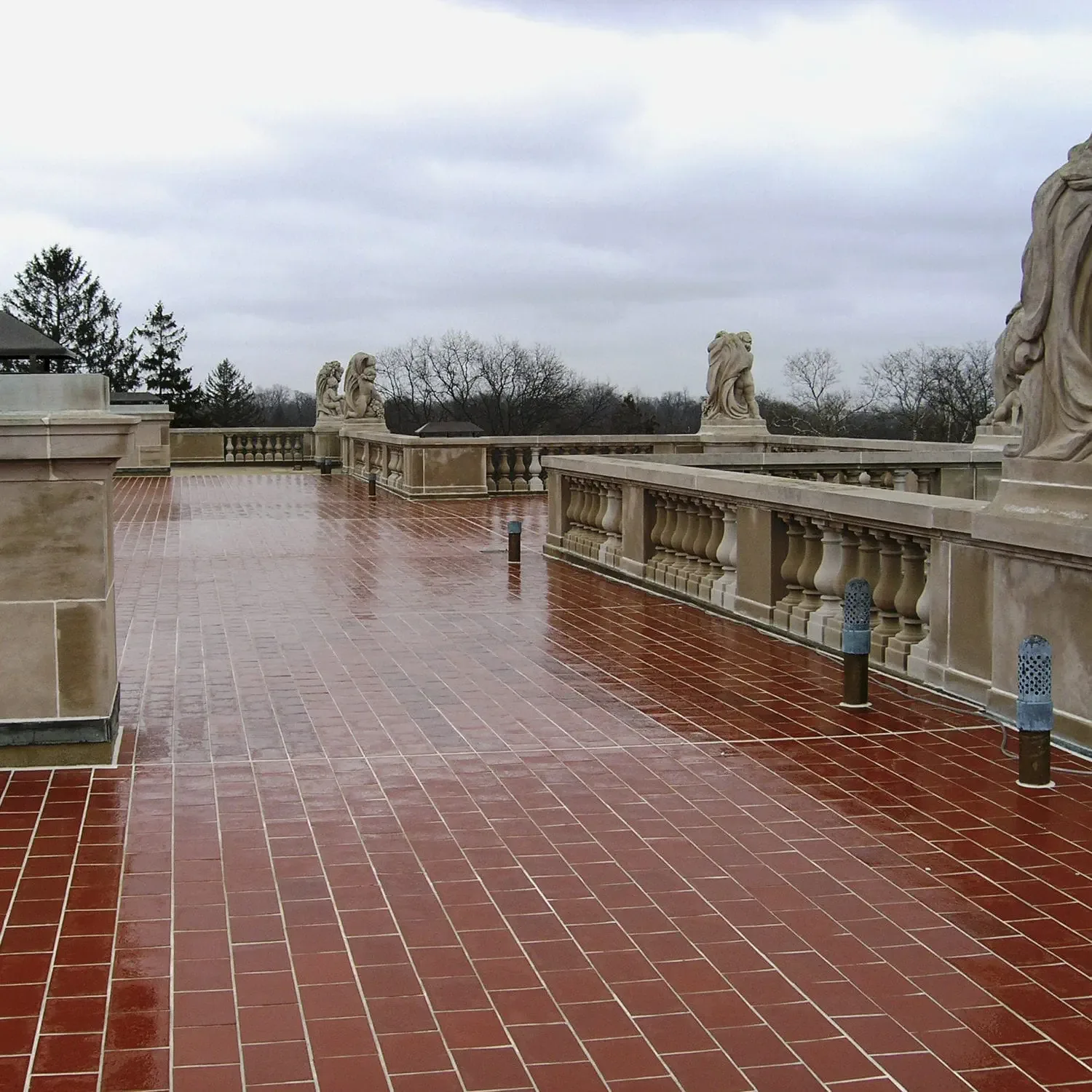
Sealing terracotta & quarry tile · Perth
Protect the terracotta, keep it looking like terracotta.
MineralProtect is the one and only next-generation sol-gel surface coating in Australia, and unglazed terracotta is exactly the kind of open, thirsty clay it grips into. It anchors into the mineral, colourless and breathable, so oil and spills lift in the cleaning instead of soaking into the floor. It is a genuine fit, with one honest limit we name up front.
What goes wrong with a raw terracotta floor
A thirsty floor drinks in everything.
Unglazed terracotta and quarry tile are fired clay left open on purpose. That warm, matte look is the same open pore structure that makes the floor soak up whatever lands on it. In a kitchen or an entry, that is cooking oil and grease, dropped wine, muddy footprints and mop water that darkens a patch and never fully lifts. And the two things people usually reach for to fix it both fail the floor.
The old way · 1
Wax and oil finishes
Boiled linseed, tung oil and paste wax build a mellow sheen for a season. Then the traffic lanes wear through, the finish goes patchy and streaky, it yellows and holds dirt, and you are back to stripping, re-oiling and buffing on a loop. Stripping old wax off an aged floor is one of the worst jobs in the house.
The old way · 2
A topcoat or film on top
A glossy film seals the surface shut. On a clay floor that breathes moisture up from the bedding screed and slab, that trapped moisture blushes the film milky, and foot traffic lifts and peels it. When a film fails it has to be stripped back to bare tile before you can redo it, so each round costs more than the last.
And the pore sealer trap
Protection in the wrong place
A penetrating sealer puts its repellency down inside the clay, millimetres below the surface. But the mop, the shoes and the spills all happen at the face. So the part of the floor you actually walk on and clean is left exposed, and the beading you paid for fades first, out of reach.
How our coating protects fired clay
It works with the porosity, not against it.
Fired clay is a silica-rich ceramic body, and it is porous. That is a problem for a raw floor and an advantage for us. The same open pore network that makes terracotta thirsty is exactly what our coating keys into.
Anchors into the surface and pores
The water-based mineral sol-gel wicks into the open clay and cures in place into a dense inorganic silica network, anchoring into the mineral right at the face. Higher porosity helps the grip, so the very thing that made the floor soak up stains is what holds the coating.
Colourless, and it still breathes
It is non-pigmenting, so the tile keeps its natural colour, matte character and feel. And because it engineers the surface instead of plugging the pores, moisture can still escape. A floor that breathes up from the screed does not get its moisture trapped and turned into a milky bloom or a lifted finish.
Protection where the wear happens
The protection sits at the surface, where feet, mopping and spills all land, not stranded down the pore where none of that reaches. When it eventually wears, it wears slowly by fine abrasion, and it renews with a top-up over clean tile. No stripping, no cliff-edge.
The edge a pore sealer cannot have
Built for how a floor is actually used.
A floor is not tested by rain. It is tested by mopping, scrubbing, foot traffic and the oil and grease of daily life, all of which happen at the surface. That is where our coating lives, so it meets all of it together, at the face.
Cleaning & abrasion
Survives the mopping and traffic
Terracotta floors get mopped, scrubbed and walked on every day. Because the protection is a dense inorganic network at the surface, it keeps working through the cleaning and traffic that wear other sealers off. It fades slowly and predictably, and renews with a top-up over clean tile rather than a strip.
Chemical
Stable under real cleaning
The bonded inorganic surface stays stable through the routine alkaline floor cleaners of real maintenance, the exact exposure that breaks a pore sealer down from the inside. It is more resistant, not immune, so we do not leave strong cleaner pooled to dry on it, and we will walk you through what it handles.
UV
Does not yellow or chalk
On a sunroom, courtyard or alfresco terracotta floor, sun is what ages a coating. Ours is inorganic, so it does not yellow or chalk the way an organic film does. It holds up under the UV that breaks other coatings down, far more UV-resistant than a film, not UV-proof.
Oil
Grease lifts instead of soaking in
This is the big one for terracotta. A standard water-repellent sealer does nothing for oil, and oil is what marks a clay floor for good. Ours is engineered so oil and grease sit on the surface and lift in the cleaning, so a dropped-oil or cooking spill wipes up instead of setting into the tile. It is PFAS-free by design.
Proven, not promised
Seal it once, properly.
One clear price, the right coating for fired clay, and a guarantee registered to your floor. No re-waxing every season, no film to strip and redo.
- Stable under alkaline cleaners and scrubbing. The exact conditions that hydrolyse and quietly fail standard pore sealers, then all at once.
- Inorganic, so it does not yellow or chalk. No organic film sitting on top to blush, peel or discolour in the sun.
- Degrades slowly, not suddenly. No hidden failure point. It eases back toward untreated over years, tested at independent houses including TÜV Rheinland, SGS, Intertek and REACH.
The honest part
Where we tell you straight.
This is a good fit, not a perfect one, and we would rather you know the limits before we start than after. Here is exactly where a coating like ours is and is not the answer for terracotta.
It will not give you the wet, glossy look
Our coating is colourless. If what you actually want is that deep, darkened, polished patina, that comes from a wax or penetrating oil, and it is a different, higher-maintenance path. We will tell you honestly which one you are chasing rather than sell you the wrong finish.
It needs bare, open tile to bond
If your terracotta already carries an old wax, oil or acrylic finish, that has to come off first, because the coating bonds into the clay, not onto a layer of someone else's product. On an aged floor that stripping is real work, and we assess it before we quote.
It does not cure damp from below
If salt is blooming or the floor stays damp because moisture is rising from the slab or bedding screed, no surface coating fixes that. Ours is breathable, so it lets that moisture keep escaping rather than trapping it, but the cause is underneath, and sealing the top will not solve it.
It is more forgiving, not spill-proof
Terracotta is a genuinely thirsty floor. We cut the soaking dramatically, so everyday marks lift instead of setting. But a big oil or wine spill left to sit still wants wiping up promptly. It buys you time and easier cleaning, not a floor you can ignore.
Common questions
Terracotta & quarry tile, answered.
Can you seal unglazed terracotta and quarry tiles?
Yes. Fired clay is a porous, silica-rich body, which is a genuine fit for MineralProtect. The coating wicks into the open pore network and cures into a thin mineral layer that anchors into the mineral. It stays colourless and breathable, so the floor keeps releasing moisture rather than trapping it.
Will sealing change the colour or give it a shine?
No. MineralProtect is colourless and non-pigmenting. Same colour, same matte character, same feel. The only change is that water and oil no longer grip.
If you want the darker, glossy patina, that comes from a wax or oil finish, which is a different and higher-maintenance path. We will tell you honestly which one you are actually after.
My terracotta floor is already waxed, oiled or sealed. Can you still coat it?
The coating needs a bare, open, sound surface to bond into, so an old wax, oil or acrylic finish has to come off first. On an old floor that is real work, and we assess it before we quote so you know exactly what is involved.
Will it stop oil and food stains in a terracotta kitchen floor?
Oil and grease sit on the surface and lift in the cleaning instead of soaking into the clay, so kitchen and dining marks wipe up instead of setting. It makes a very thirsty floor far more forgiving. It is not stain-proof, so a big oil or wine spill still wants wiping up promptly.
Will it make the floor slippery?
It does not lay down a glossy film the way a topcoat does. It is a thin, colourless surface treatment that leaves the tile's own texture, so it does not add the sheen a film would. We do not give a slip rating, and if your floor is somewhere slip matters we will talk it through with you.
Does sealing fix a terracotta floor that stays damp or blooms white salt?
No surface coating cures rising damp or salt coming up from the slab or bedding screed below. Because MineralProtect is breathable, it lets that moisture keep escaping rather than trapping it, which is the right behaviour for a floor that breathes from below. But if there is a moisture source underneath, sealing the top does not fix the cause, and we will say so.
How long does it last, and is there a guarantee?
Every Extera seal is registered under a 10-year guarantee on the repellency function. The visible beading fades before the protection does, so a drop in beading is a prompt to have us re-test and top up, not proof it has failed. Top-ups go on over clean tile with no stripping.
Keep reading
Related surfaces in the library.
Terracotta sits in the brick and masonry family. If your project is a mix of surfaces, these are the ones people ask about alongside it.
Brick & masonry
Clay brick / face brick
Sealing face brick and brickwork against water, efflorescence and grime, without a film that blushes.
Read the guideBrick & masonry
Clay / brick pavers
The same fired clay underfoot outdoors: paths, courtyards and driveways in clay and brick pavers.
Read the guideBrick & masonry
Cement masonry blocks (Besser)
Protecting Besser and breeze-block walls, retaining and fencing from water and staining.
Read the guideBrick & masonry
Roof tiles (concrete / clay)
Porous roof tiles that go mossy and soak up water: how a breathable coating helps.
Read the guideNot sure where your surface sits? Browse the full Sealing Library
Get a quote
Seal the terracotta, not the character.
We will assess your floor, tell you straight what it needs, and seal it with the right coating for fired clay, registered under a 10-year guarantee. Confirmed price before you book.