
Sealing guide · Perth · paving failures
Why are my pavers going green?
Green is a living growth, not a stain. It's algae, and often moss, feeding on moisture that sits trapped in porous, shaded paving. Here's how to clear it safely without wrecking the stone, and why a breathable seal that sheds water slows it coming back, without pretending any coating makes it impossible.
The short answer
Green means the surface stays damp.
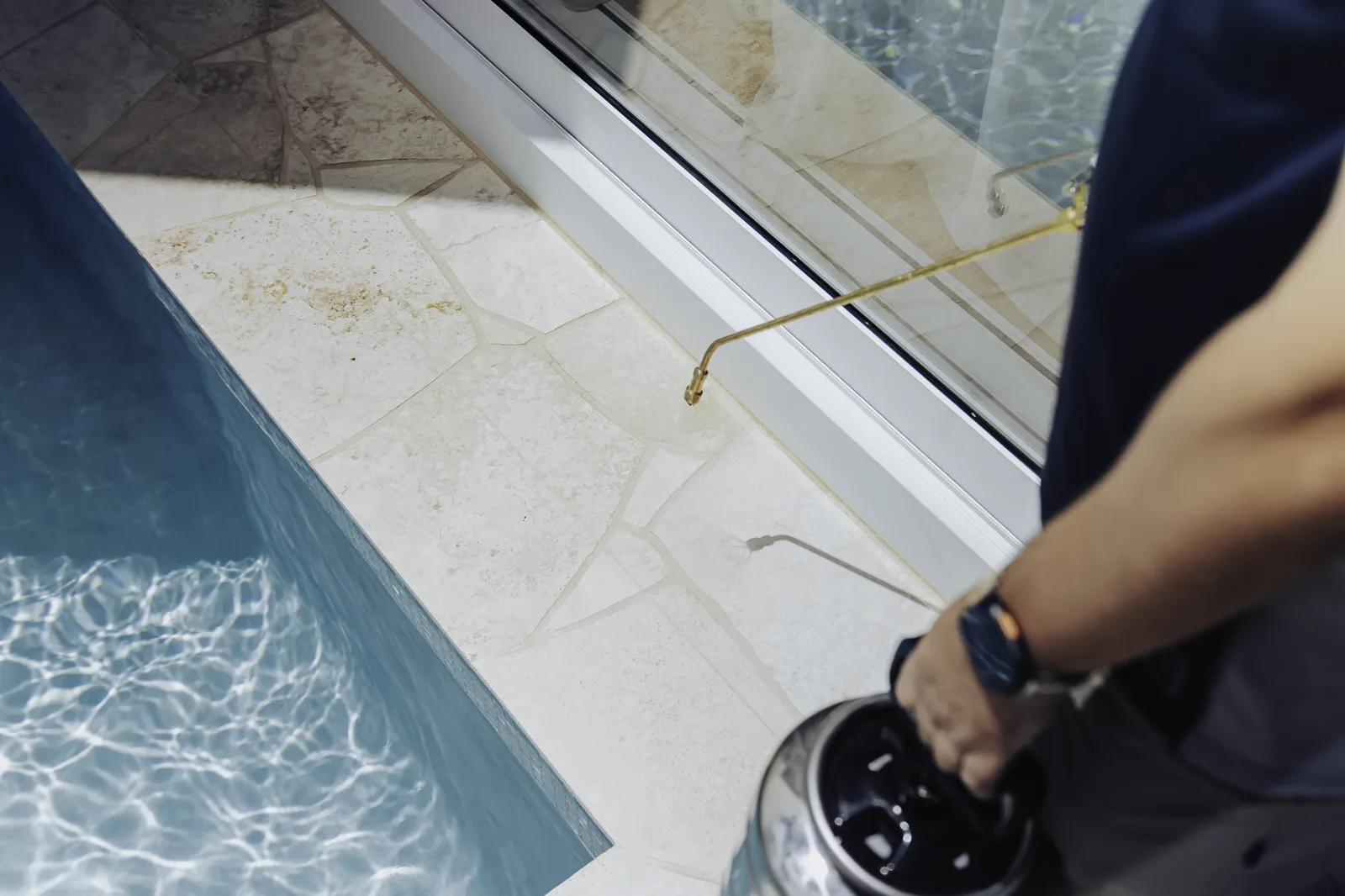
Algae and moss are tiny plants, and like any plant they need three things to take hold: moisture, shade and a surface to settle into. Porous paving in a spot that never fully dries out gives them all three. Water soaks into the open pores, the shade stops it drying, and spores drift in on the wind and take root. The green you're looking at is that growth spreading across the top and down into the surface. That's why a normal hose-off doesn't shift it, and why it comes straight back if the damp conditions don't change. Change the conditions with our paver sealing in Perth, which sheds water so the surface dries faster and greens slower.
Most common
Green algae
A thin, slippery green or black film that spreads fastest in shaded, damp areas. It's the most common cause of green pavers in Perth and the easiest to clear, because it mostly sits on the surface rather than rooting in deep.
Deeper rooted
Moss
The spongy, cushiony green that builds up in joints, low spots and the roughest, most porous stone. It holds water like a sponge, so it keeps the paver underneath constantly wet and needs a proper scrub to lift out.
Stubborn
Lichen
The flat, crusty grey-green patches that grip on hard and shrug off a quick wash. Slower growing but stubborn, it anchors right into the surface and usually needs a dedicated treatment and dwell time rather than muscle.
The point to hold onto: none of it is a stain you scrub out once. It's a growth that returns as long as the surface stays wet and shaded. Clear it, then change the conditions, or you're back here next winter.
Do it once, do it right
How to clear it without wrecking the stone.
The biggest mistake is reaching straight for a high-pressure washer. On limestone, travertine and other soft stone it pits and roughens the surface, and a rougher surface holds more water and gives the next lot of algae an even better grip. Go gentler and let the chemistry do the work.
Sweep off the loose growth first
Brush away the thick moss and loose green with a stiff broom while the pavers are dry. Getting the bulk off first means the cleaner reaches what's actually gripping the surface instead of soaking into a sponge of dead moss.
Wet the pavers, then treat with the right cleaner
Dampen the surface and apply a dedicated moss and algae cleaner made for masonry and paving. On natural carbonate stone like limestone and travertine, keep strong acids off it and test any product on a hidden paver first. Give it dwell time to kill the growth rather than scrubbing straight away.
Work it with a brush, not brute force
Once the treatment has done its job, agitate with a stiff bristle brush. If you must use a pressure washer, keep it on a low, wide fan and hold it well back, especially on soft or aged stone. Let the cleaner lift the green, don't blast the surface apart trying to do it in one pass.
Rinse, dry, then fix the cause
Rinse thoroughly and let the paving dry right out. Then deal with why it went green in the first place: move reticulation off the paving, trim back overhanging plants for sun and airflow, and clear anywhere water pools. Clear the surface without changing the conditions and the green just grows back.
Why it keeps coming back
Bare pavers hold water. That's the fuel.
Raw stone and concrete paving is porous. Rain, reticulation and morning dew soak straight in, and in a shaded spot that water sits in the pores for days. That steady damp is exactly what algae and moss feed on. Change what the water does on the surface and you pull the fuel out from under the growth.
On bare paving, water soaks in and lingers
Open pores drink up every drop and hold it. In shade it barely dries between waterings, so the surface stays damp, spores settle in, and the green spreads across the top and roots down into the pores where a wash can't reach.
A breathable seal sheds the water and lets it dry
Our coating anchors into the mineral surface and stays breathable and colourless. Water beads and sheets off the top instead of soaking in, so the surface dries out far faster after rain or reticulation. Less standing damp means far less of what algae needs to take hold.
And what does appear sits on top, so it washes off
Because the growth can no longer key deep into open pores, the green that does form sits on a protected surface. It lifts with a wash instead of needing a dwell-and-scrub battle every time. You get green slower, lighter and far easier to clear.
What to do next
Clear it, then seal it so it's easier.
The order matters. A seal protects clean, dry paving, it doesn't cure a green surface. Get the growth off and the pavers dried out first, then lock that in with a breathable coating so the next lot has far less to feed on and lifts with a wash.
- Clear the green first, gently, with the right cleaner for the growth and the stone, then let the paving dry right out.
- Fix the water and the shade, so you're not sealing over the same damp conditions that caused it.
- Then seal it, with a breathable coating that sheds water and anchors into the surface, registered under a 10-year guarantee.
The honest limit
No seal makes green impossible.
We'll say it straight, because plenty won't. Algae is airborne and it will land on any surface that stays wet and shaded for long enough, coated or not. A seal doesn't sterilise the paving or block the sun, so a spot in deep, constant shade with reticulation on it can still go green over time. What the seal changes is the odds and the effort. The surface dries faster, the growth can't root deep, and it comes back slower, lighter and washes off far more easily than off raw stone. You're not buying paving that can never go green. You're buying paving where keeping it clean is an occasional wash instead of a yearly battle, and where fixing the shade and the water alongside it does most of the work.
Green pavers, answered
The questions people actually ask.
What is the green stuff growing on my pavers?
Almost always algae, and often moss or lichen alongside it. They're tiny plants that need three things: moisture, shade and something porous to settle into. Perth paving in a shaded, damp spot gives them all three, so a thin green film spreads across the surface and into the pores. It's a living growth, not a stain, which is why bleach-and-scrub works where a normal wash doesn't, and why it comes back if the damp conditions stay the same.
How do I get green off pavers without damaging them?
Sweep off the loose growth first, then wet the pavers and treat them with a dedicated moss and algae cleaner made for masonry, left to dwell rather than scrubbed hard. Work it with a stiff brush, then rinse. Keep the pressure low, especially on limestone, travertine and softer stone, because a strong pressure washer pits and roughens the surface and gives the next lot of algae an even better grip. Avoid strong acids on natural carbonate stone, and always test any cleaner on a hidden paver first.
Will sealing my pavers stop them going green?
No sealer makes green impossible, and any that claims to isn't being straight with you. What a good seal does is change the conditions. A breathable coating that anchors into the mineral surface sheds water off the top and lets the surface dry out faster, so algae has far less of the constant damp it feeds on. It also stops the growth keying deep into open pores, so what does appear sits on top and washes off far more easily. You get green slower, lighter and easier to clear, not never.
Why do my pavers keep going green in the same spot?
Because that spot stays wet and shaded. The usual Perth culprits are reticulation or sprinkler overspray landing on the paving several times a week, a south-facing or tree-shaded area that never gets full sun, poor drainage where water pools, and overhanging plants that trap humidity and drop leaf litter. Fix the water and the shade and the green slows right down. Adjust the retic off the paving, trim back for airflow and sunlight, and clear pooling, and you remove the fuel.
Is green on pavers slippery or dangerous?
It can be. A film of algae or moss is genuinely slippery when wet, which matters around pools, steps and entertaining areas where people walk barefoot. That's the main reason to keep on top of it rather than leave it. Clearing it back and keeping the surface drier makes the paving safer underfoot as well as cleaner to look at.
Keep reading
Next on paving and stone.
Guide
Why is my limestone going white?
The other common paving problem: efflorescence versus etching, how to tell them apart and what to do.
Read the guideGuide
How to clean sealed natural stone
The right way to keep sealed stone paving clean without stripping the coating or scratching the surface.
Read the guideGuide
Protecting pool surrounds in Perth
Shade, splash and constant damp make pool coping a prime spot for green. How to get ahead of it.
Read the guidePillar
Surface resistance
Why protection has to live at the surface, where the water, cleaning and wear actually land.
Read the pillarSurface
Travertine
Pool, patio and paving. How a breathable coating protects travertine and keeps it drying fast.
See the surfaceSurface
Clay and brick pavers
Driveways, paths and courtyards. Porous and prone to green in the shade, and how we seal them.
See the surfaceGet a quote
Clear the green. Keep it easier.
We'll clear the growth, get the paving dry, and seal it with a breathable coating that sheds water and anchors into the surface, registered under a 10-year guarantee. Green comes back slower and lighter, and lifts with a wash instead of a yearly battle. Confirmed price before you book.