
The Sealing Library · Honest expectations
What a seal does, and what it doesn't.
The most useful thing we can tell you about a sealed surface is where it stops. A good seal protects for years, but the beading you can see fades before the protection does, and no coating makes a surface you never have to touch. Name the limit plainly, and the upkeep turns into the easy part. That is the whole idea.
The two clocks
Two clocks, and they run at different speeds.
A sealed surface has two things going on at once, and confusing them is why people wrongly decide a coating stopped working. One is the protection. The other is the beading you can see. They are not the same clock, and the visible one is not the important one.
The slow clock
The protection lasts years
The real job, keeping water from soaking in, oil from setting, grime from gripping, is the durable part. It is a dense mineral coating bonded right at the surface, so it holds up through the cleaning and sun that wear ordinary sealers off. This is the clock that matters, and it is the slow one.
The fast clock
The beading fades first
The dramatic water beading is the most fragile thing on the surface. It fades faster than the protection underneath. So when water stops beading, that is a prompt to have us re-test, not proof the seal is gone. Judge it on whether water still soaks in slower and grime still wipes off easier.
The reset
The reseal tops up, no stripping
When it is genuinely due, ours goes back on over itself. There is no failed film to grind back to bare surface first, the step that makes every film re-coat cost more than the last. A top-up on a clean surface, and you are back to full strength.
Here is the gap that pays for itself: ours lasts for years and tops up without stripping. The sealers in common use across Perth are typically redone every year or two, and a failed film has to be stripped first. If you want the mechanism behind that, start with how sealing actually works and the sealer types compared.
The upkeep
The hard part is done. What's left is easy.
Sealing does not delete maintenance. It changes what maintenance is. The set-in stain that once meant hard scrubbing, or replacing the surface outright, is the version ours, the one and only next-generation sol-gel surface protective coating in Australia, takes off the table. Because contaminants sit on top instead of soaking in, what used to set in for good now tends to lift with an ordinary clean. The surface does not clean itself, but the upkeep becomes genuinely easier.
Cleaning gets easier, not eliminated
Because contaminants sit on the surface instead of soaking in, the marks that used to set in for good now tend to lift with ordinary cleaning. You still clean it. You are just doing the easy version, and doing it less often.
Every clean is also protecting the surface
Grit and grime are what abrade a coating over time, so keeping the surface clean is literally how you make it last. The upkeep and the protection are the same habit: look after the surface and it looks after you back.
A top-up puts it back to full strength
Over the years, when the beading has faded and the water test says it is time, a top-up goes on a clean surface and resets it. No stripping, no cliff-edge, no starting again from bare surface. That is the difference between a coating that renews and a film that has to be torn off.
The honest limits
What sealing does not do.
In a category full of permanent and never-again promises, the operators worth trusting are the ones who tell you where a product stops. So here is where ours does, in plain terms, before you book.
It does not stop acid etching on stone
On carbonate stone like marble, limestone and travertine, acids such as wine, lemon, vinegar and pool acid dissolve the surface itself. That is etching, a physical mark in the stone, not a stain sitting on it, and no penetrating sealer stops it, because the acid reacts at the exposed surface without soaking in. Sealing slows absorption and buys wipe-up time. Glass is the one exception: on glass, GlassProtect protects against the permanent etching that ruins bare glass.
It is not a set-and-forget surface
No coating makes a surface that cleans itself for good. Ours makes the cleaning easy and slows the build-up, but it still gets the occasional clean. Anything sold as never needing attention again is overpromising, and we would rather you heard that from us going in than felt let down later.
More resistant, not immune
Ours stands up to routine alkaline cleaners, pool chemistry, sun and oil far better than an ordinary sealer, because the protection is inorganic and sits where the wear happens. But more resistant is not proof against everything. Strong solvents, harsh acids and constant abrasion still take a toll. We build for real-world use, not for a promise nobody could keep.
Why we lead with the limits: naming them is how you know the rest is true. The full picture of what the surface can take is in surface resistance in the real world, and the stone chemistry behind the etching limit is in stone and sealer chemistry.
PFAS-free by design
The oil resistance, without the forever chemicals.
For years, the only sealers that genuinely repelled oil on stone were fluoropolymer: the forever chemicals now being regulated out. Australia has already banned PFOA, PFOS and PFHxS. We deliver oil resistance without them.
By design, not by reformulation
We never needed the fluorine
We did not take a fluorinated product and strip the fluorine out to dodge a rule. Our chemistry never used it. Oil and grease sit on the surface and lift in cleaning because of how the mineral coating controls surface energy, so a barbecue or engine-oil spill wipes up instead of marking the surface for good.
Where it matters most
Safer to live with, right where you live
This counts most on the surfaces closest to daily life: kitchen stone, alfresco, pool surrounds. A coating you cook beside and swim next to should not be a persistent chemical you would rather not have around. Ours is water-based, low-VOC and PFAS-free by design.
The water test
Check it yourself, in ten seconds.
You do not need us to tell you whether a surface is still shedding water. You can see it. This is the simplest check there is, and it is worth knowing so you never have to guess.
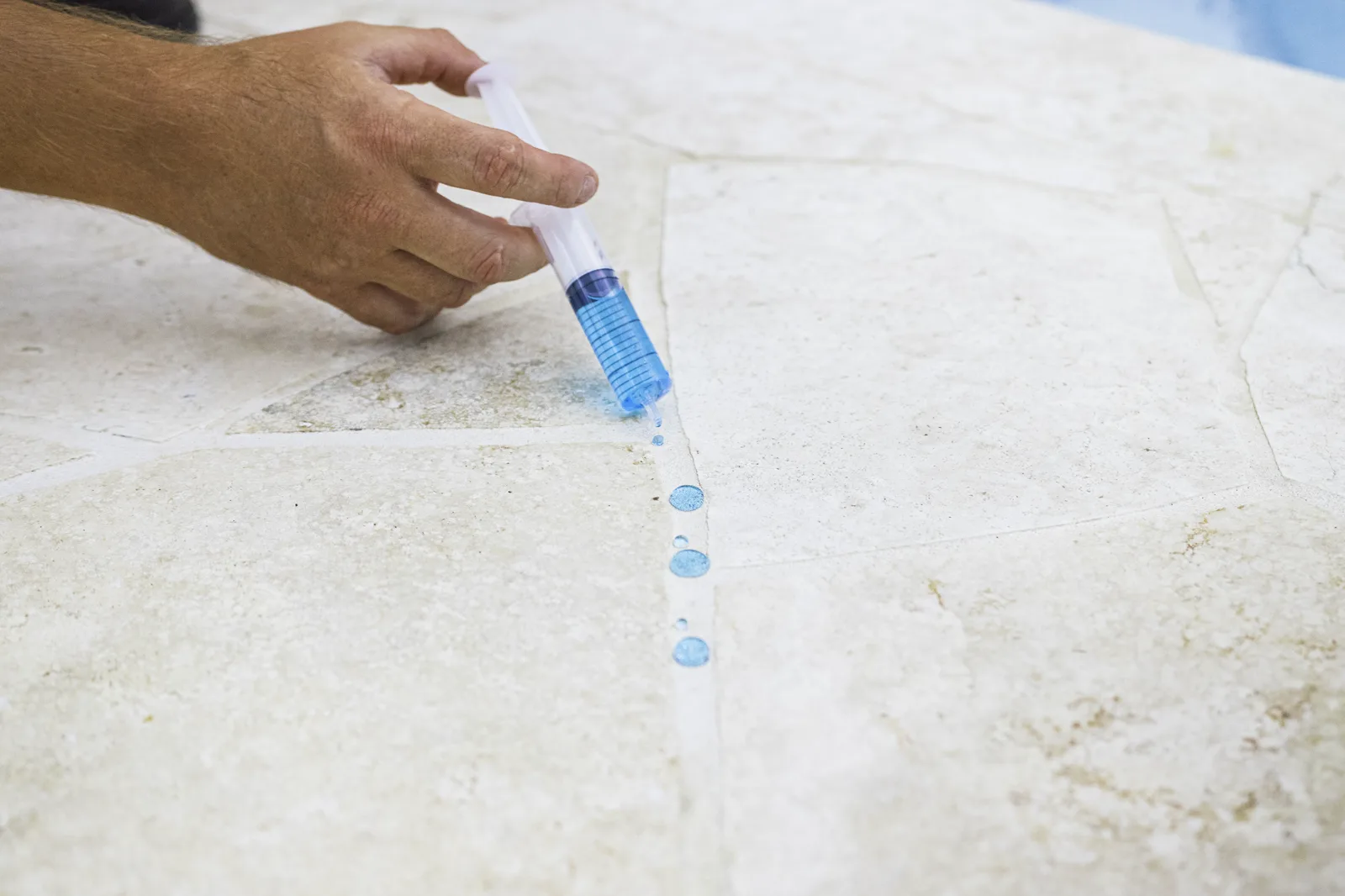
- Pour a little water on it. On a working seal, it beads up and sits on top, and a porous surface stays its normal colour underneath instead of darkening where the water lands.
- Watch what the surface does. If the water soaks straight in and the stone or concrete darkens, the surface is drinking it, and that is what lets stains set. If it beads and sheds, the protection is doing its job.
- Beading gone is a prompt, not a verdict. Because beading fades before the protection, water that no longer beads is a sign to have us re-test, not proof the seal is dead. If it is genuinely due, a top-up goes on clean, no stripping.
See it by surface
The same rules, on your surface.
How the two clocks and the upkeep play out depends on what you are sealing. Start with your material, or browse the whole library.
Natural stone · optimal
Travertine
Porous carbonate stone, our sweet spot. Where the coating anchors into the mineral surface, stays breathable, and keeps the colour you paid for.
Read the guideConcrete · optimal
Exposed aggregate
The driveway that came sealed with a film that whitened and peeled. Here is the seal that bonds into the surface instead, and tops up without stripping.
Read the guideGlass · optimal
Frameless glass
Where water beads and sheets off instead of clinging, so rain and a quick rinse do most of the work and hard-water minerals find far less to grip. GlassProtect also protects glass against the permanent etching that ruins it bare.
Read the guidePrefer the glass detail on its own? Read glass protection explained, or open the full Sealing Library and find your exact material.
Living with it, answered
The real questions.
If the water stops beading, has the seal failed?
No, and this is the single most common mix-up. The visible beading is the most fragile thing on a sealed surface, and it fades before the protection underneath does. So when water stops beading, treat it as a prompt to have us re-test, not proof the seal is gone. Judge it on whether water still soaks in slower and grime still wipes off easier. If it is genuinely due, a top-up goes on a clean surface with no stripping.
Does a sealed surface still need cleaning?
Yes, and any coating that says otherwise is overpromising. Sealing does not remove cleaning, it changes what cleaning is. Because contaminants sit on the surface instead of soaking in, the marks that used to set in for good now tend to lift with ordinary cleaning. You still give it the occasional clean, it is just the easy version, and every clean is also keeping the protection working, since grit is what abrades a coating over time.
How often will I need a reseal or top-up?
It depends on the surface and how hard it is used, so we give you the honest interval for your job rather than a number picked to win it. Ours lasts for years and tops up without stripping, where the sealers in common use across Perth are typically redone every year or two, and a failed film has to be stripped back to bare surface first. When the water test tells you the beading has faded, we re-test, and if it is due the top-up goes straight on clean.
Does sealing stop my marble or travertine etching from wine and lemon?
No, and any sealer that claims to is overpromising. Marble, limestone and travertine are carbonate stone, so acids like wine, lemon, vinegar and pool acid dissolve the surface itself. That is etching, a physical mark in the stone, not a stain sitting on it, and no penetrating sealer stops it because the acid reacts at the exposed surface without needing to soak in. Sealing slows absorption and buys wipe-up time. Glass is the one exception: on glass, GlassProtect protects against the permanent etching that ruins bare glass. There is more in stone and sealer chemistry.
What is the difference between the guarantee and how long the beading lasts?
They are the two clocks again. The visible beading is the short one and fades first. The guarantee is a separate thing: a 10-year registered guarantee on the coating's repellency function, with re-treatment of the affected area as the remedy, and it sits on top of your rights under Australian Consumer Law. Loss of beading is a prompt to re-test, not a guarantee claim in itself. The guarantee page spells out exactly what it covers.
Is the coating safe to have around food and pools, given the PFAS news?
Yes. For years the only sealers that genuinely repelled oil on stone were fluoropolymer, the forever chemicals now being regulated out, and Australia has already banned PFOA, PFOS and PFHxS. Ours delivers oil resistance without them: PFAS-free by design, not by reformulation, because our mechanism never needed fluorine to work. It is water-based and low-VOC, which matters most on the surfaces closest to daily life, like kitchen stone, alfresco and pool surrounds.
Get a quote
Seal it once, and know what you have.
We prepare and seal your surface with the right coating for the material, at $16/m² all-in, registered under a 10-year guarantee. You get the honest refresh interval for your surface, not a number picked to win the job. Read what the guarantee covers first if you like.