
The Sealing Library · decision
Do I need to seal marble?
Short version: for most marble, yes, but for one honest reason and not the one people expect. Sealing marble slows staining, the oil, wine and coffee that soak in and leave a shadow. What it cannot do is stop acid etching, and any seal that claims to isn't being straight with you. Get that one distinction right and the decision makes itself.
The short answer
Seal it for stains, not for etching.
Marble is beautiful and it is porous, so left bare it drinks in whatever lands on it. A drop of olive oil, a splash of red wine, a ring from a coffee cup: on unsealed marble these soak straight in and can leave a shadow that is hard to lift. A good breathable coating changes that. It repels water and oil so a spill beads and sits on top, giving you time to wipe it away before it ever soaks in. That is the real, honest reason to seal marble. What no coating can do is make marble acid-proof, and that is the part worth understanding before you spend a cent.
What sealing does
Slows staining
Repels water and oil so spills bead on the surface instead of soaking in. You get a window to wipe them off, and everyday marks lift far more easily. This is where a seal genuinely earns its keep.
What it cannot do
Stop acid etching
Marble is calcium carbonate. Anything acidic, lemon, wine, vinegar, many cleaners, chemically dissolves the surface and leaves a dull mark. No penetrating sealer prevents that on stone, and we will not pretend otherwise.
The quick test
The water drop
Put a few drops of water on a hidden patch. If it darkens and soaks in within a couple of minutes, your marble is thirsty and sealing will help. If it beads and sits, it is less urgent, though oil still soaks in faster than water.
The point to hold onto: sealing buys you time against stains. It does not make marble bulletproof against acid. Both things are true, and knowing the difference is what stops you overpaying for a promise no coating can keep.
Two different problems
A stain and an etch are not the same thing.
People lump every mark on marble together, but they come from opposite mechanisms and only one of them is a job for sealing. Tell them apart and you will know exactly what a coating can and cannot do for you.
A stain is something soaking in
Oil, wine, coffee and dirty water are absorbed into the pores and sit there as a darker patch. It is a deposit, and it is exactly what a breathable coating is built to slow, because the coating keeps the liquid on the surface where you can wipe it off. Honed and tumbled marble is more open and thirsty than polished, so it stains faster and benefits most.
An etch is the surface dissolving
Marble is metamorphosed limestone, calcium carbonate, and acid reacts with it chemically. A splash of citrus or wine, or the wrong cleaner, eats a shallow dull spot into the polish. It is not a deposit sitting on top, it is lost stone, and no coating on marble can prevent that. This is the honest limit every marble owner should hear up front.
So sealing helps with one, not the other
Seal marble and you meaningfully cut your risk of staining and make everyday cleaning easier. You still treat acids with respect: wipe spills quickly, keep citrus and harsh cleaners off it, and use pH-neutral products. A seal is a safety margin against stains, not permission to be careless with acid.
The same carbonate chemistry drives the white marks people see on Perth limestone. For the deep version: why limestone goes white
How to seal it properly
Breathable and colourless, never a film.
If you do seal marble, how it is sealed matters as much as whether. The old approach was to lay a topcoat over the stone. On marble that is the wrong move, and it is why so many people are wary of sealing valuable stone at all.
A film changes the marble and can fail
An acrylic or wet-look topcoat sits on the surface as a skin. It can add an unnatural sheen, it wears and scuffs in traffic, and on stone that carries any moisture it can cloud or peel. You have altered the look of the marble you paid for, and set yourself up for a strip-and-redo later.
A bonded coating anchors into the surface
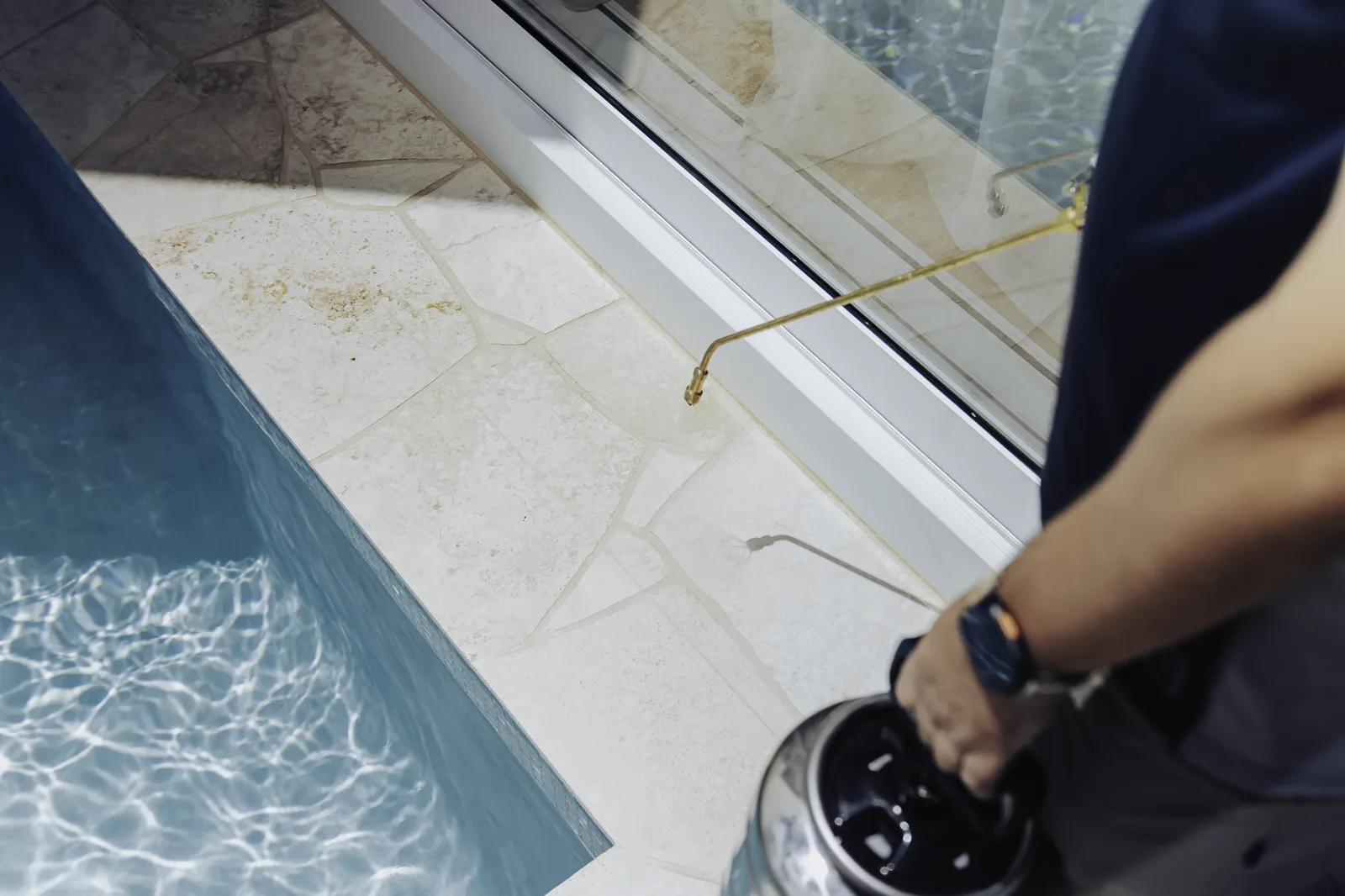
MineralProtect anchors into the mineral surface itself rather than lying on top. It is water-based, colourless and PFAS-free by design, so it changes nothing about how your marble looks. It repels water and oil, and stays breathable, so the stone can still release moisture instead of trapping it.
Colourless means the marble stays marble
This matters most on feature stone. Because the coating engineers the surface rather than coating over it, it protects without darkening, yellowing or glossing your marble. You keep the exact stone you chose, just far more resistant to the spills that used to stain it.
The honest limit
Worth it, as long as you know what it buys.
So, do you need to seal marble? For most marble, yes, and it is worth it, as long as you are buying the right thing. You are buying slower staining, an easier clean and a safety margin when something spills, not immunity from acid and not a stone you can neglect. Sealed marble still needs a coaster under the wine and a quick wipe after the lemon. If a company tells you their seal makes marble stain-proof or acid-proof, that is the moment to be sceptical, because the honest truth is more useful: protect it against what a coating can genuinely stop, and respect the acids it cannot. If you would like us to look at your marble before you decide, send a photo with a quote and we will tell you straight whether sealing is worth it for your piece. You can also see how we treat natural stone across benchtops, floors and feature walls on the stone and paving page, or read the specifics for polished and honed marble.
What to do next
Protect the stone. Keep the stone.
If your marble is unsealed and you would rather not watch it collect stains, a breathable, colourless coating is the low-risk way to protect it without changing a thing about how it looks. We prepare it, seal it, and register the job under a 10-year guarantee.
- Do the water-drop test first, so you know whether your marble is actively absorbing.
- Seal for stain resistance, with a colourless coating that repels water and oil and changes nothing.
- Keep respecting acids, wipe spills fast and skip citrus and harsh cleaners, sealed or not.