
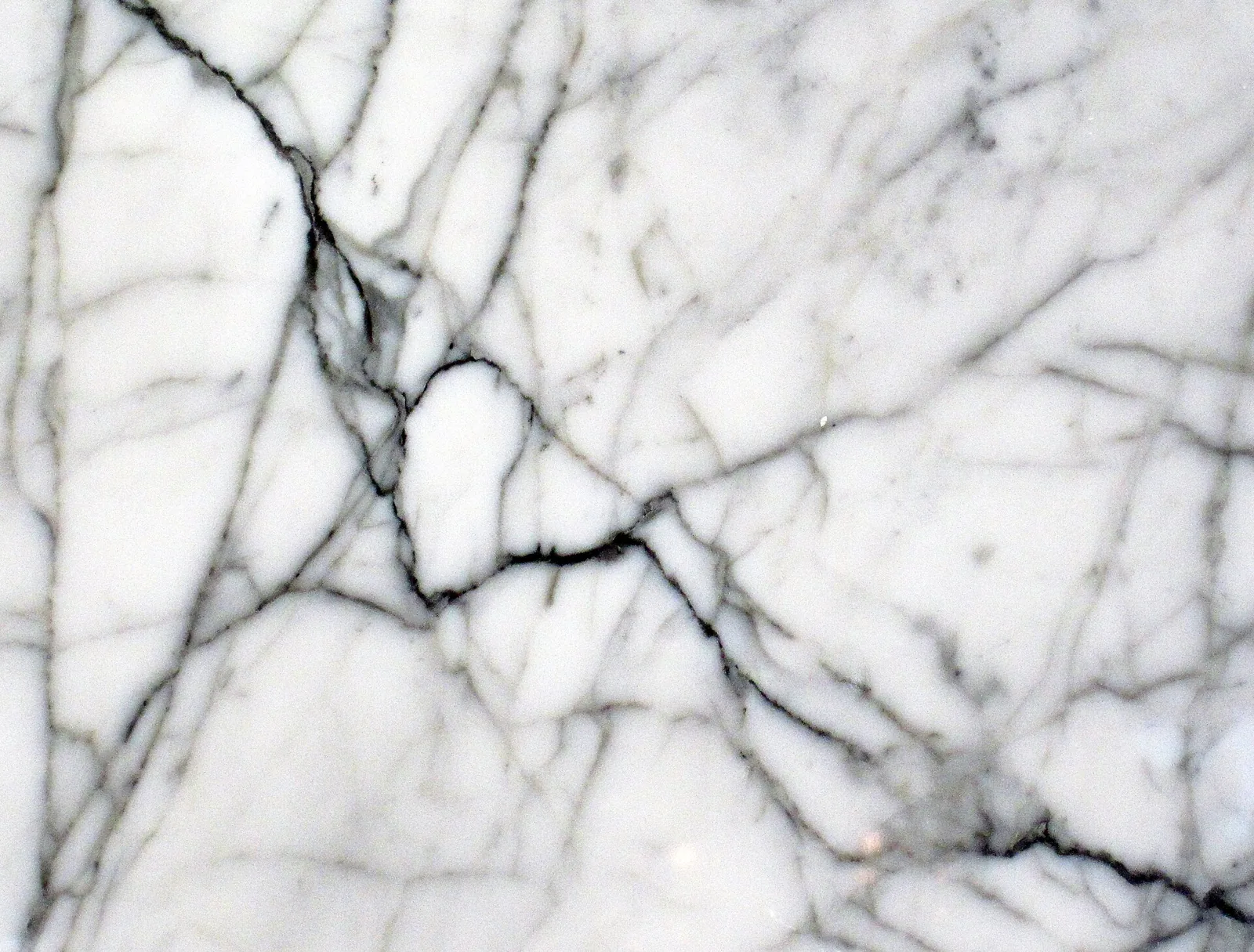
Sealing marble · Perth
Polished marble: the one we'll be honest about.
We make the one and only next-generation sol-gel surface coating in Australia, and there is nothing else on the market that works like it. So when we say polished marble is the hard case for any sealer, ours included, you can take it as the straight version, not a sales pitch. Here is exactly why, and what we would do instead.
What people actually want fixed
Polished marble marks in ways a seal can't undo.
Marble is a beautiful, soft, acid-sensitive stone, and a factory polish makes it look flawless the day it goes in. Then real life starts. Most calls we get about marble are one of these three, and only one of them is a job for a sealer at all.
The dull rings
Etching from anything acidic
A splash of lemon, wine, vinegar, cola or a bathroom cleaner leaves a dull matte ring on a polished top, even after you wipe it up. That is not dirt and it is not a stain. The acid has dissolved the polish away. No sealer stops that, because acid attacks the exposed surface without ever needing to soak in.
The dark marks
Oil and wine soaking in
On a more open marble, cooking oil, a wine spill or a toiletry can soak in and set as a dark patch. This one a coating can genuinely help with, by keeping the spill on top long enough to lift in cleaning. On a dense factory polish, though, very little soaks in to begin with, so there is little for a seal to improve.
The wrong promise
A seal sold as etch-proofing
The trap is being sold a marble sealer as though it will stop the etching. It will not, and the operator who tells you it will is the one to be wary of. A penetrating sealer slows how fast liquids soak in. It does nothing about acid eating the surface.
Why marble is the exception
Our coating anchors into a surface. Polished marble barely has one.
There used to be only two ways to seal a surface, and both wear out. Our sol-gel is a third way that anchors into the mineral surface of the material itself. That is a real advantage on most stone. On dense, polished marble it is exactly where the mechanism runs out of room.
No pores to key into
Our coating works partly by wicking into a surface's open pore structure and setting into a mineral network keyed into it. The more porous a stone, the better that grip. Polished marble is at the other extreme: it is dense, and the polish closes what little porosity it has, so there is almost nothing for the coating to anchor into.
Carbonate, not silica
On siliceous stone like granite and quartzite our coating forms a genuine chemical bond to the surface. Marble is calcium carbonate, which does not offer the same chemistry to grip, so on pure polished marble we lose that anchor too. On porous marbles and limestones we still anchor into the pore structure, but a mirror polish removes even that.
And the etch is untouchable either way
Even a perfect seal would not help the thing marble owners hate most. Acid etching is the stone dissolving at the face, physical loss of material, not a film on top. It happens at the exposed surface, so no penetrating sealer can get between the acid and the marble. This is honest chemistry, not a limit of our product versus someone else's.
Where the coating does earn its place
Not all marble is a polished benchtop.
The moment marble is honed, tumbled, or used as a floor or outdoor paver, it opens up, and our coating starts to do real work. On those surfaces the same real-world-resistance edge that makes our chemistry worth having comes into play. Here is what it does, and the line we will not cross.
Oil and wine
Spills lift instead of soaking in
On honed or tumbled marble the coating lowers the surface energy so oil, wine and toiletries sit on top rather than drawing into the stone. Blot a spill reasonably soon and it lifts in normal cleaning instead of setting as a dark mark. Standard water-repellent sealers do not deal with oil at all. Ours is engineered to, and it is PFAS-free by design.
Cleaning and wear
It survives the mopping and scrubbing
Because the protection anchors at the surface rather than sitting on top as a film, it holds up to the routine cleaning that wears ordinary sealers off, and it tops up without stripping when it is eventually due. It is more resistant to routine alkaline cleaners, not immune, and being inorganic it will not yellow or chalk in Perth sun the way an organic film does.
The honest limit
It will not make marble acid-proof
No coating we make, or anyone makes, stops acid etching on marble. If your surface is a kitchen benchtop that meets lemon and wine daily, a seal will not save the polish, and we would rather you knew that before you spent a cent. This is the one place we say plainly: the material, not the sealer, is the constraint.
The better fit
If you want a stone bench we can protect
Granite and quartzite are siliceous stone. Our coating bonds properly to them, resists oil and cleaning, and they shrug off the acids that etch marble. If you love the look of stone on a benchtop but want it to actually cope with a kitchen, that is the conversation worth having, and we are glad to have it.
How we quote it
We would rather lose the job than sell you a seal that does little.
Naming the limit is the whole point. The operators who promise a marble seal that never fails and shrugs off acid are the ones to worry about. On polished marble we will look at your actual surface and give you the straight answer, even when the straight answer is do not bother.
- An in-person read of your stone. Polished, honed or tumbled, indoor or out, and how it is used changes the answer completely. We assess the piece in front of us, not a category.
- A clear yes, no, or here is the trade-off. If a coating genuinely helps your surface we will tell you what it does and does not cover. If it does not, we will say so and point you to what does.
- Everything we do seal is registered. Where we do seal a surface it is $16 per square metre all in, $960 minimum, under a 10-year guarantee covering the coating's repellency function.
The one thing to remember
Stain versus etch is the whole story.
Get this one distinction and you will never be misled by a marble seal again. A stain is something coloured soaking in and darkening the stone. A coating helps here, keeping oil and wine on top so they lift in cleaning, and a stain can often be drawn back out of the stone later. An etch is a dull mark or ring where acid has physically dissolved the polish. That is missing stone. No sealer prevents it, no cleaner removes it, and the only fix is to re-hone or re-polish the marble.
So the honest promise for polished marble is a small one: a coating can reduce staining on the more open marbles, and it can make day-to-day cleaning easier. It cannot stop etching, it cannot make the stone free of upkeep, and it cannot make a soft carbonate behave like granite. If that is not enough for how you use the surface, the answer is a different stone, not a better sealer.
Straight answers
Marble sealing, answered.
Can you seal polished marble?
Polished marble is dense and near non-porous, so a penetrating coating has almost no pore structure to anchor into and adds little on a factory polish. We will always tell you straight rather than sell you a seal that does little. Where marble is honed, tumbled or used outdoors it opens up and a coating starts to earn its place, and that is worth a look.
Does sealing stop marble from etching?
No. Etching is acid dissolving the marble at the surface, a physical loss of stone, not a stain sitting on top. A penetrating sealer cannot prevent it, because acid reacts at the exposed surface and needs no pores to get in. Anyone promising an acid-proof or etch-proof marble seal is overselling you. The only real fixes are wiping acidic spills fast and re-honing an etch out later.
What is the difference between an etch and a stain?
A stain is something coloured, oil or wine, soaking in and darkening the stone, and a coating can help oil and wine sit on top so they lift in cleaning. An etch is a dull mark or ring where acid has eaten the polish away. A stain lives in the stone and can be drawn out. An etch is missing stone and can only be re-honed or re-polished.
What can you seal well instead?
If you want a stone benchtop we can genuinely protect, granite and quartzite are siliceous stone where our coating bonds properly and resists oil and cleaning. Honed and tumbled marble, travertine and limestone are porous and take the coating well too. We are happy to walk you through the trade-offs.
My marble is a floor or outdoor paver, not a bench. Different answer?
Often yes. Honed floors and tumbled outdoor marble are far more open than a mirror-polished benchtop, so the coating has something to anchor into and the oil and cleaning resistance genuinely helps. It still will not make the stone acid-proof, but on those surfaces a seal is worth considering. Send us a photo and how it is used and we will tell you.
How much does it cost and is it guaranteed?
Where we do seal a surface it is $16 per square metre all in, with a $960 minimum, registered under a 10-year guarantee that covers the coating's repellency function. On polished marble we would rather assess it in person and tell you honestly whether a coating is worth your money at all.
Keep reading
Related surfaces and the science
Granite
The stone benchtop we protect well. Siliceous, acid-resistant, and a genuine bond for our coating.
Read the guide →Travertine
Porous calcareous stone where the coating anchors beautifully. Our sweet spot around Perth pools.
Read the guide →Limestone (Tamala / natural)
Perth's own stone. Open, part-siliceous, and a strong fit for anchoring at the surface.
Read the guide →Sandstone
Siliceous and porous, a genuine covalent bond plus pore interlock. Another confident yes.
Read the guide →For specifiers
The science, in full
Why calcite offers no silanols, why porosity drives the anchor, and the honest bounds on every resistance claim.
Go deeper on the science →Browse
The Sealing Library
Every common WA surface, by material, graded honestly for how well our coating protects it.
Find your surface →Get a quote
Marble? We'll tell you straight.
Send us your surface and how you use it. If a coating genuinely helps, we will seal it under a 10-year guarantee. If it does not, we will say so and point you to what does.