
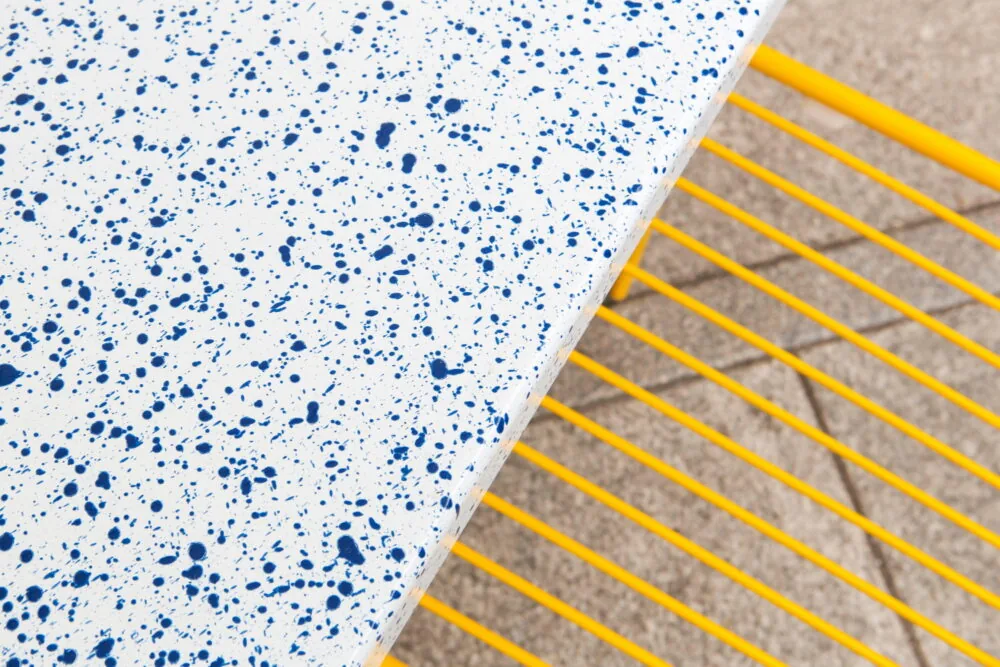
Sealing vitreous enamel · Perth
Enamel that wipes clean.
Vitreous enamel is glass, fired onto steel or cast iron. That glassy face is why a bath or a barbecue looks so sharp when it's new, and it's exactly what soap scum, limescale and baked grease dull over the years. GlassProtect is the one and only next-generation sol-gel surface coating in Australia, and it bonds a clear layer onto that enamel so the marks lift instead of setting in.
What actually goes wrong
Enamel doesn't wear out. It gets dull.
Fired enamel is hard and it's meant to last decades, so it rarely fails outright. What people actually notice is the shine going. On a bath that's soap scum, body oil and Perth's hard, mineral-heavy water leaving a film and a chalky ring at the waterline. On a barbecue hood or an enamel cooktop it's grease and spatter baking on. None of it is damage to the enamel itself. It's a layer of grime keyed onto a glassy surface that had nothing on it to shed the grime in the first place.
In the bathroom
Scum, oil and a limescale ring
Soap doesn't rinse away clean in hard water. It turns to a greasy scum that clings to the enamel, and where the water evaporates it leaves a chalky lime ring. Bare enamel has no way to shed either, so it builds up film on film, and the bath slowly loses the gloss it had new.
In the kitchen and outside
Grease that bakes straight on
Enamel cooktops, range hoods and barbecue lids cop oil and spatter that heat sets hard. On bare enamel it grips the glassy surface and needs real scrubbing to shift, which is where the trouble starts.
Here's the part that quietly wrecks enamel: the fix people reach for. Harsh acidic cleaners, and gritty cream cleansers worked in with a scourer, do lift the grime, but they also micro-scratch the glass a little more each time. Years of that is what actually dulls an old bath for good. You can't scrub a glassy surface aggressively forever and expect it to stay glassy. The answer isn't a harder scrub. It's giving the enamel a surface the grime can't grip in the first place.
How the coating works
It bonds to the glass. It doesn't sit on it.
For years there were only two ways to protect a surface: lay a film on top that eventually peels, or leave it bare and keep scrubbing. GlassProtect is a genuine third way, and it's the only next-generation sol-gel surface coating in Australia. On a glassy face like enamel it condenses a clear, nano-thin mineral layer that bonds to the surface itself and lowers its surface energy, so water, scum and lime lose their grip.
Bonds to the surface, not over it
Enamel is glass, and glass carries reactive sites the coating chemically bonds to. GlassProtect condenses onto them as a clear layer around 75 to 100 nanometres thick. There's no film laid on top to peel, cloud or yellow, and nothing you can see or feel changes.
Works where the cleaning happens
The protection sits right at the face of the enamel, which is exactly where the scum, grease and cleaning cloth meet it. Water sheets and beads off with far less dwell, so fewer minerals are left behind, and the ones that are do not key in. What does land sits loosely on top instead of bonding to the surface, so a quick wipe clears it where bare enamel would have you reaching for a scourer.
Stays clear, and easy to keep clean
Because it changes only the surface energy and not the look, the enamel keeps its colour and its gloss. What changes is the maintenance: marks wipe off with a soft cloth instead of a scourer, so you stop wearing the surface down trying to keep it clean.
The edge that matters on enamel
Built for the cleaning, not just the water.
Plenty of things bead water. The reason most of them don't last on a bath or a barbecue is that they can't take the way an enamel surface is actually used: scrubbed, hit with strong cleaners, cooked on, and left with greasy scum. That's the whole test, and it's where this coating is built to win.
Cleaning and abrasion
Survives the scrub that wears others off
The layer that does the work is a bonded mineral network sitting right at the surface, which is exactly where the cloth and cream cleanser act. It keeps repelling through the cleaning that strips thinner coatings, still beading at 3,000 scrub cycles, and it fades slowly rather than all at once. When it's due it tops up over itself, with no stripping.
Chemical
Stable through everyday cleaners
The coating is an inorganic silica network, so it doesn't break down the way an organic film does when it meets the alkaline detergents and bathroom cleaners of normal upkeep. It's more resistant, not immune, so we're honest that strong acids and harsh chemistry still take their toll, but routine cleaning no longer eats the protection.
Oil and grease
Where a water-only coating gives up
The film that clouds a bath is oily soap scum, and the marks on a barbecue are grease. A coating that only sheds water can't touch either. GlassProtect is genuinely oil-resistant, with an initial oil contact angle around 84 degrees, so scum and grease sit on the surface and lift in cleaning instead of clinging on.
UV, on the outdoor enamel
Doesn't yellow in the sun
On an outdoor barbecue lid or an appliance panel that lives in Perth sun, an organic film chalks and yellows. This coating is inorganic, so it holds up under the UV that ages those films. It's far more UV-resistant than a film, not UV-proof, and it holds its clarity rather than going cloudy over a summer.
Proven, not promised
The number that decides it on glass.
Durability on a glassy surface isn't about the rain. It's about how many rounds of cream cleanser and scrub pad the coating survives before it stops working. That's what we test to, and it's the honest measure for enamel too.
- Still beading at 3,000 scrub cycles. Around 3 times slower repellency loss than the leading brand, in comparable cream-cleanser abrasion testing.
- 3 times more durable than the leading brand. Tested contact-angle retention, on the exact kind of glassy surface enamel is.
- Independently tested and certified. Verified at recognised houses including TÜV Rheinland, SGS and Intertek.
Where we're straight with you
What sealing enamel won't do.
It doesn't stop a chip or a crack
Enamel is fired glass on metal. A hard knock can chip it, and a big temperature shock can craze it, and no coating changes that. What we protect is the surface of sound enamel against fouling and cleaning wear, not the enamel against impact.
It's long-lasting, not permanent
This is a treatment that fades slowly and is meant to be renewed, not a coating that lasts forever. The visible beading goes first, before the protection does, so when water stops rolling off cleanly that's your cue to have us check it, not proof it's gone. It tops up over itself with no stripping.
It's for enamel in normal service
Baths, sinks, cooktop faces, range hoods and barbecue lids all sit within a normal range and take the coating well. The parts that run red hot, grill bars and the inside of a firebox, are not where this belongs, and we'll tell you plainly which surfaces on your appliance we'd seal and which we wouldn't.
You still clean it, just far less
Nothing is maintenance-free, and we won't pretend otherwise. The point isn't to never wipe the bath again. It's that a soft cloth replaces the weekly chore: because minerals, scum and grease can no longer bond to the surface, water beads and sheets off and the enamel largely keeps itself clean, so keeping it clear goes from a job with a scourer and harsh chemistry to a quick rinse or a light wipe. It won't clean itself completely, but it is genuinely easier to keep clean, so you keep the gloss instead of grinding it away.
The questions we actually get
Enamel, answered.
Is vitreous enamel the same as glass?
Effectively, yes. Vitreous enamel is a thin layer of glass fired onto steel or cast iron at high heat, which is why a good enamel bath or barbecue lid has that hard, glassy sheen. Because the working face is glass, it takes GlassProtect well: the coating bonds a clear layer onto that glassy surface so water, scum and grease can't grip it.
Can you get the shine back on a dull enamel bath?
Some of it. A lot of what reads as a dull bath is a film of soap scum, body oil and hard-water minerals sitting on the enamel, and a proper clean lifts that off. What a clean can't fix is fine scratching worked into the glass itself by years of abrasive cream cleanser. Once it's cleaned back as far as it will go, GlassProtect keeps the surface repelling scum and lime, so it stays cleaner and takes far less upkeep to hold that way.
Can you seal an enamel barbecue or cooktop?
Yes, on the enamel surfaces that live in normal service: the lid and hood, the enamel cooktop face, an enamel sink or an appliance panel. GlassProtect is stable through the heat those surfaces see, and it helps grease and spatter lift instead of baking on. It's not for the parts that run red hot, like grill bars or the inside of a firebox, so we seal the enamel that stays within a normal range and tell you plainly where the coating stops.
How long does it last, and when do I redo it?
It's a long-lasting treatment, not a permanent one. The visible beading fades before the protection does, so when water stops rolling off cleanly, that's your cue to have us check it, not proof it has failed. When it's genuinely due it tops up over itself with no stripping. Every job is registered under a 10-year guarantee, and for glass and vitrified surfaces GlassProtect is tested 3 times more durable than the leading brand.
Is GlassProtect really 3 times more durable?
Yes, and it's worth being precise about what against. It's tested 3 times more durable than the leading brand, and it's still beading at 3,000 scrub cycles. In the same cream-cleanser abrasion testing people use on their own glass, it loses its water repellency about 3 times slower than the leading brand, so it survives the exact cleaning that wears other coatings off.
Will sealed enamel keep itself cleaner?
Mostly, yes. Because minerals, soap scum and grease can no longer grip a coated surface, water beads and sheets off and the enamel largely keeps itself clean, so most of what would mark it runs off before it can and what does land lifts with a rinse or a light wipe instead of a scourer. To be straight about hard water: it still carries minerals, so water left to sit and dry will leave something behind on any surface on earth. What changes is what happens to it. On bare enamel that scale bonds on, and on the glass itself it slowly etches in for good. On a coated surface the minerals can no longer grip, so you get far less to clean and it wipes off easily. By keeping mineral water from dwelling and bonding, GlassProtect resists and delays the hard-water etching that slowly eats untreated enamel. It doesn't stop a physical scratch or every harsh chemical, but it holds off the build-up that leads to that damage far longer.
Does sealed enamel still need any upkeep?
Yes, and here's the honest version. The hard part is done: because minerals, soap scum and grease can no longer bond to the surface, water beads and sheets off and the enamel largely keeps itself clean, so a quick rinse or a soft wipe is all it needs. Constant hard, bore or reticulation water left to dry with no wiping can still leave spots, on any surface on earth, but on a coated bath or panel those spots stay loosely on top and lift easily, where on bare enamel they bond on and, on the glass, etch in for good. It's not effortless, but it's genuinely easier to keep clean.
Related surfaces
More vitrified surfaces we seal.
Enamel sits in the same family as porcelain and ceramic: glassy, vitrified faces that all take GlassProtect. If yours is a tile rather than a bath or an appliance, start here.
Porcelain & ceramic
Glazed porcelain tile
The glazed floor and wall tile that shows every footprint and smear. Read the guide
Porcelain & ceramic
Polished / lappato porcelain
High-gloss porcelain where the polishing opens micro-pores that trap smears. Read the guide
Porcelain & ceramic
Matte / honed porcelain
The soft, non-reflective finish that holds mop marks and grime in its texture. Read the guide
Porcelain & ceramic
Full-body / technical porcelain
Unglazed through-body porcelain, common in commercial floors, where grime keys in. Read the guide
Get a quote
Keep your enamel glossy.
We'll clean it back properly and seal the enamel with GlassProtect, registered under a 10-year guarantee. Confirmed price before you book.