
Sealing onyx · Perth
Onyx is where we tell you straight.
We build the one and only next-generation sol-gel surface coating in Australia, and it is superb on porous stone. Onyx is not porous stone. It is dense, near-poreless, acid-sensitive carbonate, so it is not our strong suit, and we would rather tell you why than sell you a bottle. Here is the honest picture.
What actually goes wrong with onyx
A beautiful stone with a soft, acid-sensitive core.
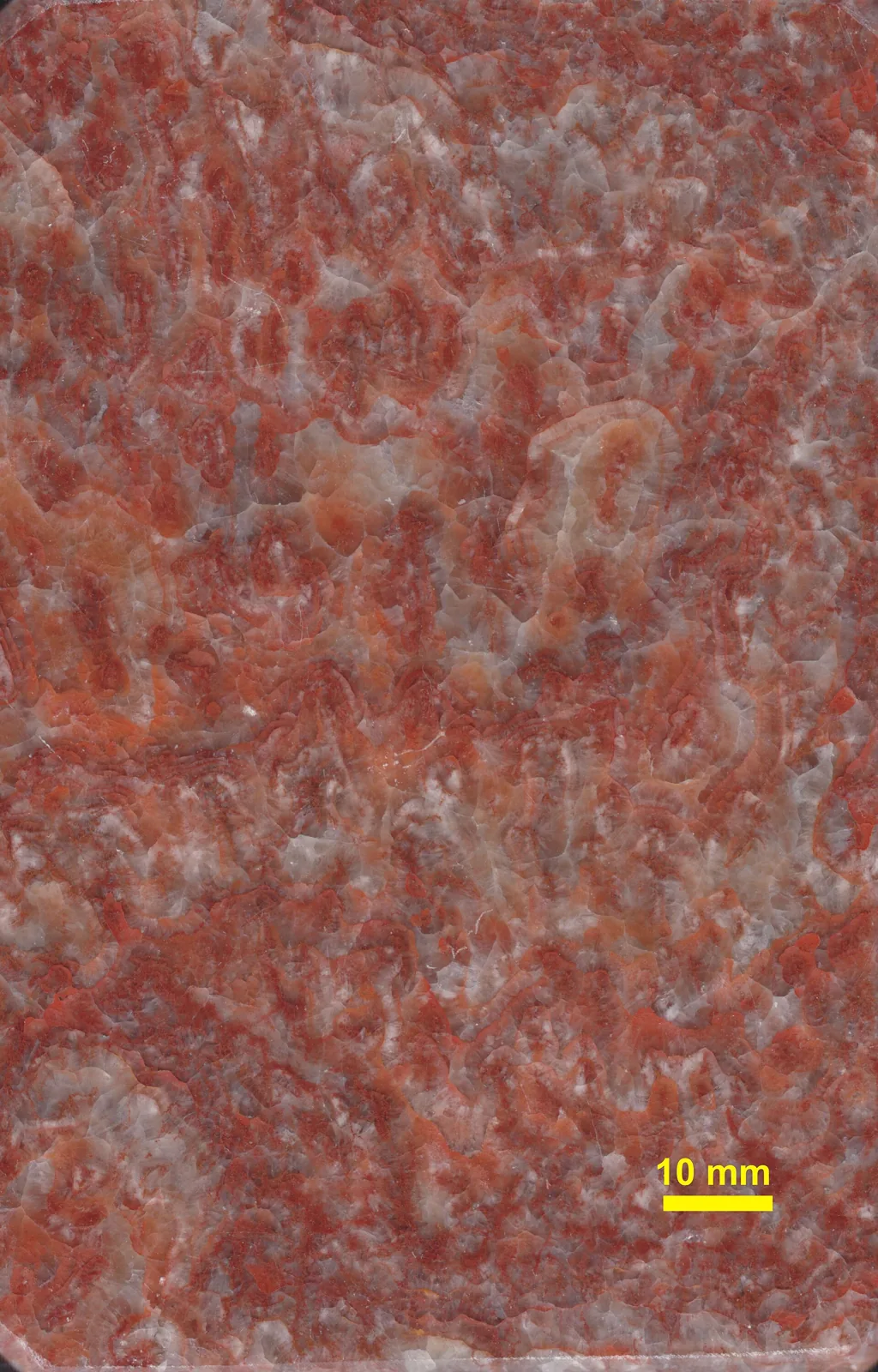
Onyx is prized for exactly the thing that makes it hard to protect. It is a fine, translucent, banded carbonate, usually run as a backlit feature wall or a vanity top, chosen for looks, not toughness. Two problems come with that, and no sealer erases either.
Problem · 1
It etches from anything acidic
Onyx is calcium carbonate, the same family as marble. Citrus, wine, coffee, vinegar, cola and most bathroom cleaners are acidic, and they dissolve the surface where they sit, leaving a dull mark. That is an etch, not a stain. It is physical loss of material, and cleaning cannot bring it back. This is why an onyx vanity in a busy bathroom shows its life quickly.
Problem · 2
It is dense, so there is little to grip
Our coating does its best work by anchoring into the mineral surface of an open, porous stone. Polished onyx has almost no open pore. There is very little for a surface treatment to key into, which is the opposite of the porous limestone and travertine we protect brilliantly. Onyx is also a soft stone that scratches and scuffs, and no coating makes any stone scratch-proof.
Why our chemistry loves porous stone, and onyx is not
There are three ways to seal. Ours needs a surface to bond into.
For decades there were two ways to seal a surface: a film on top, or a sealer down the pores. Our sol-gel is a third class. It anchors into the surface itself, right where wear and cleaning happen. That mechanism is a genuine category-of-one, and it is exactly why porosity matters so much for us.
It anchors into the mineral
On porous stone the water-based sol wicks into the open pore network and cures into a dense inorganic layer keyed into pore mouths and grain contacts. More porosity means a stronger anchor. That is why limestone, travertine and sandstone are our sweet spot.
Onyx gives it almost nothing to hold
A near-poreless, polished carbonate has next to no open structure to anchor into, and no silica for the coating to bond to the way it does on granite or sandstone. So the very thing that makes our coating exceptional elsewhere has little to work with here. We would rather say that plainly than pretend otherwise.
And no surface coating stops an etch
Etching is acid dissolving the carbonate at the exposed face. It needs no absorption to happen, so no penetrating sealer prevents it on stone, ours included. The one surface where we do make an etch-prevention claim is glass, never stone. Saying so is the whole point of an honest guide.
Where our edge lands, and where onyx changes the maths
Our real strength is cleaning, chemical, UV and oil. On the right stone.
The reason our coating wins on porous stone is that its protection lives at the surface, where real use happens. It survives the scrubbing that wears other sealers off, shrugs off routine cleaners, does not yellow in the sun, and helps oil lift instead of soak in. Here is how honestly each of those four applies to onyx.
Cleaning & abrasion
Real elsewhere, limited on soft onyx
On hard porous stone our surface layer survives pressure washing and repeated cleaning and renews with a top-up. Onyx is a soft stone that scuffs and scratches on its own, and no coating changes a stone's hardness. So this edge, one of our biggest elsewhere, does little for onyx.
Chemical
More resistant to routine cleaners, never acid-proof
Our coating is more resistant to routine alkaline cleaners than a bare surface, not immune. But onyx is undone by acids, and no sealer makes carbonate acid-proof. The honest win is only that a colourless surface can shed a spill a little faster, buying you time to wipe before it etches.
UV
A strength that onyx rarely needs
Our coating is inorganic, so it does not yellow or chalk in the sun the way an organic film does. That matters outdoors. Onyx is almost always an interior feature wall or vanity, out of the Perth sun, so this genuine strength usually has nothing to do here.
Oil
The one place a coating can honestly help
On a honed onyx vanity, a colourless surface treatment can help cosmetics, lotions and cooking oils lift in cleaning rather than sit and darken. It is an outcome, not a number, and it is bounded by everything above. On a mirror-polished piece there is so little to grip that even this is marginal.
The honest limit
The operators who promise an onyx sealer that stops acid etching are the ones to walk from.
Naming what we cannot do is the point. On onyx, the everyday damage that matters is the etch: a dull ring where a glass of wine, a lemon slice or a squirt of bathroom cleaner sat. That is the carbonate dissolving, and there is no penetrating sealer on any shelf that stops it. The fix for a bad etch is re-honing the stone, not cleaning it.
- No penetrating sealer stops acid etching on stone. Ours included. Anyone who says otherwise is overpromising the whole category.
- Porosity is our friend, and onyx has almost none. The dense, polished surface that makes onyx beautiful is the same thing that gives our coating little to anchor into.
- Etch-prevention is a claim we make for glass only. Never for stone. We would rather protect the surfaces we can genuinely stand behind.
What we would actually tell you to do
On onyx, good habits protect more than a bottle ever will.
If you love your onyx, the honest advice is to treat it like the delicate stone it is. That does more for it than any coating we could sell, and we are happy to say so.
Wipe acid fast
Citrus, wine, coffee, vinegar and bathroom cleaners are the enemies. Blot and rinse them straight away so they do not dwell long enough to etch.
Coasters, mats, pH-neutral cleaner
Use coasters and a mat under toiletries and drinks, and clean only with a pH-neutral product made for natural stone. Skip the supermarket sprays.
Ask us to assess the actual piece
If it is a honed feature wall rather than a mirror-polished top, a colourless surface treatment might be worth it. Show us and we will give you a straight yes or no.
Straight answers
Onyx, honestly answered.
Can you seal onyx?
We can look at it, but onyx is not our strong suit and we say so up front. It is dense and near-poreless, so there is very little for a coating to anchor into, and like all carbonate stone it acid-etches, which no penetrating sealer stops. On a honed feature wall or vanity a colourless, breathable surface layer can sometimes help everyday marks wipe up faster. On a mirror-polished top it is usually not worth it. We assess your exact piece and tell you straight.
Will a sealer stop my onyx from etching?
No. Etching is acid dissolving the carbonate at the surface itself, which needs no absorption to happen, so no penetrating sealer prevents it on stone. If someone promises you an etch-proof stone sealer, that is your cue to be careful. The one surface where we do make an etch-prevention claim is glass.
Why do you seal limestone and travertine so well but not onyx?
Because they are porous and onyx is not. Our sol-gel wicks into an open pore network and anchors into the mineral, and more porosity means a stronger anchor. Polished onyx has almost none, and it is a soft, near-pure carbonate with no silica for the coating to bond to. Porosity helps us. Onyx has almost none, so it is the hard case.
My onyx already has dull marks. Can you fix them?
Dull rings and patches on onyx are usually etches, which are physical loss of material. Cleaning and sealing do not bring them back. The genuine repair is mechanical re-honing and polishing by a stone restoration specialist, which is a different trade to sealing. We will always tell you when that is what you actually need.
What is the best way to protect an onyx vanity then?
Good habits, honestly. Wipe acidic spills fast, use coasters and a mat under toiletries, and clean only with a pH-neutral stone product. Those do more for onyx than any coating. If you would still like a surface treatment assessed on a honed piece, we are happy to look and give you a real answer.
Is there a stone that looks like onyx that you seal brilliantly?
If you love the look of natural stone but want it protected properly, porous stones are our sweet spot. Have a read of our guides on travertine, limestone, sandstone and granite. Those are the surfaces where our coating genuinely earns its keep.
Where our coating shines
Stones we protect brilliantly.
Get a quote
We will tell you what your stone actually needs.
Onyx, or the porous stone next to it, either way you get a straight answer. Where we are the right coating, it is $16/m² all-in and registered under a 10-year guarantee. Where we are not, we will point you the right way.