
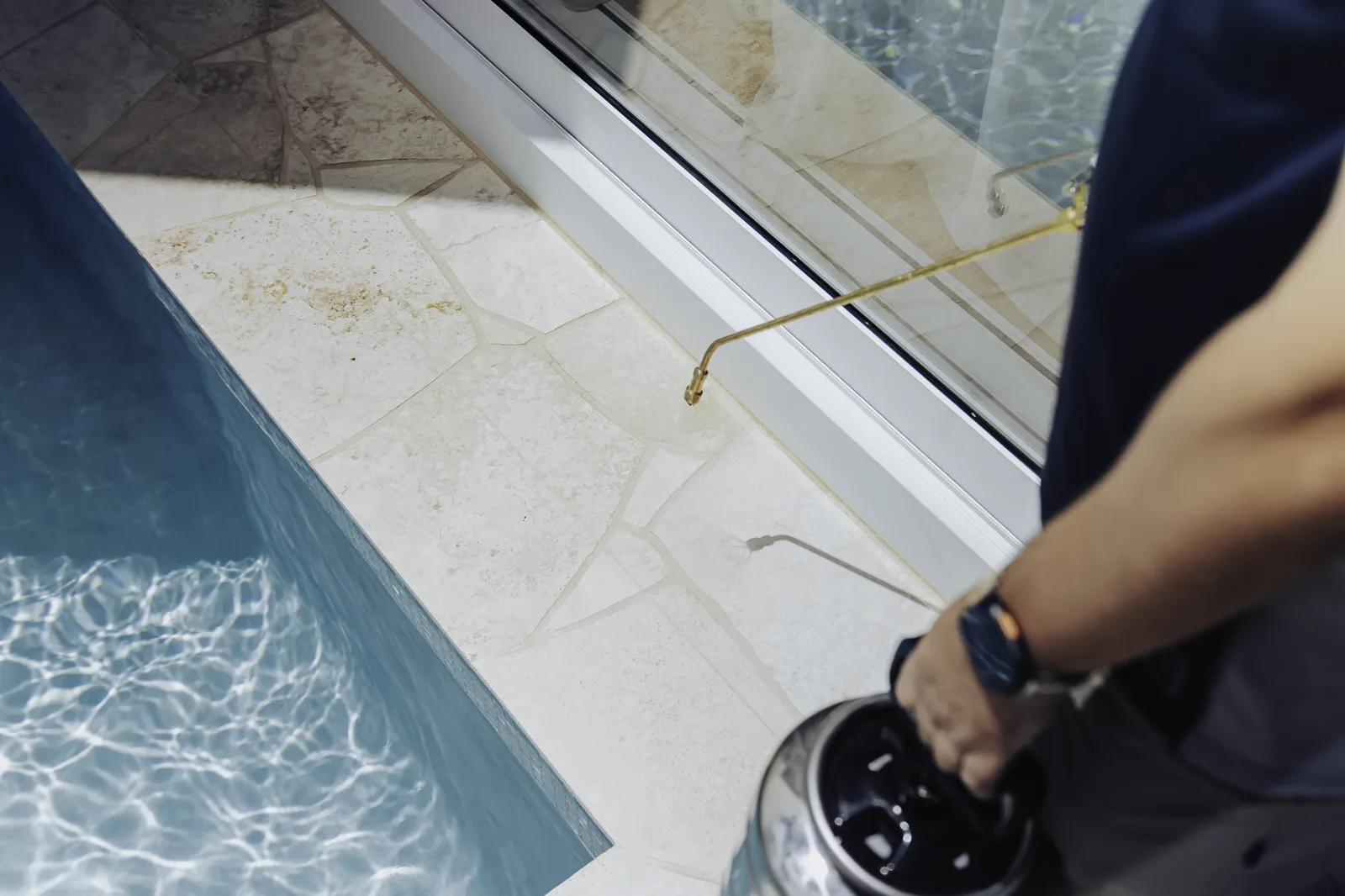
Sealing guide · Perth coast
How to protect coastal stone from salt.
On the coast, one bad run of salt is not a stain you clean off. It is stone flaking away for good. You cannot make stone salt-proof, but you can slow the damage right down: rinse the salt off before it dries, and seal with a breathable coating that sheds water instead of trapping it.
The short answer
Salt does not sit on coastal stone and wash off. It soaks in dissolved in water, then crystallises inside the pores as that water evaporates, and the growing crystals push the surface apart until it flakes off. That flaking, called salt spalling, is permanent loss of stone. So protection is about keeping salt from concentrating inside the stone in the first place.
Two things do most of the work. Rinse the salt away with fresh water before it dries and crystallises, especially after sea wind or pool splash-out. And seal with a breathable coating that sheds water off the top and still lets the stone dry from behind, so far less salty water gets in and what does get in can leave. What you must never do is lay a film or wet-look topcoat over coastal stone, because that traps the salt underneath and flakes the stone off from below.
The honest headline: this manages the risk, it does not remove it. Nothing makes stone salt-proof. What a good seal and a regular rinse do is turn a fast, irreversible loss into a slow, controlled one you can stay on top of.
What salt actually does
Why salt is worse than any stain.
A stain sits on the surface and comes off. Salt gets inside the stone and takes the surface with it when it goes. Here is the sequence that plays out on porous stone near the Perth coast.
Salty water soaks in
Sea air, spray off a windy swell, pool splash-out and bore-water reticulation all carry salt onto the stone dissolved in water. Porous stone like limestone, travertine and sandstone drinks that water in, salt and all, through its open pore structure.
The water evaporates, the salt stays
In Perth sun the surface water dries off fast, but the salt cannot evaporate. It is left behind inside the pores, and as more salty water arrives and dries, the salt concentration climbs. Eventually it reaches the point where it crystallises out as solid salt, just below the surface.
The crystals grow and push the surface apart
Salt crystals take up more room than the salt did in solution, and they keep growing with every wet and dry cycle. Trapped in a pore, they push outward with real force against the stone around them. This is called salt crystallisation pressure, and it is what tears porous stone apart from the inside.
The surface spalls off, and it does not grow back
The stone gives way where it is weakest: the face. It flakes, pits, powders and crumbles off in layers, which is salt spalling. Coping around the pool goes rough and chalky, paving loses its top, walls shed a skin. Once the surface is gone it is gone, so protecting stone before it spalls is the whole game.
The wet-and-dry zones are worst. Salt damage concentrates exactly where stone keeps getting wet and drying out again: pool coping at the waterline, splash zones, paving that catches reticulation, the base of walls near the ground. Those are the areas to watch first, and the first to rinse and seal.
What to actually do
Five moves that slow salt right down.
None of these makes stone salt-proof. Together they take coastal stone off the fast track to spalling and put you in control of it.
Rinse with fresh water, regularly
This is the highest-leverage thing you can do, and it is free. Salt only crystallises once the water it arrived in dries and concentrates, so a hose-down with fresh water washes it away before it can. Do it after a windy spell off the sea, after pool parties and splash-out, and through the dry months. Rinsing is even more effective on sealed stone, because the salty water sits on the surface where the hose reaches it instead of soaking straight in.
Seal with a breathable coating, not a film
A breathable coating that sheds water keeps most of the salty water on the surface where you can rinse it off, and still lets the stone dry out from behind, so salt is not sealed in against the face. That is genuine protection. A film or wet-look topcoat does the opposite: it traps salt and moisture under a skin and flakes the stone off from beneath. On coastal stone, breathable is not a preference, it is the whole point.
Protect young and raw stone early
The best time to protect coastal stone is before it has taken any salt damage. Raw, newly laid limestone, travertine and sandstone are wide open and most vulnerable. Once spalling has started the lost surface cannot be coated back, so sealing early is worth far more than sealing after the damage shows.
Keep pool and reticulation splash off the stone where you can
Every splash-out and every sprinkler that throws salty or bore water onto coping and paving is another dose of salt to dry out. You will not stop all of it, but aiming reticulation away from the stone, and hosing down splash zones, cuts the salt load noticeably at the areas that spall first.
Skip the acid cleaners
Limestone, travertine and many coastal stones are calcium carbonate, and acid dissolves them. Reaching for an acidic cleaner to lift salt staining trades a manageable deposit for a permanent dull etch, and opens the surface up so it drinks in even more salty water afterwards. Fresh water and a soft brush, not acid.
Do the free thing first. Even with no seal at all, regular fresh-water rinsing alone will slow coastal salt damage. A breathable seal makes every rinse count for more and adds protection the rinse cannot, but the rinse is the habit worth building today.
Why the right seal helps
Shed the water, keep it breathing.
Salt damage is water moving in and out of the stone. So the way you seal decides whether that water is kept out and let go, or bottled in with the salt. There are three ways to seal a surface, and only one of them is right for the coast.
It sheds the salty water off the top
MineralProtect anchors into the mineral right at the surface and lowers how readily water grips, so rain, spray and splash-out bead and run off instead of soaking straight in. Far less salty water gets into the stone, which means far less salt inside to concentrate and crystallise.
It stays breathable, so the stone dries out
Because it works at the surface rather than plugging the pores or laying a skin on top, moisture vapour can still escape. The stone keeps drying from behind, so salt is not sealed in against the face. That breathability is the difference between protecting coastal stone and slowly destroying it, which is exactly why a film is so dangerous here.
It is colourless, and it survives the cleaning
It protects without darkening the stone or leaving a film to blush and peel, and because it bonds into the surface it stands up to the sea, the sun and the rinsing rather than washing off in a season. On coastal stone, a seal that only lasts one summer is barely protection at all.
How the bond actually forms and why breathability matters is in the science pillars: Stone & sealer chemistry and how surface resistance works
Kept straight
What this does, and what it cannot.
It manages the risk, it does not remove it
No coating makes stone salt-proof, and we will not tell you it does. Salt in sea air and splash is relentless, and some will always find its way in. A breathable seal and a regular rinse slow the load right down and buy the stone years, but on the coast this is management, not a cure. Anyone promising salt-proof stone is selling you the promise, not the protection.
It cannot bring back stone that has already spalled
Once salt has flaked or pitted the surface off, that stone is gone, and a coating cannot fill it back in. Protection is worth the most before the damage starts, which is why raw and young coastal stone is the priority. If yours is already spalling, we will tell you straight what is worth sealing to protect what is left, and what is past saving.
What to do next
Match it to your stone.
The porous coastal stones that salt hits hardest are the ones a breathable coating protects best. Here is the guide for each.
Natural stone
Limestone
Raw Perth Tamala limestone, coping, paving and walls, is the classic coastal casualty. Porous, calcium carbonate and salt-loving. How a breathable coating protects it, in full. Sealing limestone
Natural stone
Travertine
Pool coping and alfresco favourite, and open enough that salt gets in fast. Our sweet spot for a breathable, colourless seal. Sealing travertine
Natural stone
Sandstone
Paving and cladding that pits and sheds its face under salt. A breathable coating anchors in and slows the spalling right down. Sealing sandstone
Not sure how much salt damage yours has taken already? Send a photo with a quote request and we will tell you straight what is worth protecting and what a breathable seal will and will not do for it.
Common questions
Coastal salt, answered.
Can you make coastal stone completely salt-proof?
No, and any sealer that promises it is not being straight with you. Salt is carried in by sea air, spray, splash-out and reticulation, and it will find its way into porous stone. What you can do is manage the load: rinse the salt off before it dries and concentrates, and use a breathable coating so far less salty water soaks in and the stone keeps drying out. That turns a fast, permanent loss into a slow, managed one. It does not make the stone salt-proof, because nothing does.
What's the single best thing I can do near the coast?
Rinse it with fresh water. Salt only does its damage once the water it arrived in evaporates and the salt crystallises inside the pores. A regular hose-down with fresh water, especially after a windy spell off the sea or a pool splash-out, washes the salt away before it can concentrate. It costs nothing and it is the highest-leverage thing you can do. A breathable seal then makes that rinsing far more effective, because the salty water sits on the surface where the hose reaches it instead of soaking straight in.
Does sealing stop salt damage on limestone?
It slows it, it does not stop it, and the type of seal matters enormously. A breathable coating that sheds water keeps most salty water on the surface where you can rinse it off, and lets the stone dry from behind so salt is not trapped against the face. That is genuine, worthwhile protection on porous coastal limestone. What you must never use is a film-former or wet-look topcoat, which traps salt and moisture under a skin: the salt then crystallises under the film and flakes the stone face off from beneath, which is worse than doing nothing.
My pool coping is flaking and pitting. Is that salt?
Very often, yes. Pool water carries salt, whether it is a saltwater pool or chlorinated, and every splash-out and wet footprint leaves salty water on the coping to evaporate. On porous limestone, travertine and sandstone that salt crystallises just under the surface, expands, and spalls small flakes and pits off the top, worst right at the waterline where it keeps wetting and drying. Rinsing with fresh water and sealing with a breathable coating both slow it. Flaking that has already happened cannot be coated back, so protecting a young surface early is worth the most.
Should I use a wet-look or film sealer to keep salt out?
No. It is the worst thing you can do on coastal stone. A wet-look acrylic or topcoat lays a skin that seals moisture and salt in rather than out. Salt keeps arriving from the sea air and rising from the ground, gets trapped under the film, crystallises against the underside of the stone face, and lifts it off in flakes, while the film itself blushes white and peels. Coastal stone needs a breathable coating that lets vapour escape, sheds water off the top and stays colourless, not a film that bottles the salt in.
Keep reading
Related guides & the science.
Same problem family: Perth stone outdoors
Related salt & water problems
The other coastal and hard-water failures we get asked about most.
Go deeper
The science behind it
Why breathability decides whether stone survives the salt, and how a bonded coating works.
Get a quote
Protect it before the salt takes it.
We will prepare and seal your coastal stone with a breathable coating that sheds water and lets the stone breathe, registered under a 10-year guarantee. Confirmed price before you book, and a straight answer on what sealing will and will not do for salt.