
Sealing guide · Perth
How often should you actually reseal?
There is no honest calendar number. The sealers in common use across Perth get redone every year or two because they wear out that fast; ours lasts for years and tops up without stripping. The real answer is to read your own surface, and it takes ten seconds.
The short answer
Stop resealing on a guess.
If you want the quick version: the cheap penetrating and film sealers most Perth surfaces come with are typically redone every year or two, because WA sun, reticulation and cleaning break them down fast. A coating built to last, like ours, holds for years and tops up without stripping. But a calendar is the wrong tool for the decision. The surface itself tells you when it is time, and reading it is easy.
Common sealers
Every year or two
Penetrating silane and siloxane sealers, and the acrylic films driveways come with, wear out fast in Perth conditions. People end up resealing every summer or two to keep the same surface protected, and a failed film has to be stripped first.
Our coating
Years, then a top-up
Because it bonds into the surface instead of sitting on it or hiding in the pores, ours lasts for years. When it is eventually due, a top-up goes straight onto a clean surface and resets it. No stripping, no cliff edge.
The right test
Read the surface
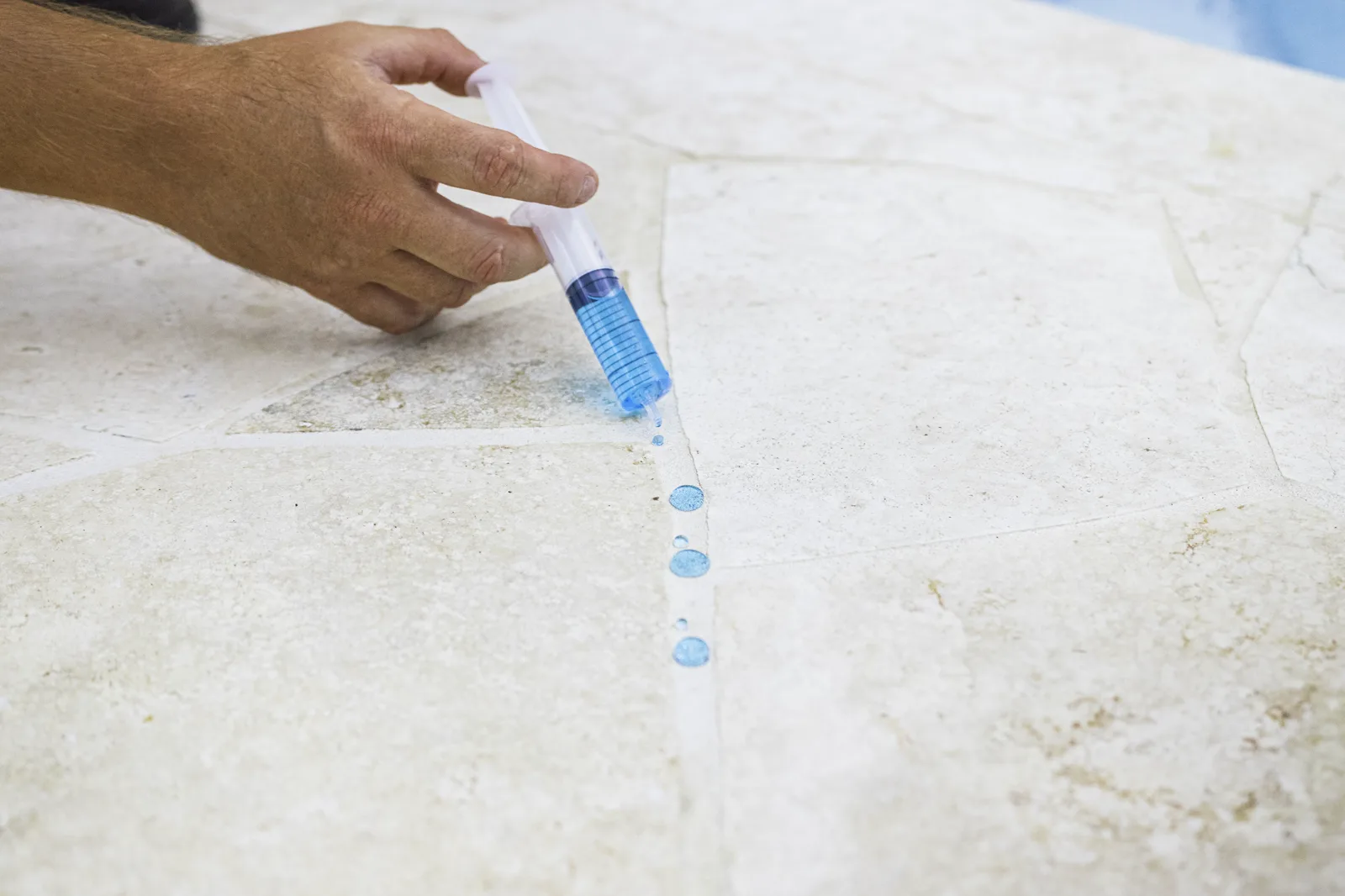
Do not reseal on the date. Pour water on it and watch. If it beads and sheds, leave it alone. If it soaks in and the surface darkens, that is your signal. Ten seconds, and you never have to guess.
Why we will not hand you a number for our own coating: it depends on the surface and how hard it is used, so we give you the honest interval for your job rather than one picked to win it. What we will not do is invent a figure. The surface, and the ten-second test below, are more honest than any brochure year.
The ten-second test
Let the surface tell you.
You do not need us, or a calendar, to know whether a surface is still shedding water. You can see it. This is the simplest check there is, and it works on stone and concrete alike.
- Pour a little water on it. A cup is plenty. Do it on a spot that gets used and weathered, not a sheltered corner, so you are testing the real thing.
- Watch for beading, and watch the colour. On a working seal the water beads up and sits on top, and a porous surface stays its normal shade underneath instead of darkening where the water lands.
- If it soaks in and darkens, the surface is drinking it. That is exactly what lets stains, oil and salt set in. It is the signal to have us re-test and, if it is due, top it up.
- Beading gone is a prompt, not a verdict. Beading fades before the protection does, so water that no longer beads is a reason to re-test, not proof the seal is dead. Judge it on whether grime still wipes off easier than bare surface would.
Why the difference
Two sealers, two very different clocks.
Why does one seal need redoing every year or two while another lasts for years? It comes down to where the protection sits. There were only ever two old ways to seal, and both put the protection somewhere that fails fast in Perth. Ours puts it somewhere that does not.
A film on top wears through, then has to be stripped
Acrylic and coating films look good on day one, then chalk, peel and yellow under hot tyres and UV. And when a film fails you cannot just recoat it, it has to be ground back to bare surface first, which is why each round costs more than the last. That is the fastest clock of all.
A sealer in the pores fails from the inside, out of reach
Penetrating silane and siloxane sealers soak in and repel from below. Better, but WA sun, alkaline cleaners and pressure washing break that chemistry down where you cannot see it, and it fails from the inside out, often within a year or two. That is the every-year-or-two clock most Perth surfaces are on.
Bonded into the surface, it holds and it tops up
Ours is a mineral sol-gel that anchors into the mineral, protecting right at the surface where wear and cleaning happen. It is the one and only next-generation sol-gel surface protective coating in Australia, and nothing else works like it. It lasts for years, and when it is due it tops up over itself with no stripping.
This is the two-clocks idea in short. The full version, why the beading you can see is not the same as the protection you cannot, is in what a seal does, and what it does not, and the mechanism behind it all is in how sealing actually works.
One honest caveat
Longer is not the same as forever.
No coating on earth lasts forever, and any product sold as permanent or never-again is not being straight with you. Ours degrades slowly rather than falling off a cliff, so it eases back toward untreated over years instead of failing all at once. That is a feature: it means there is no hidden failure point and the water test always gives you an honest read. A hard-used surface, a busy driveway, a pool surround taking constant salt and sun, will come due sooner than a sheltered courtyard. That is why we read your actual surface rather than quote you a headline number.
See it on your surface
The same rules, on your material.
How long a seal holds, and what going without it looks like, depends on what you are sealing. Start with your surface, then do the ten-second test on it.
Natural stone · optimal
Limestone
Perth's Tamala limestone is soft and thirsty, so a worn seal shows up fast as flaking and salt damage. Here is how the coating anchors in and stays breathable, and how to tell when to top it up.
Read the guideConcrete · optimal
Exposed aggregate
The driveway that came with a film that whitened and peeled, and needed stripping to redo. This is the seal that bonds into the surface instead, and tops up without the strip.
Read the guideNatural stone · optimal
Travertine
Porous carbonate stone, our sweet spot on the pool surround. See how the seal keeps the colour you paid for, and how the water test reads on a tumbled paver.
Read the guideReseal timing, answered
The real questions.
How often should you reseal stone or concrete?
There is no single number, and anyone who gives you one without seeing the surface is guessing. The sealers in common use across Perth are typically redone every year or two, because sun, sprinklers and cleaning break them down. Ours lasts for years and tops up without stripping. The right way to decide is to read the surface with the ten-second water test rather than reseal on the calendar.
Do I have to strip the old sealer before resealing?
It depends what is on there now. A film that has failed, chalked, peeled or gone white usually has to be stripped back to bare surface before anything new can go on, and that step is what makes each film re-coat cost more than the last. Our coating is different: when a top-up is eventually due it goes straight onto a clean surface and resets it, with no stripping and no starting again from bare. If your existing seal is a peeling film, here is why it peeled.
My water has stopped beading. Does that mean the seal has failed?
Not on its own. The visible beading is the most fragile thing on a sealed surface, and it fades before the protection underneath does. So water that no longer beads is a prompt to have the surface re-tested, not proof the seal is gone. Judge it on whether water still soaks in slower and grime still wipes off easier than bare surface would. If it is genuinely due, a top-up goes on clean. The full explanation is in what a seal does, and what it does not.
Is it worth resealing every year just to be safe?
With the cheap sealers, people feel forced to, because those products genuinely wear out that fast in WA. But resealing on a fixed calendar wastes money when the surface is still protected, and leaves it exposed when it is not. Read the surface instead. A coating built to last for years does not need an annual top-up, and paying for one every summer is the most expensive thing about a cheap seal.
How do I know when it is actually time?
Do the ten-second water test. Pour a little water on the surface. If it beads and sheds and a porous surface stays its normal colour underneath, the protection is working and you leave it alone. If the water soaks straight in and the stone or concrete darkens where it lands, the surface is drinking it, and that is when it is worth having us re-test and top it up.
Keep reading
Related guides.
Care
Maintaining a sealed driveway
The easy upkeep that keeps a sealed driveway working and stretches the interval between top-ups.
Read the guideCare
Cleaning sealed natural stone
How to clean sealed stone without stripping the seal, and why every clean is also protecting it.
Read the guideThe science · pillar
What a seal does, and what it does not
The two clocks in full: why the beading fades first, and how a reseal tops up without stripping.
Read the pillarGet a quote
Seal it once, and stop resealing.
We prepare and seal your surface with the right coating for the material, at $16/m² all-in, registered under a 10-year guarantee. You get the honest refresh interval for your surface, not a number picked to win the job.