
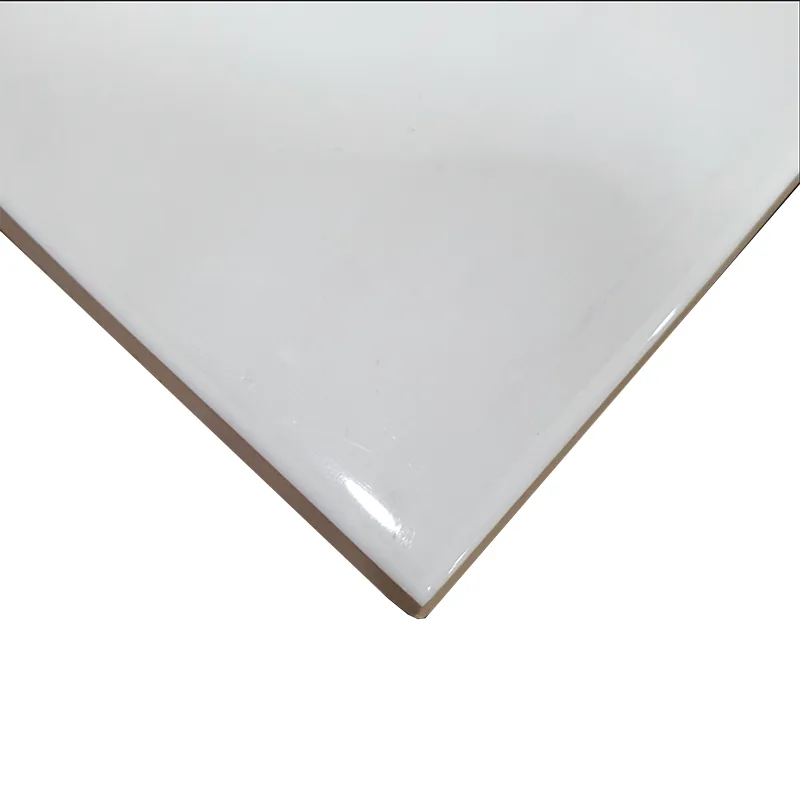
Sealing glazed ceramic tile · Perth
Glazed ceramic that wipes back clear.
Your glaze is already a fired glassy surface, so it doesn't drink water in like stone. What it needs is a coating so soap scum and hard water can no longer bond to it. GlassProtect bonds a clear nano layer to the glaze, so what does land lifts in a wipe instead of etching in, and the tile wipes clean with a fraction of the effort. It's the one and only next-generation sol-gel surface coating in Australia, and nothing else works like it.
What actually goes wrong
The tile is fine. It's the film on top.
Glazed ceramic doesn't fail from the inside the way porous stone does. It looks tired because of what settles on the glaze and won't come off. In a Perth bathroom or kitchen, that's three things, over and over.
Soap scum
The greasy film on your shower wall
Soap and body wash react with Perth's hard water to leave an oily calcium film across the tile. Water alone can't shift it, so you're back with a cream cleanser and a scrub pad every weekend. That oily scum is exactly what a water-repellent-only spray leaves behind.
Hard water spotting
Cloudy spots on the splashback
Every droplet that dries on the glaze leaves its dissolved minerals behind as a white spot. On a kitchen splashback or subway tile they build into a dull, cloudy haze that no amount of glass cleaner brings back to new.
Kitchen grease
Marks behind the cooktop
Cooking oil and airborne grease settle on the glaze and turn tacky, then hold dust and grime. On an unprotected tile it takes degreaser and elbow grease. It doesn't have to.
Here's the part most people miss: the ordinary "shower shields" and rain-repellent sprays sold for this wear off in a matter of weeks, and they only repel water, so the oily scum keys straight back in. You end up scrubbing anyway.
How GlassProtect works
A coating that bonds to the glaze itself.
The category only ever had two ways to seal: lay a film on top that peels, or soak into pores that a glaze doesn't even have. GlassProtect is a third way. It condenses a clear mineral nano layer onto the glassy surface of the glaze and lowers its surface energy, so water, scum and lime lose their grip.
Bonds to the surface, doesn't sit on it
The glaze is a fired glass, rich in the silanol sites GlassProtect grabs onto. It forms a mineral Si-O-Si network chemically bonded to the glaze, around 75 to 100 nanometres thin. There's no film sitting on top to peel, chalk or yellow.
Lowers the surface energy
Once the surface energy drops, water sheets and beads off with far less dwell, so fewer minerals are left behind, and the ones that are do not key in. The oily soap scum has far less to grip too. That's why the tile clears in a wipe instead of clouding over.
Invisible, and it changes nothing
It's optically clear and non-pigmenting. Same colour, same finish, same feel. You won't see it. You'll notice it every time you wipe the tile down and the water sheets straight off.
The real test isn't water
Built to survive the cleaning.
A shower wall doesn't wear out from rain. It wears out from the cream cleanser, the scrub pad and the bathroom spray you attack it with. That's what strips ordinary coatings off in weeks. GlassProtect is built for exactly that, because the protection sits right at the surface where the cleaning happens.
Cleaning & abrasion
It survives the scrub
The bonded mineral network is engineered at the surface, so it takes the scrubbing and cream cleanser instead of being wiped off by it. It fades slowly and predictably, and it renews with a top-up rather than a strip. In cream-cleanser scrub testing, GlassProtect is still beading around 100 degrees after 3,000 cycles.
Chemical
Stable under real cleaners
The inorganic siloxane backbone doesn't break down the way an organic film does, so it stays stable through the routine alkaline bathroom and kitchen cleaners of everyday maintenance. More resistant, not immune. It's built to be cleaned, not consumed by cleaning.
Oil & grease
It repels oil, not just water
This is the whole game on a shower wall or splashback. Soap scum is an oily film, and a water-repellent-only coating can't shift it. GlassProtect repels oil as well as water, so the scum and cooking grease lift in a normal wipe instead of clinging.
Clarity
Stays looking new
Because water sheets off with far less dwell, far fewer minerals are left behind, and the spots that do land sit loosely on the surface instead of bonding to it. A fired glaze is a glass, so where bare glass lets hard water etch in for good, on a coated glaze it wipes away. Keeps the tile clearer for longer, with far less work from you to keep it there.
This is our biggest edge. An old-style spray puts a thin film on the surface that the first few cleans wear off. GlassProtect bonds a mineral network to the glaze, so it meets the cleaning, the chemicals and the grease together, right where they land.
Proven, not promised
Still beading at 3,000 cycles.
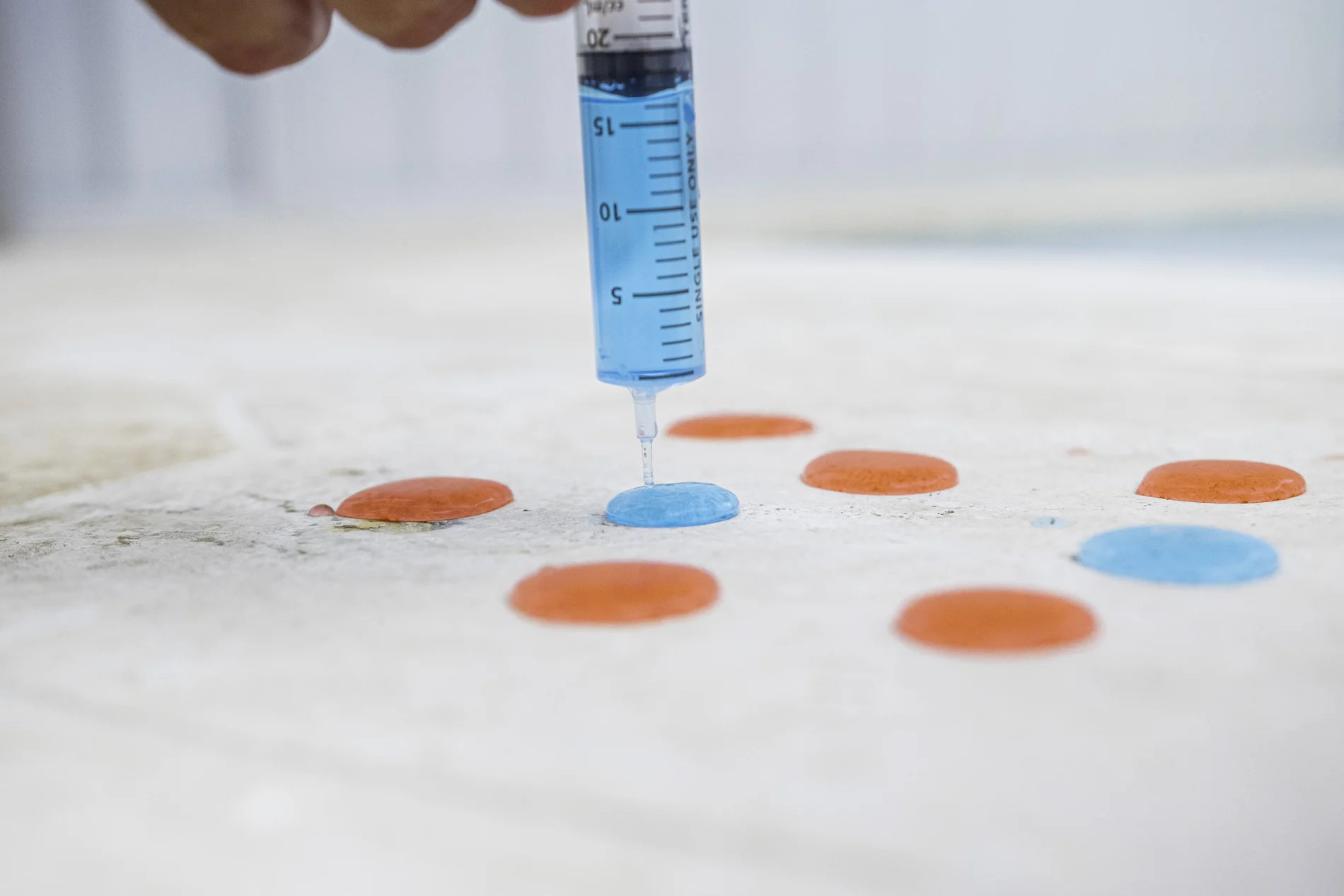
Durability on a glassy surface is measured one way: whether it still repels water after the cleaning it gets. GlassProtect is tested against the cream-cleanser scrubbing people actually use, and it holds.
- 3× more durable than the leading brand. Around 3 times slower loss of water repellency in comparable cream-cleanser abrasion testing.
- Still beading around 100 degrees at 3,000 scrub cycles. Where many coatings wipe off within a month of normal cleaning.
- Independently tested. The coating carries certification through recognised labs including TÜV Rheinland, SGS, Intertek and REACH.
Straight talk
What it doesn't do.
It's a long-lasting treatment, not a permanent one. It degrades slowly and predictably, and it needs a top-up eventually, though it tops up without stripping. It makes cleaning far faster and far less frequent. It doesn't make the tile self-cleaning, and it doesn't remove the need to clean altogether.
And a fair word on grout: the glaze is what we coat, and the coating protects the glaze beautifully. The cementitious grout lines between the tiles are a porous mineral surface, a different job with a different coating. If your grout is going grey, tell us at the quote and we'll sort the whole floor or wall properly, not just the tile.
Common questions
Glazed ceramic, answered.
Does glazed ceramic tile even need sealing?
Not in the way porous stone does. The glaze isn't porous, so it doesn't need a penetrating sealer to keep water out of the body of the tile. What it needs is a surface coating so soap scum and hard water can no longer bond to the glaze. That's what GlassProtect does, so what lands lifts in a wipe instead of etching in, and the tile wipes clean with far less effort.
Will it deal with the soap scum on my shower tiles?
It lifts most of it. Soap scum is an oily calcium film, and that's the bit a water-repellent-only spray can't touch. GlassProtect repels oil as well as water, so the scum has far less to key into and comes away in a normal wipe instead of needing a cream cleanser and a scrub pad every weekend.
Will my kitchen splashback stay clearer with less cleaning?
Yes, far clearer with far less work, and the hard-water spots that used to need scrubbing now wipe straight off. You get far less of it, and what does land wipes away. A hard-water spot forms when a droplet dries in place and leaves its minerals behind. Because GlassProtect lets water sheet off with far less dwell, fewer minerals are left, and the spots that do form sit loosely on the surface instead of bonding to it. A fired glaze is a glass, so where bare glass lets those minerals etch in for good, on a coated splashback they clear in a wipe.
Can I still clean the tiles normally?
Yes, and you'll do it far less often. The coating is built to survive routine cleaning. It's stable through the alkaline bathroom cleaners and the scrubbing that wear ordinary coatings off, and when it's eventually due it renews with a top-up rather than a strip.
How long does it last?
It's a long-lasting treatment, not a permanent one. It degrades slowly and predictably and tops up without stripping when the time comes. Every seal we apply is registered under a 10-year guarantee.
Does sealed glazed tile still need any upkeep?
Yes, and that's the honest answer on any surface on earth. The hard part is done: GlassProtect turns keeping your tile clear from a job with a scrub pad and a bottle of cleaner into a quick wipe, because minerals and soap scum can no longer bond to the glaze. Constant hard, bore or reticulation water with no upkeep can still leave spots, but on a coated tile those spots sit loosely on top and rinse or wipe off easily, where on bare glazing they bond on and, over time, etch in for good. Water beads and sheets off, so a quick rinse does most of the work and the tile stays clearer for far longer. It's genuinely far easier to keep clean than bare glazing, though it's never effortless.
Is it the same coating you use on glass?
Yes. A fired glaze is chemically a glass, so GlassProtect bonds to it the same way it bonds to a shower screen. That's why a glazed ceramic wall and its glass shower screen can be sealed in the one visit, both wiping clean and staying clear.
Keep reading
Related surfaces.
Go deeper on the science
The chemistry of sealing glazed ceramic
Sol-gel bonding to a vitrified glaze, the four resistances with their honest bounds, the head-to-head against a shower spray, and the test standards. Read the technical guide
Same family
Glazed porcelain tile
Denser body, same glassy glaze on top. Sealed with the same GlassProtect coating. See the guide
Same family
Polished / lappato porcelain
The gloss that shows every smear and water spot. A coating that keeps it clear. See the guide
Same family
Matte / honed porcelain
The finish that grabs marks and mopping streaks. Here's the honest fit. See the guide
Same family
Full-body / technical porcelain
Unglazed, so a different surface altogether. What we can and can't do with it. See the guide
Same family
Sanitaryware
Basins, toilets and glazed bathroom ware, the same vitrified glaze and the same hard-water spotting story.
Browse
The Sealing Library
Every common WA surface, by material, matched to how well our coating protects it. Find your surface
Get a quote
Seal the tile. Keep it clear.
We'll prepare and seal your glazed ceramic with GlassProtect, registered under a 10-year guarantee. Confirmed price before you book.