
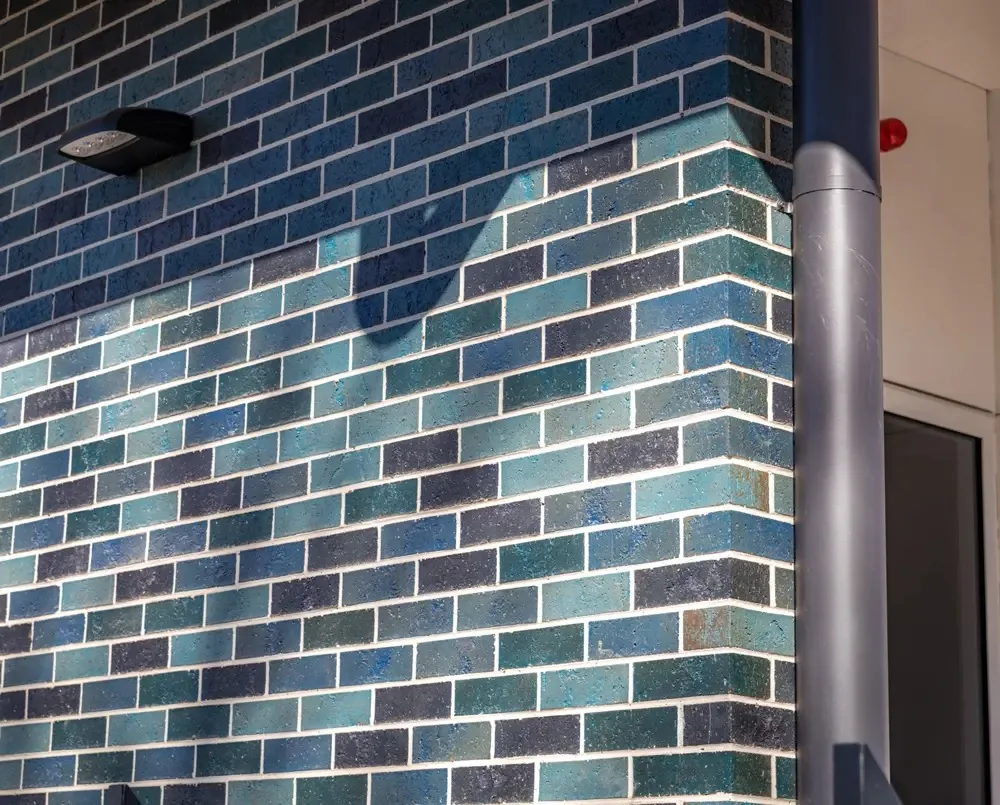
Sealing glazed brick & glazed terracotta · Perth
Glazed brick that stays glazed.
A glazed brick or terracotta facade is meant to be the easy-care wall: wipe it, done. Then Perth gets to it. Reticulation overspray spots it, road film dulls it, and shaded corners go green. We bond a clear nano layer to the glaze itself, so far less of that grips, and what does land wipes off instead of baking in, keeping the wall as sharp as the day it went up.
What actually happens to it
A "wipe-clean" wall that stopped wiping clean.
People choose a glazed facade because the fired glaze is hard, dense and non-porous, so nothing should stick. It's a fair expectation. But the glaze is a bare glass surface, and a bare glass surface in Perth picks up four things that turn a feature wall grubby, and one of them doesn't wash off at all.
The one that's permanent
Reticulation etch
This is the sting in the tail. Bore and scheme water is loaded with minerals. A sprinkler clips the wall, the droplet dries on the glaze, and the minerals bake on as a cloudy spot. Leave those spots to sit through summer after summer and they stop being a stain and start being etch: they eat into the glass glaze itself, and no cleaner on earth brings that back.
Street-facing walls
Road film and pollution
A glazed wall on the street front collects an oily haze off passing traffic and exhaust. It's greasy, not just dusty, so a hose does nothing and you're left scrubbing. On a tall or textured glazed brick, that means ladders and elbow grease you didn't sign up for.
Shade and coast
Green in the shade, salt on the coast
South-facing and shaded panels that stay damp go green with algae and mould. Closer to the water, a salt haze settles and dulls the gloss. Both keep coming back because there's nothing on the glaze to stop them keying in between cleans.
Why the usual fix backfires
A film is the wrong answer here
The instinct is to paint on a "protective coating." On a west-facing wall in full Perth sun, an organic film is the last thing you want: it bakes, yellows, chalks and peels off the slick glaze it never really gripped, and then it has to be stripped. You've traded a clean-me problem for a strip-me problem.
How we protect it
We don't coat the wall. We arm the glaze.
Here's the thing worth saying plainly: this is the one and only next-generation sol-gel surface protective coating in Australia. Nothing else works like it. On a glazed facade that matters, because the fired glaze is a glass, and GlassProtect bonds a clear nano layer straight to it, at the surface, where every bit of that grime and spotting actually lands.
It bonds to the glaze, it doesn't sit on it
GlassProtect condenses a clear, roughly 75 to 100 nanometre layer onto the glaze and ties into the glass's own surface chemistry. It isn't a film laid over the top that can peel. It's part of the working surface, which is why the sun can't bake it loose the way it lifts a paint-on coating.
It lowers the surface energy, so grime can't grip
The coating lowers the surface energy of the glaze so water sheets and beads off with far less dwell, and oily film and grime can no longer get a hold. Fewer minerals are left behind, and rain and a quick rinse now carry off most of what lands, so the wall largely keeps itself clean again.
And on the etching, it genuinely helps
Because the glaze is glass, this is the one surface where the word protect truly earns its place: GlassProtect resists the mineral etching that permanently ruins bare glass. Hard water still carries minerals, but on a coated glaze they rinse and wipe away before they can dwell long enough to bond and etch in for good. The hard part is done. You'll still give the wall the odd clean, but a rinse now does most of what a scrub used to.
Where it earns its keep
Protection lives at the surface, where the wall actually gets hit.
A facade doesn't get babied. It gets pressure-washed, sun-blasted, sprinkler-clipped and traffic-grimed. That's exactly the wear that lives at the surface, and it's exactly where the coating sits.
Cleaning & abrasion
Survives the wash the wall gets
A glazed wall gets pressure-washed and scrubbed to shift algae and film, and that's what wears ordinary coatings straight off. GlassProtect is built to take it: on glass it's still beading around 100 degrees after 3,000 scrub cycles. And when it's eventually due, it tops up over itself. No strip back to bare glaze.
Chemical
Stable through the routine attack
It holds up to the alkaline cleaners a facade wash uses, and it shrugs off bird droppings and the acidic haze off a busy road far better than a bare glaze does. It's more resistant, not immune. We'd never tell you it's acid-proof, but it takes the everyday chemistry in its stride.
UV
A west wall in full sun, no yellowing
The coating is inorganic, so it doesn't have the organic chains that make a paint-on film bake, chalk and yellow on the hot side of a house. It's far more UV-resistant than a film, not UV-proof, and that's the whole reason it can protect a facade in Perth sun where a coating would have failed.
Oil & grime
Road film lifts instead of keying in
This is the difference on a street front. GlassProtect repels oil, not just water, so the greasy traffic film and pollution that a water-only coating can't shift sits on top and lifts in a normal clean. The wall goes back to a wipe or a hose instead of a scrub.
Proven, not promised
The number that matters is retention.
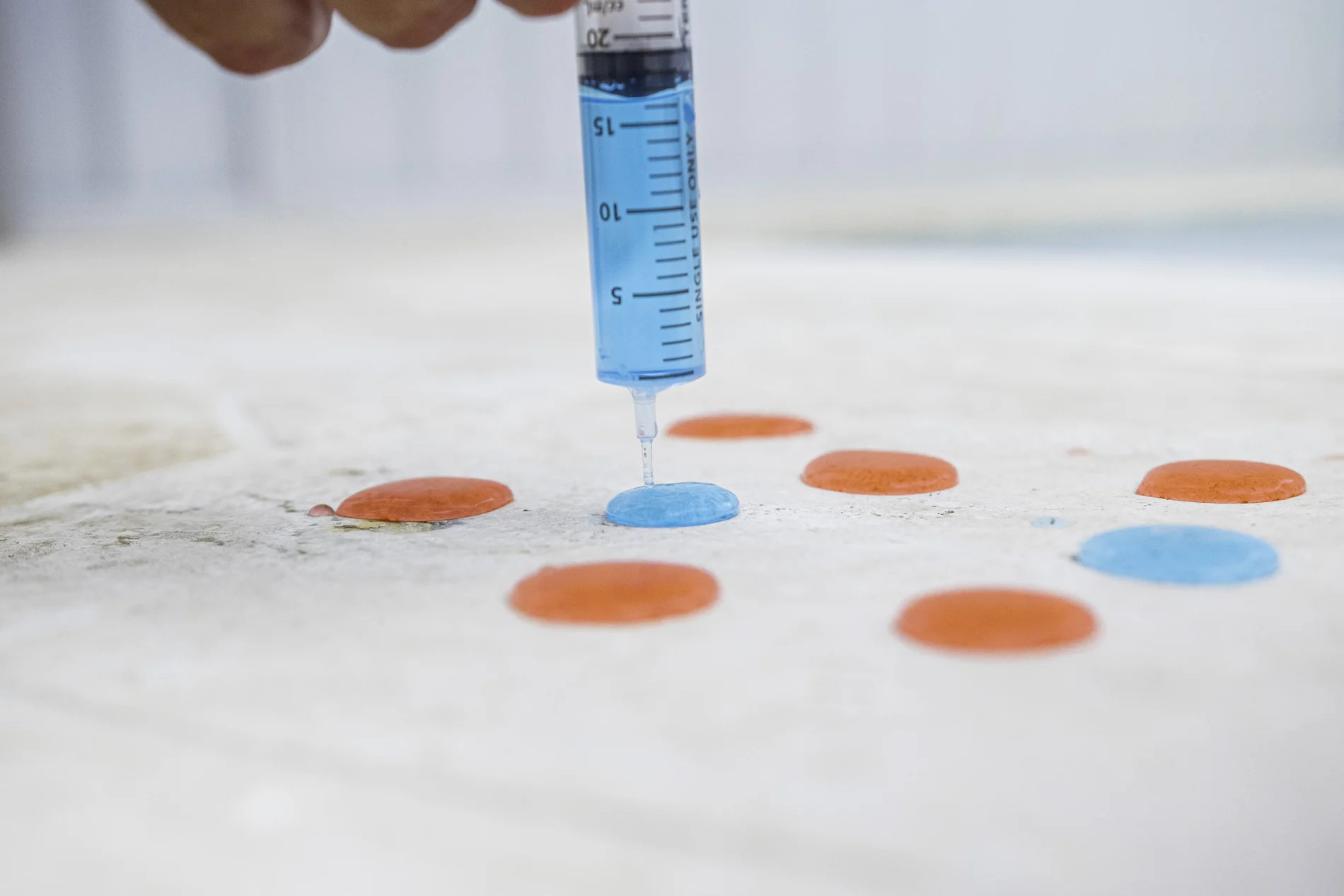
For a glass coating, durability isn't a hardness boast. It's how long the surface keeps shedding water and grime under the exact cleaning people give it. That's measured as contact-angle retention across recognised wet-scrub and abrasion standards, and here's where GlassProtect lands.
- Still beading around 100° after 3,000 scrub cycles. That's 3× more durable than the leading brand, tested by a recognised wet-scrub method.
- Loses its water repellency about 3× slower than the leading brand, in comparable cream-cleanser abrasion testing, the exact cleaner-and-pad attack a facade gets.
- Tested at independent houses, including TÜV Rheinland, SGS, Intertek and REACH.
Straight talk
What we protect, and what we don't.
A glazed brick wall isn't one material. It's a glass glaze, plus the mortar joints around it, plus whatever the wall is doing behind the face. We're honest about which of those we can help.
We protect the glazed face
That's where the spotting, grime, oily film and etch land, and that's exactly what GlassProtect is built for. On the glaze itself it performs like it does on any glass.
We don't seal the mortar joints
The joints between the bricks are cementitious and porous. They're a different material with different chemistry, so a glass coating on the face isn't the answer for them. If the joints are the concern, tell us and we'll talk you through the honest options.
We can't fix a wall bleeding from behind
Efflorescence, those white salt blooms, comes from water moving through the masonry and pushing salts out. That starts inside the wall. No coating on the outer face can stop water that's coming from behind it.
Resistant, not indestructible
It makes the glaze largely self-cleaning, so a rinse does most of the work. It's low-maintenance, not maintenance-free, and it isn't scratch-proof or acid-proof. It's a genuine, lasting head start, honestly stated.
Questions we get asked
Glazed brick, answered.
Can you actually seal glazed brick and glazed terracotta?
Yes. The fired glaze on the brick or terracotta is a glass surface, and glass is exactly what GlassProtect is built for. We bond a clear nano layer to the glaze so grime and oily film can't grip, and water beads and sheets off instead of drying on, so the glaze largely keeps itself clean and any spotting that forms rinses or wipes away instead of etching in.
What are the white marks the sprinklers leave on my wall?
Hard bore or scheme water dries on the glaze and leaves its minerals behind as a cloudy spot. Left to dwell through summer after summer, that spotting can permanently etch the glass glaze, and no cleaning brings that back. Because the glaze is glass, GlassProtect helps protect it against that etching by keeping the water from gripping and drying on in the first place.
Will it change the colour or the gloss of the glaze?
No. GlassProtect is colourless and optically clear. It won't darken the brick, add a sheen or dull the gloss. It's the same wall, just protected, so the finish the architect chose stays exactly as it was.
What about the mortar joints between the bricks?
We protect the glazed face, which is where the water spotting, grime and staining land. The mortar joints are cementitious and porous, a different material, so a glass coating on the face isn't built for them. We'll tell you at the quote exactly what we are and aren't protecting so there are no surprises.
How long does it last, and will I have to redo it?
It's a long-lasting treatment, not a permanent one. It degrades slowly and predictably rather than failing all at once, and when it's eventually due it tops up over itself with no strip back to bare glaze. Every job is registered under a 10-year guarantee.
Does a sealed glazed wall still need any upkeep?
Yes, and that's the honest promise. The hard part is done: minerals and soap scum can no longer bond to the glaze, so the wall largely keeps itself clean, with rain and a rinse doing most of the work and the odd wipe handling the rest. Constant hard, bore or reticulation water with no upkeep can still leave spots, on any glass on earth, but on a coated wall those spots stay on the surface and rinse or wipe away, where on bare glass they bond on and etch in for good. It's low-maintenance, not maintenance-free, and that's the honest line.
What does it cost to seal a glazed facade in Perth?
Whole-home GlassProtect starts from $495. We confirm the price in writing before you book, once we've seen the wall and its access.
Keep reading
Related surfaces.
Not sure your surface is here? Browse them all in The Sealing Library, graded honestly by material.
Get a quote
Seal the glaze. Keep the wall.
We'll assess your glazed brick or terracotta facade, seal the glaze with GlassProtect, and register it under a 10-year guarantee. Confirmed price before you book.