
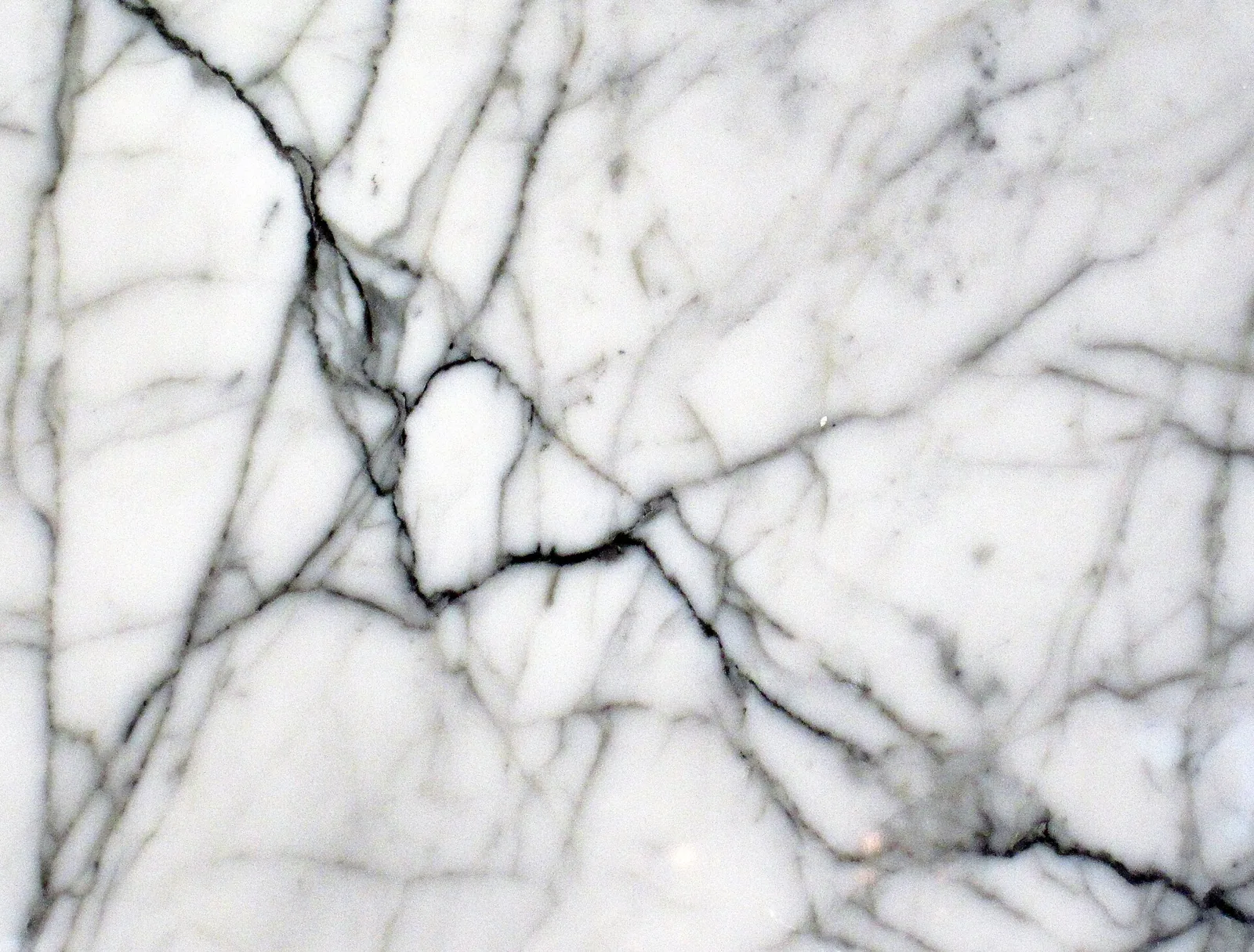
Sealing super white dolomite · Perth
Keep your white benchtop white.
We seal super white dolomite with the one and only next-generation sol-gel surface coating in Australia. It anchors into the surface, so cooking oil, coffee and wine lift off instead of soaking in, and your white stays white. It is a genuinely different class of sealer. And because dolomite is not the quartzite it is often mistaken for, we will tell you straight about the one thing no sealer fixes.
What goes wrong with dolomite
The stone that looks tougher than it is.
Super white dolomite is chosen for the bright, marble-look benchtop without the marble price, and it is often shown next to quartzite and assumed to be just as tough. It is not. Dolomite is a carbonate stone, softer and more absorbent than a real quartzite, and in a working Perth kitchen that catches up with it fast: the olive oil that darkens the stone by the cooktop, the coffee and red wine rings, and then the acid problem that catches most owners by surprise.
It stains
Oil and drink soak in
A dolomite benchtop still has open pore structure, so cooking oil, coffee, red wine and turmeric absorb and leave a mark. On an unsealed top, a dropped-oil patch by the stove can darken and stay for good.
It mistakes itself for quartzite
Sold tough, behaves soft
Super white dolomite gets confused with quartzite constantly, because they can look almost identical on a slab. Quartzite is siliceous and shrugs off acid. Dolomite is carbonate, so it behaves like marble, and people find that out the hard way.
It etches
Acid burns the stone itself
Lemon, vinegar, wine and many kitchen and bathroom cleaners react with dolomite and leave a dull etch spot. That is the acid eating the surface, not a stain, and it matters for what a sealer can and cannot do.
Why the usual seal struggles here: a film on top adds a plastic sheen to a stone people choose for its natural look, and it peels. A penetrating seal down in the pores slows staining for a while, then breaks down under daily cleaning within a year or two, and neither one lifts oil or touches etching. What dolomite needs is protection built into the surface itself, plus an honest word on the one thing no sealer fixes.
How our coating protects dolomite
It anchors into the surface.
MineralProtect is a water-based mineral sol-gel. On super white dolomite it wicks into the surface and cures there into a dense, colourless mineral network, roughly a hundred nanometres at the surface. It is not a film on top and it is not lost down the pore. It sits exactly where the cooking, the spills and the wiping actually happen.
Anchors into the mineral
The coating keys into the stone's surface and sets as a rigid network right where you use it. Same white, same honed or polished finish, same feel. It just stops gripping water and oil. Because dolomite is a denser carbonate, the finish matters, and we assess your actual top at the quote so we anchor it properly.
Repels oil, not only water
On a benchtop, oil is the mark that stays. Most sealers only shed water and do nothing about grease. Ours is engineered so cooking oil, butter and greasy hands sit on top and lift in cleaning instead of soaking in, and it does it PFAS-free by design, without the fluorochemistry that is being regulated out.
Colourless, and it still breathes
It changes nothing you can see, which is the whole point on a white stone chosen for its look. And because it protects at the surface instead of plugging the pores, the stone is not sealed shut behind a film that could trap moisture and cloud it. It protects the surface and leaves the stone breathing.
The real edge
It holds up where a benchtop gets used.
A kitchen benchtop is scrubbed, wiped with cleaner and hit with oil and acid every single day. Protection at the surface means the coating faces all of that head on, which is the whole point of a next-generation coating, and it is where the ordinary seal quietly gives up.
Oil
The mark that actually stays
Cooking oil, butter, salad dressing and greasy hands are what leave the lasting dark patches on a white benchtop. Here they sit on top and lift in cleaning instead of soaking in. A plain water-repellent seal does nothing about oil at all.
Cleaning & abrasion
Survives the daily wipe-down
The everyday wiping, scrubbing and cleaning that wears a penetrating seal off is exactly what this is built to take. It renews with a top-up on clean stone, with no stripping back to bare dolomite to do it.
Chemical
Stable to routine cleaners
It stays put through the routine cleaners a kitchen sees, where standard silane chemistry breaks down. More resistant, not immune, and never a match for a strong acid, which is its own honest story below.
UV
Does not yellow in the light
Matters most for dolomite that runs under a bright window or a splashback in the sun. It is inorganic, so it does not chalk or go yellow the way an organic film does. Far more UV-resistant, not UV-proof.
Proven, not promised
Built to survive the kitchen.
The real test of a benchtop seal is not the rain. It is the oil, the cleaner and the spill, day after day. That is what wears sealers out, and it is what this is engineered for, so it keeps working for years rather than months.
- Anchored at the surface, where the use is. Not hidden down the pore where a penetrating seal can fail long before you notice.
- Colourless and breathable. Same white, same finish, no darkening and no plastic sheen on a stone you chose for its look.
- Degrades slowly, tops up without stripping. Independently tested at houses including TÜV Rheinland, SGS and Intertek, and registered under a 10-year guarantee.
The honest limit
A sealer cannot stop etching.
Here is the one thing we will not dress up, because it is the most important thing to know about super white dolomite. Etching is not a stain. It is acid dissolving the stone itself and leaving a dull spot where the finish was. Lemon, vinegar, wine, some fizzy drinks and many common cleaners do it. Because the acid reacts right at the exposed surface, it does not need to soak in, so no penetrating sealer can prevent it. Ours slows how fast liquids absorb and lifts oil, which is real and worth having, but for an acid spill the answer is still a quick wipe.
This is exactly where the quartzite mix-up bites. If your slab really were quartzite it would shrug acid off. Dolomite will not, and that is why we grade it a moderate fit rather than our sweet spot, and why we would rather tell you than sell around it. At the quote we point out that your top is acid-sensitive so you know a citrus or wine splash needs wiping. If you are choosing a benchtop that has to shrug off acid, a genuinely siliceous stone like granite is the acid-resistant option, and we are happy to say so.
Straight answers
Super white dolomite questions.
Does super white dolomite etch?
Yes. Dolomite is a carbonate stone, so acids like lemon, wine, vinegar and many cleaners react with it and leave a dull etch mark. It is often mistaken for quartzite, which is a harder siliceous stone that resists acid, but dolomite is not quartzite and it does etch. No sealer stops that. What our coating does is repel oil and slow how fast liquids soak in, so ordinary spots wipe up instead of marking, and for acid the fix is still a quick wipe.
Is dolomite the same as quartzite?
No, even though super white dolomite is often sold and displayed alongside quartzite and can look almost identical on a slab. Quartzite is siliceous, hard and acid-resistant. Dolomite is a carbonate stone, softer, and it etches in acid the way marble does. The two behave very differently in a kitchen, which is why it is worth knowing which one your benchtop actually is. At the quote we can usually tell you which you have.
Can you seal a super white dolomite benchtop?
Yes. MineralProtect anchors into the mineral and lowers the surface energy, so oil, coffee, wine and grease sit on top and lift in cleaning instead of soaking in and marking the stone. It stays colourless, so your white benchtop looks exactly the same. It is a moderate fit rather than our sweet spot because dolomite is denser than a porous paver and it still etches, and we tell you straight where a spill needs attention.
Will sealing stop etch marks or ring marks?
It stops the staining kind of mark, not the etching kind. A stain is oil, coffee or wine soaking into the stone, and the coating slows that right down and lifts it in cleaning. An etch is acid dissolving the stone surface itself and leaving a dull spot, and no penetrating sealer prevents that because the acid reacts at the surface without needing to soak in. Sealing buys you time to wipe an acid spill before it does its worst. It does not make dolomite acid-proof.
Does the sealer change the colour of a white benchtop?
No. MineralProtect is colourless and non-pigmenting. Same white, same honed or polished finish, same feel. It will not yellow the stone or add a sheen. The only change is that water and oil stop gripping the surface the way they did, so cleaning is faster and staining is slower.
How long does it last on a dolomite benchtop?
Years, rather than the yearly or two-yearly cycle the common sealers run on in Perth kitchens, and it tops up on clean stone without stripping anything back. Every job is registered under a 10-year guarantee on the repellency function. Judge it on whether water still soaks in slower and cleaning is still easier, not on whether the water still beads tightly, because beading is the first thing to fade well before the protection does.
Keep reading
Related surfaces & the science.
Go deeper
The science of sealing dolomite
The sol-gel chemistry, why a carbonate stone has no silicon to bond to, the four resistances with their honest bounds, and the head-to-head against impregnators and films. Read the technical version
Natural stone
Granite
Siliceous and acid-resistant, benchtop or paving. If you want a top that shrugs off acid, this is the confident, strong fit.
Natural stone
Travertine
Porous calcareous stone and a genuine sweet spot for us. The pool-surround favourite, sealed against salt and staining.
Natural stone
Limestone (Tamala / natural)
Perth's own coastal stone. Porous, part-siliceous and one of the best fits our coating has.
Natural stone
Sandstone
Siliceous and porous, where the coating forms a genuine covalent bond. Sealed against greening and staining.
Browse
The Sealing Library
Every common hard surface in WA, graded honestly by how well our coating protects it. Find yours.
Get a quote
Seal your dolomite, told straight.
We will prepare and seal your super white dolomite with MineralProtect, registered under a 10-year guarantee, and tell you plainly that the top is acid-sensitive before you book. Confirmed price up front.