
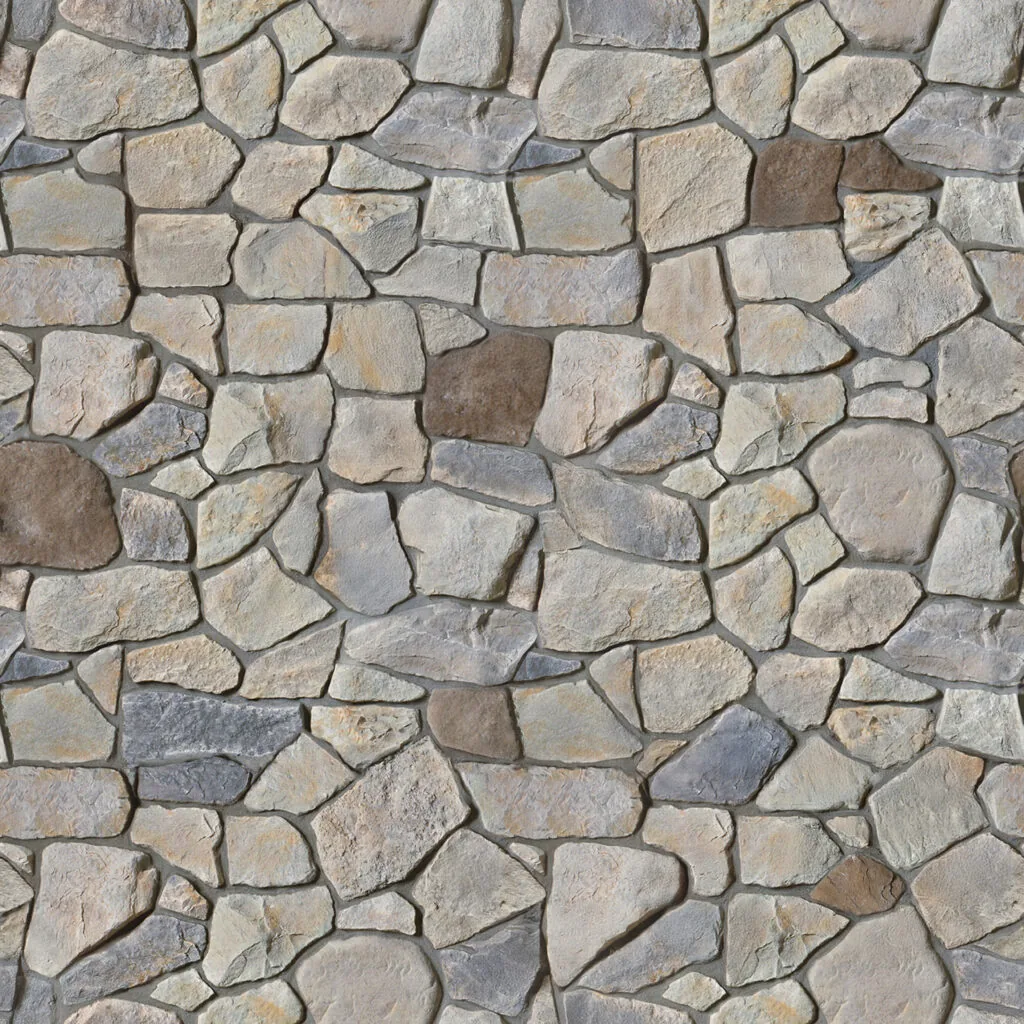
Sealing cast & cultured stone · Perth
Protect the cladding, colour and all.
Cultured stone looks like rock, but it is cement with the colour sitting right at the face. That is exactly why it goes green in the shade, streaks after rain and blooms white low on the wall. We seal it with the one and only next-generation sol-gel surface coating in Australia: it anchors into the mineral surface, stays breathable, and does not change the look. Nothing else works like this.
What goes wrong
It is not stone. It is cement.
Cast and cultured stone veneer is a manufactured product: Portland cement, lightweight aggregate and iron-oxide pigment, moulded and coloured to imitate real rock. It reads as stone on a feature wall or a whole facade, but it behaves like cement. Porous, thirsty, and with its colour held in a thin surface skin that the weather gets to first. Here is what we see on Perth walls.
Shaded walls
It goes green, then black
A porous cement face on a south wall or under eaves holds moisture, and algae and mould take hold. The stone dulls, greens, and eventually darkens along the mortar lines and the shaded courses. It is the single most common thing owners ring us about on cladding.
After rain
Streaks and dirt shadows
Because the surface drinks water, wind-driven rain carries grime down the face and leaves streaks and tide-marks under sills and corners. Reticulation overspray adds mineral marks to the lower courses. On a manufactured colour, those marks stand out.
Low on the wall
White bloom and fade
Cement carries salts to the surface as it dries, so a white efflorescence haze creeps up from the base. Add years of Perth UV on a surface pigment and the colour can flatten and chalk. Once it fades, no sealer brings it back, which is the case for protecting it early.
And the usual fix makes it worse. The trade reflex is a glossy acrylic to wet the colour up. On a breathing cement wall a film is the wrong tool: it traps the moisture moving out through the wall, so it blisters, blooms white and peels, and then it has to be stripped before anything else can go on. You have changed the look and started a repeat cycle.
How our coating works
It bonds into the cement itself.
For decades there were two ways to seal a wall: lay a film on top, or soak a repellent into the pores. Both wear out in Perth conditions, so you redo them. Our coating is a third class. It is a water-based mineral sol-gel that cures into a dense Si-O-Si network right at the surface, where the weather and the cleaning actually happen. On a cement-bound product like cultured stone it grafts to the cement's own chemistry at the surface rather than sitting on top.
Anchors in, not on
Cultured stone is bound by Portland cement, and cement carries the reactive sites our sol-gel bonds to. The coating condenses at the surface as an inorganic network, so there is no film on top to blister, yellow or peel off the face.
And it still breathes
Because it works at the surface instead of plugging the wall, moisture can still escape. That matters more on cladding than almost anywhere: a wall dries from behind, and a coating that lets it breathe will not trap the salts that bloom white and lift a face the way a sealing film does.
Colourless, changes nothing you can see
It is thin enough to change only the surface energy, not the appearance. The manufactured colour, the texture and the matte look stay exactly as they are. Water beads and grime lifts, but the wall does not go glossy or dark. Only how the surface behaves changes.
The edge that matters on a wall
Protection where the weather lands.
A pore-filling sealer builds its repellency millimetres down, below where anything actually happens to the face. Our coating puts the protection at the surface, so it meets the four things that age a cultured-stone wall together, right where they hit.
Cleaning
Survives the wash-down
A greened wall gets scrubbed or gently pressure-washed to bring it back. That is the exact load that strips a surface-thin pore sealer and peels a tired film. Because our network is bonded at the face, the wall cleans up and the protection is still there, and when it is eventually due it tops up without stripping.
Chemical
Stable to the cleaners you use
The inorganic siloxane backbone does not oxidise the way an organic resin does, so it stands up to the routine alkaline wash-downs and mould treatments cladding gets rather than being consumed by them. More resistant, not immune, but a real gap on the sealers cement walls usually get.
UV
Will not yellow or chalk over the colour
A whole facade lives in full Perth sun. An organic acrylic film yellows and chalks up there, changing the look of the very stone it was meant to protect. Our coating is inorganic, with no chain for UV to break, so it does not yellow over the colour. Far more UV-resistant, not UV-proof.
Oil & splash
Splashes lift instead of soaking in
Cultured stone often wraps an outdoor kitchen, a fireplace or an alfresco pillar. Cooking oil, soot and drink splashes sit on top and lift in cleaning instead of marking porous cement for good, and it is PFAS-free by design, not by reformulation.
The seal, working
One price, one guarantee.
The colour does not change. What changes is how the surface behaves: water beads and rolls, grime and organic growth lose their grip, and the wall stays looking the way it was meant to for far longer between cleans.
- Breathable, so it will not trap the wall. Moisture keeps escaping from behind, unlike a film that blooms and blisters.
- Colourless and non-pigmenting. No gloss, no darkening. The manufactured look is untouched.
- Registered under a 10-year guarantee. Documented to the address, backed by JUMBOGUARD, applied to spec by a Certified Applicator.
See it behave
The proof is on the surface.
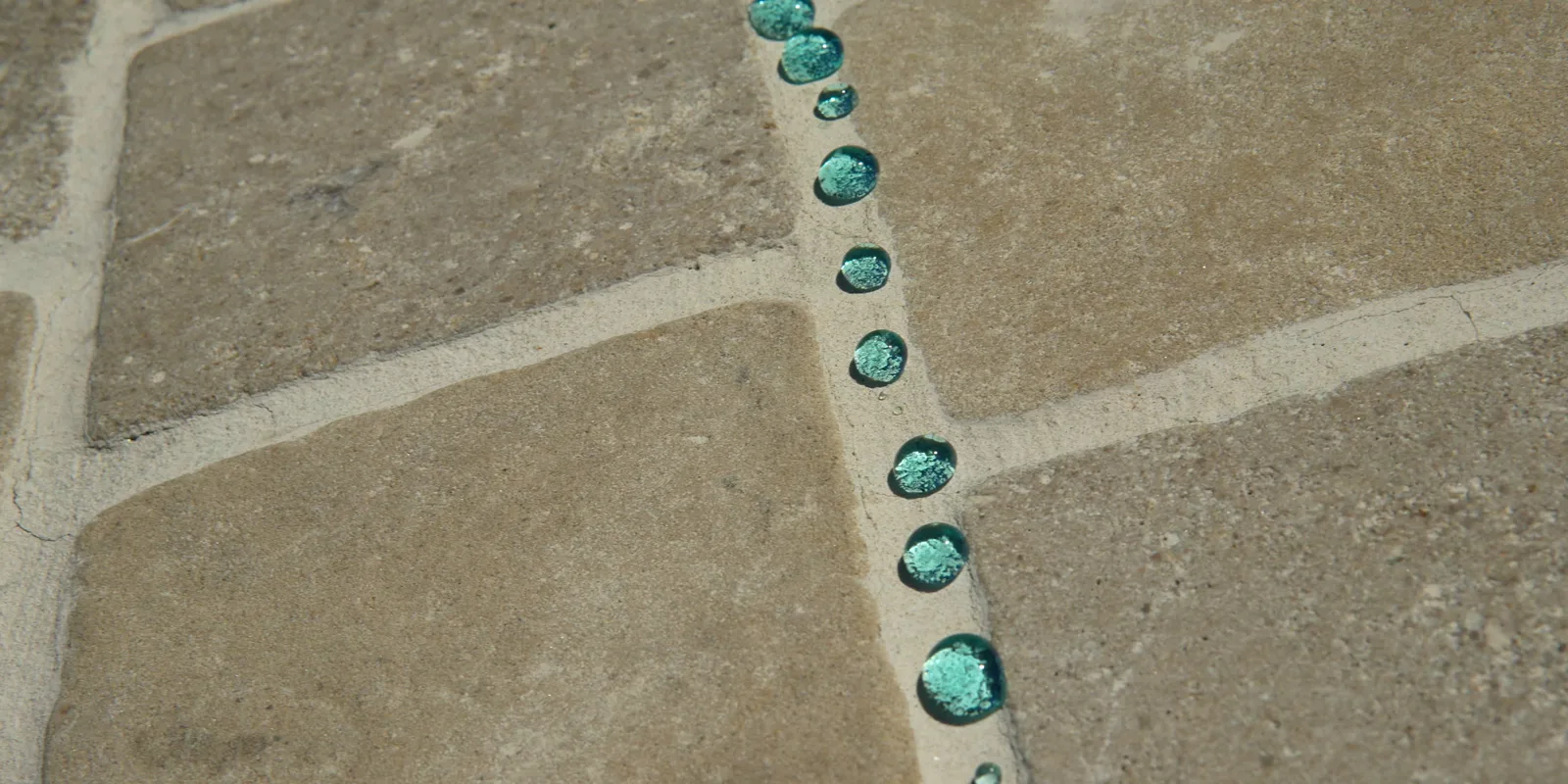
Drag to compare a mineral surface sealed with our coating, dry and wet. Water beads and rolls off instead of soaking into the cement. The colour is identical either way. Only the behaviour changed.
Where we are straight with you
What a seal cannot do.
It is not waterproofing
This is a thin surface coating that sheds water and keeps the cladding easy to clean, not a membrane. If a wall is letting water through from a genuine building fault, that is a job for flashing or a membrane, and we will tell you so rather than seal over it.
It will not reverse fade
If Perth sun has already flattened the surface colour, no sealer restores it. The coating protects the colour you have from here on. That is why sealing a facade early, while the colour is still true, is the version that pays off.
Efflorescence starts inside the wall
The white bloom is salt carried out by moisture moving through the wall, so no surface coating stops it at the source. What our coating does, being breathable, is let that moisture keep escaping rather than trapping it the way a film does. We clean off existing bloom first as part of prep.
Common questions
Cultured stone, answered.
Should you seal cast or cultured stone veneer?
Yes, and it benefits more than most people expect. Cultured stone is a cement product with the colour held at the face, so it is porous and takes on grime, algae and water staining. A breathable coating that anchors into the surface keeps it cleaner for longer and protects the look, without darkening it or trapping moisture behind the cladding.
Will sealing change the colour or add gloss?
No. Our coating is colourless and non-pigmenting. It changes only how the surface behaves, not how it looks: no gloss, no darkening. It does not wet the colour up the way an acrylic or an enhancer does. It also will not restore colour that has already faded, so the best time to seal is while the colour is still true.
My cultured stone has gone green. Can you fix it?
Cleaning the algae and mould off is the first step, and it is part of how we prepare the wall. Once it is clean and sound, the coating anchors into the surface so the greening is far slower to return, because the porous face that held the moisture is now protecting instead of soaking. On a shaded wall nothing stays perfect forever, but you go a lot longer between cleans.
Does the coating stop efflorescence, the white bloom?
Not at the source. Efflorescence is salt carried to the surface by moisture moving through the wall from behind, which a surface coating cannot stop. What our coating does is stay breathable, so it lets that moisture keep escaping rather than trapping it, unlike a film that blisters and blooms white. We remove existing bloom as part of preparation.
Is it a waterproofing membrane?
No. It sheds water and makes the cladding much easier to keep clean, but it is a thin surface coating, not a waterproofing membrane. A wall with a real water-ingress problem needs a building fix, and we will say so honestly rather than sell you a seal that was never going to solve it.
How long does it last on a facade?
A vertical wall sees far less wear than a driveway or a floor, so the coating lasts for years and tops up without stripping when it is eventually due. Every job is registered under a 10-year guarantee, documented to the address.
Related surfaces
Same family, same chemistry.
Cultured stone is one of the cement-bound surfaces we seal. If yours is more like these, start here instead.
Liquid limestone (poured)
Poured cement, so it anchors concrete-class. The alfresco and pool-surround favourite, sealed without darkening. Read the guide →
Reconstituted limestone
Cast limestone-look blocks that go black on shaded retaining walls. The same breathable protection. Read the guide →
Terrazzo (cement-bound)
Cement-bound chips, in-situ or precast. How we protect it from staining without a film. Read the guide →
GRC / GFRC
Glass-reinforced concrete facade panels. Another cement product we bond into at the surface. Read the guide →
Get a quote
Seal the cladding once.
We will clean and seal your cast or cultured stone with the right coating for a cement-bound surface, colour untouched, registered under a 10-year guarantee. Confirmed price before you book.