
Sealing guide · Perth
Do I need to seal my travertine?
Short answer: yes. Travertine is soft, porous stone that stains and marks easily, so a seal earns its keep. But before you spend a cent, here is the honest version of what sealing can do for it, and the one thing it cannot.
The straight answer
Yes, and here's why.
Travertine is a carbonate stone that formed with natural pits and open pores running right through it. That texture is the look you paid for, and it is also the catch: an open, porous surface drinks in whatever lands on it. Left unsealed, a travertine floor or pool surround takes on oil, drink and sunscreen stains fast, and in Perth's damp shaded spots it goes green and black with algae and mould. Sealing is the standard, sensible step, and it does not change how the stone looks. It changes how it behaves.
Seal it if any of these are true
- It's outdoors or around a pool. Sun, sprinklers, sunscreen and salt all hit it, and unsealed travertine holds the moisture that grows algae and mould.
- It sees food, drink or oil. An alfresco, a kitchen floor or an outdoor bar means spills, and oil is the mark that soaks in and stays.
- You want it to keep looking like it does now. The staining and greening that ages travertine early is exactly what a seal slows down.
- It's newly laid. Sealing clean, fresh stone up front is easier and cheaper than lifting set-in stains out later.
The rare case where you might hold off: a purely decorative indoor feature that never gets touched, spilled on or rained on. Even then, most people seal it once and forget it. If you are unsure, the deciding question is simple: does anything ever land on this stone that you would not want soaking in?
What a seal actually does
It works at the surface.
A good travertine seal is not a shiny film laid over the top, and it is not a repellent hidden down in the pores where cleaning and wear never reach. A modern coating anchors into the mineral right at the face of the stone, where the staining, scrubbing and weather actually happen, and it stays breathable so the stone can still let moisture out.
Why the pore side of travertine matters so much, and why porous stone actually grips a modern coating in better rather than worse, is the whole subject of two guides worth reading: why the right sealer depends on your stone, and where sealing protection actually lives. This page keeps it plain; those go into the science.
Before you spend a cent
What sealing can, and cannot, do.
This is the part most sealing pitches skip. Travertine has two very different kinds of damage, and a seal handles one of them well and the other not at all. Knowing which is which is what stops you being sold a promise no product can keep.
What it can do
Slow the staining and the greening
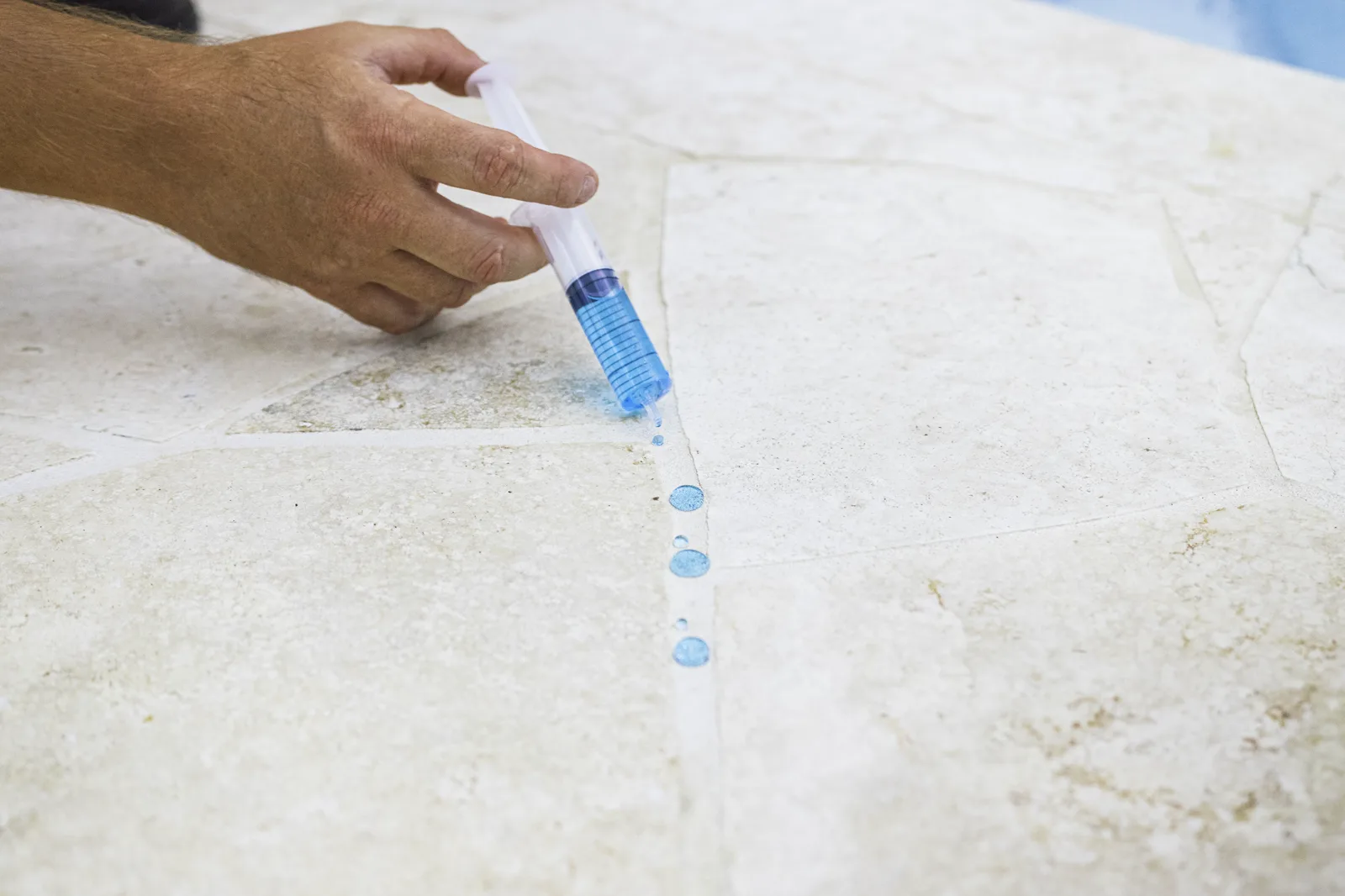
A seal makes water and oil sit on the surface instead of soaking into the pores, so spills wipe up instead of setting in, and the stone stays far easier to keep clean. Because it also keeps the surface drier, it slows the algae and mould that turn shaded and reticulated travertine green and black. And a colourless coating does all of that without darkening the stone or changing its finish.
What it cannot do
Stop acid etching
Travertine is carbonate stone, so acids like lemon, vinegar, wine and pool acid dissolve the surface itself. That dull etch mark is the stone being eaten, not a stain sitting on it, and no penetrating sealer prevents it because the acid does not need to soak in to react. Sealing slows absorption and buys wipe-up time, so the real defence against etching is cleaning acidic spills promptly, not the seal.
In plain terms: sealing is very good at the stain, oil and mould problem, which is what actually ages most travertine. It is not an etch-proofing. Anyone who tells you a sealer makes travertine bulletproof against lemon and wine is not being straight with you.
What to do next
Match the seal to your stone.
"Travertine" covers a lot of ground, and the right call depends on your exact stone and where it lives. Start with the guide that fits what you have, then get it looked at rather than guessing.
Natural stone · optimal
Sealing travertine, in full
The complete guide to sealing travertine: what goes wrong, how a colourless coating anchors into the stone, and the honest limits on a salty pool surround.
Read the guideNatural stone · optimal
Limestone
Travertine's closest Perth cousin, and often mixed with it around pools. Same porous carbonate, same worries about flaking and going green.
Read the guideNatural stone · moderate
Honed & tumbled marble
If your "travertine" is actually a honed or tumbled marble, the staining answer is similar but the etching one is even more front of mind. Here's the honest read.
Read the guideNot sure which stone you actually have, or want a straight read on whether sealing is worth it for your surface? Ask us for a quote. We assess the stone first and tell you plainly what a seal will and will not do for it, before you commit to anything.
Travertine, answered
The real questions.
Do I really need to seal travertine?
Yes, in almost every case. Travertine is a soft, porous carbonate stone full of open pits and pores, so it soaks up oil, drink spills, sunscreen and dirt fast, and damp travertine grows mould and algae. Sealing does not change the look of the stone, it changes how it behaves: water and oil sit on the surface and wipe off instead of soaking in and marking it for good. The one honest exception is that sealing does not stop acid etching, which is a separate problem worth understanding before you decide.
What happens if I do not seal my travertine?
Unsealed travertine stains. A dropped-oil, sunscreen or red-wine spill wicks straight into the open pores and sets, and by the time you notice it is already a permanent mark rather than something you can wash off. Outdoors, unsealed travertine also holds moisture, so it goes green with algae and black with mould in shaded or reticulated spots. None of that means the stone is ruined, but it is far harder and more expensive to lift a set-in stain out later than to seal clean stone up front.
Does sealing stop travertine etching from lemon, wine or pool acid?
No, and any sealer that claims to is overpromising. Travertine is a carbonate stone, so acids like lemon, vinegar, wine and pool acid dissolve the surface itself. That dull etched mark is the stone being eaten, not a stain sitting on top, and no penetrating sealer stops it because the acid does not need to soak in to react. What sealing does is slow absorption and buy you wipe-up time, so the honest advice is to clean acidic spills promptly on the areas that see them.
Will sealing change the colour or finish of my travertine?
It does not have to. A colourless surface coating leaves the stone the same colour, finish and feel, and only changes the surface energy so water and oil no longer grip. That is a different category to an enhancer or wet-look sealer, which is designed to deepen and darken the stone. If keeping the exact travertine you chose is the point, a colourless coating is what you want. Either way you should be told which type is going on before you book, because the two look very different once dry.
How often do I need to reseal travertine?
It depends on the stone and how hard it gets used, which is why a real number should come after someone has seen your surface, not before. In general the visible water beading fades first and is your prompt to top up, and a modern surface coating tops up on clean stone without stripping. Our coating is registered under a 10-year guarantee on its repellency function. A busy pool surround in full Perth sun will want attention sooner than a sheltered indoor floor. For the full picture, read how often you should reseal.
Is it too late if my travertine is already stained?
Usually not. Many stains can be drawn back out of porous stone with the right clean before sealing, and etching can often be honed back on the affected area. What sealing then does is stop the next round of marks setting in the same way. When we assess the stone we tell you honestly what is a stain we can lift, what is etching that needs a different fix, and what has gone too deep to fully recover, rather than sealing over a problem and calling it done.
Keep reading
Related guides, and the science.
Question
Why is my limestone going white?
That chalky white bloom on Perth limestone and travertine has a cause, and knowing it tells you whether sealing is the fix or whether something else is going on first.
Read the guideQuestion
Does sealing damage natural stone?
The honest answer, including where the wrong sealer really can cause trouble on stone, and how to avoid it. Worth reading before you commit either way.
Read the guideQuestion
How often should you reseal?
Beading fades before the protection does, so the "when to reseal" question is trickier than it looks. How to judge it honestly, and why two clocks matter.
Read the guideThe science
Why the right sealer depends on your stone
The pillar behind all of this: how carbonate stone like travertine differs from siliceous stone and concrete, and why that decides which seal actually works.
Go deeperNatural stone · optimal
Sealing travertine, in full
Once you have decided to seal, this is the complete guide to how it is done, what to expect, and the honest limits on a salt-laden pool surround.
Read the guideBrowse them all
The Sealing Library
Every common hard surface in WA, by material, honestly graded by how well our coating protects it. Search your exact stone or browse the families.
Find your surfaceGet a quote
Seal it once, the right way.
We assess your travertine, tell you plainly what a seal will and will not do for it, and if it is worth it we prepare and seal it with a colourless, breathable coating registered under a 10-year guarantee. Confirmed price before you book.