
Sealing solar panels · Perth
Keep your solar glass shedding the dust.
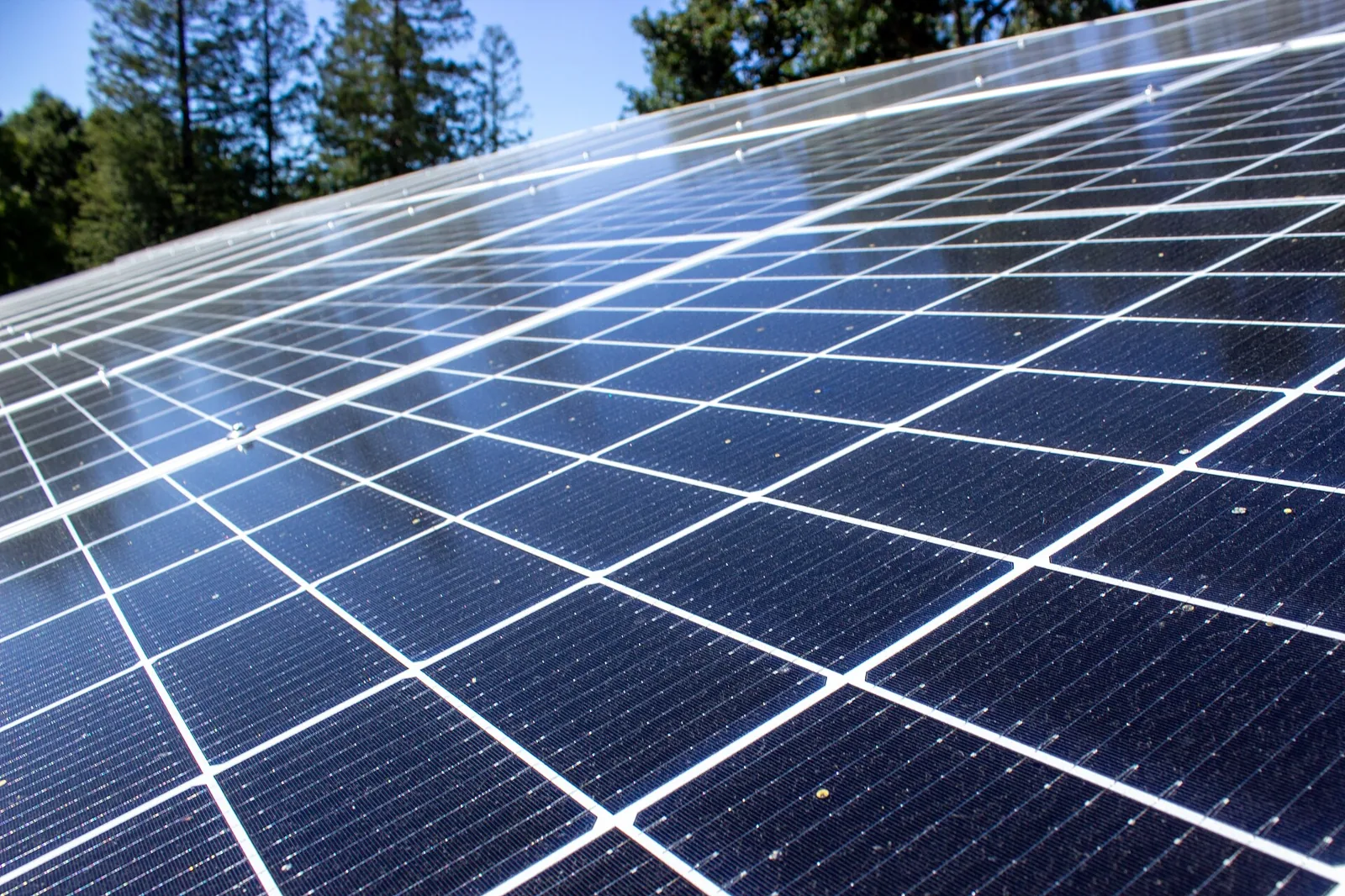
Solar panels are a strong fit for us, because the outer skin is glass, the exact surface GlassProtect is built for. It is the one and only next-generation sol-gel surface protective coating in Australia. We bond a clear nano layer onto the PV glass so dust, pollen, bird mess, sprinkler minerals and coastal salt can no longer grip, and the glass keeps shedding the soiling that quietly robs output between cleans. What used to bake on now sheds with the rain and a rinse.
The loss you never see on the roof
Clean panels make power. Dirty ones don't.
Solar panels only earn when light reaches the cells, and in Perth that light has to get through a layer of grime first. The panels sit up on a roof out of sight, so the soiling builds for months and you never notice, until the numbers on the app quietly drift down.
The dry summer
Dust and pollen bake on
Through a long Perth summer it barely rains, so wind-blown dust, pollen and bushfire haze settle on the glass and stay there. Every millimetre of that soiling is light that never reaches the cell, and with no rain to rinse it, the panels bake under it for weeks.
The water marks
Spotting and salt
Reticulation overspray and the odd summer shower dry on hot glass and leave hard-water mineral spots. Near the coast, salt-laden air adds a film of its own. Those deposits are exactly what loose dust then keys onto, so the glass fouls faster each round.
The greasy film
Bird mess and traffic film
Bird droppings, tree sap and the oily film off pollen and exhaust don't rinse away with water, because the film is greasy, not watery. It clings, it bakes on in the sun, and it shades whole cells until someone gets up there to scrub it off.
The point most people miss: solar glass doesn't have an absorption problem. It has a surface problem. Everything that costs you output is sitting on the glass, waiting to be shed or waiting to be scrubbed, and a low-energy surface is what decides which.
How GlassProtect works on PV glass
A clear layer bonded to the glass.
The face of a solar panel is a vitrified, glassy silica surface, and that carries reactive silanol groups, which is exactly what GlassProtect is built to grip. It condenses a clear Si-O-Si nano layer, around 75 to 100 nanometres, straight onto the glass, and drops the surface energy so soiling grips far less and lifts far more easily.
Bonds onto the glass, not on top of it
The coating chemically condenses to the glass's own silanols as it cures. It isn't a film laid over the panel that can peel or cloud, and on a surface whose whole job is to let light through, that matters. There is nothing sitting on top to yellow.
Keeps the glass shedding soiling
Water beads and rolls, and because the sliding angle stays low, rain sheets off and carries loose dust with it, so far less dwells and dries on. The glass keeps clearing itself between washes, so far less bakes on and needs scrubbing off. The oily film that a water-repellent-only surface can't shed, off pollen, birds and traffic, gets released too, so it lifts rather than baking on.
Colourless, so it changes nothing the cells see
It is optically clear at around 99 percent, so it doesn't act as a filter over the glass. The panel gets the light it was rated for. The only difference is that the surface now sheds what used to stick, so it stays cleaner for longer between washes.
Where the edge really lives
Built for a roof in full Perth sun.
Nothing gets a harder run than glass on a north-facing roof. It sits in the UV all day, it takes wind-blown grit, salt and the occasional wash, and it never gets a break. The protection has to live at the surface, where all of that happens, and it has to keep working for years, because getting up there to redo it is the last thing you want.
UV
Doesn't yellow in the sun
This is the one that matters most on a panel. An organic film baking in full sun would yellow and cloud, and on solar glass that is lost output. GlassProtect is inorganic, so it doesn't yellow or chalk the way an organic coating does. It holds up under the UV that would wreck a lesser treatment, far more UV-resistant, though never UV-proof.
Cleaning & abrasion
Survives the rain and the wash
Wind-blown grit, driving rain and a professional panel wash are the loads that wear most coatings off. GlassProtect is tested 3× more durable than the leading brand, and it is still beading after 3,000 cream-cleanser scrub cycles, where a spray-on repellent is long gone. When it does ease back, it renews with a top-up, no stripping.
Oil & grease
Lifts the film dust sticks to
The reason dust cakes onto panels is the oily film underneath it, off pollen, exhaust and bird mess. A water-repellent-only surface still gets wetted and fouled by it. GlassProtect repels oil as well, so that film sits on top and lifts in cleaning, and loose dust has far less to grip.
Chemical & salt
Stable through salt and washing
The bonded inorganic surface stays stable through coastal salt air and the mild solutions used to wash panels. It also protects the glass against the permanent etching that hard-water mineral deposits can cause over time. More resistant than an organic coating, not immune, and we tell you that plainly.
The whole wedge in one line: we protect the glass where the glass actually works, in the sun and the weather, and we keep working there long after a spray-on repellent has washed away.
Proven, not promised
Still beading after the weather.
The real test of a coating on a roof isn't the day it goes on. It is whether it survives a full year of UV, salt, grit and washing and keeps shedding soiling. That is what wears a coating out, and it is exactly what GlassProtect is built for.
- 3× more durable than the leading brand. Around 3× slower repellency loss in comparable cream-cleanser abrasion testing.
- Still beading at 3,000 scrub cycles. Retaining roughly a 100-degree water contact angle where many coatings wipe off within a month.
- Independently tested. At recognised houses including TÜV Rheinland, SGS, Intertek and REACH, and registered under a 10-year guarantee on the coating's repellency function.
The honest limits
What it does, and what it doesn't.
Solar panels are a strong fit for us, not our absolute sweet spot, and we would rather you knew the edges up front. A coating that keeps the glass shedding soiling is a genuinely good thing; it just isn't magic, and anyone promising you a fixed jump in output is overselling.
It doesn't make more power
It is a clean-and-shed coating, not a booster. It won't make a cell more efficient. What it does is stop soiling robbing the output you already paid for, by keeping the glass cleaner between washes. That is the honest claim, and it is worth having.
We assess the glass first
Some modules carry a factory anti-reflective or textured surface. It goes on the outer glass only, never the cells or wiring, and we check the glass before we coat anything and tell you straight whether it is a good fit. If it isn't, we say so.
Beading fades before protection does
The visible bead is the first thing to ease off, and it fades faster than the shed-and-wipe performance underneath. When the water stops beading, that is your cue to have us re-test, not proof it has failed.
Long-lasting, not permanent
It degrades slowly and predictably and tops up over time. It makes cleaning far less frequent and far easier, and safe roof access still matters; it doesn't remove the need for the occasional clean entirely.
Common questions
Solar glass, answered.
Does coating solar panels actually help output?
Not by changing the panel. A coating doesn't make a cell more efficient. What it does is keep the glass shedding dust, pollen and bird mess so rain and a rinse do most of the work, and far less soiling sits there blocking light between cleans. Soiling is a known output loss in dry, dusty conditions like Perth's, and cleaner glass simply lets the panel do the job it was rated for. We are straight about it: this is a clean-and-shed coating, not a power booster.
Will it reduce how much light gets to my panels?
No. It is a clear nano layer, roughly 75 to 100 nanometres thick and optically clear at around 99 percent, so it doesn't act as a filter over the glass. The panel gets the light it was rated for. The only change is on the surface, where soiling grips far less, so rain sheets off and carries it away and the glass keeps clearing itself between washes.
Do I still need to clean my panels once they're coated?
Yes, just far less often and far more easily. The glass sheds far more of its soiling on its own: rain sheets off and carries loose soiling with it, and anything that does need a wash lifts with a fraction of the effort. It doesn't remove the need for the occasional clean, and safe roof access still matters. We won't pretend otherwise.
How long does it last up on a roof in full sun?
It is a long-lasting treatment, not a permanent one. GlassProtect is tested 3× more durable than the leading brand and is still beading after 3,000 cream-cleanser scrub cycles. Because it is inorganic it holds up under the full-day UV a roof gets, where an organic film would yellow, and when it eventually eases back it renews with a top-up rather than a strip. Every job is registered under a 10-year guarantee on the coating's repellency function, which sits on top of your rights under Australian Consumer Law.
Is it safe for my panels and my system?
It goes onto the outer glass only, the same vitrified glass surface it is built for. It doesn't touch the cells, the wiring or the frame, and it doesn't change how the system runs. Some modules carry a factory anti-reflective or textured surface, so we assess the glass first and tell you plainly whether it is a good fit before we coat anything.
Does it help with bird droppings and sprinkler overspray?
Yes, that is where it earns its keep in Perth. Reticulation overspray and rain that dries on hot glass leave mineral deposits, and bird mess and pollen leave an oily film that dust keys onto. Water sheets and beads off a coated panel and carries loose soiling with it, so far less dwells and bakes on, and rain and a rinse do most of the work between washes. Because GlassProtect repels oil as well as water, that oily film lifts instead of baking on too, so loose dust has far less to grip. It also protects the glass against the permanent etching that hard-water minerals cause on bare glass over time.
Does sealed glass still need any upkeep?
The hard part is done. GlassProtect keeps your solar glass shedding its own soiling, so rain sheets off and a light rinse does most of the work, and the glass largely keeps itself clear between washes. It doesn't make glass that never needs a clean, and safe roof access still matters, but the coating does the heavy lifting, so a wash goes from a scrub-and-chemicals job to a quick rinse. It also protects the glass against the permanent etching that hard-water minerals cause on bare glass over time.
Keep reading
Related surfaces & the science.
Go deeper
The science of sealing solar glass
The chemistry in full: the silanol bond to PV glass, the four resistances with their honest bounds, the head-to-head versus a spray-on repellent, and the abrasion standards behind the durability. Read the technical version
Same family
Frameless glass
Balustrades, pool fences, splashbacks and facades, and how GlassProtect keeps them shedding grime so rain and a rinse do the work. Read the guide
Same family
Windows & glazing
House windows and curtain-wall glazing that spot up in the rain, and the coating that keeps them clear. Read the guide
Same family
Mirrors
Bathroom mirrors and the water spots that dull them, and how a low-energy surface keeps them clear. Read the guide
Browse everything
The Sealing Library
Every common hard surface in WA, graded by how well our coatings protect it. Find your surface
Get a quote
Seal your solar glass once.
We'll assess your panels and, where the glass is a fit, coat it with GlassProtect so it keeps shedding soiling, registered under a 10-year guarantee. Confirmed price before you book.